In this article (13 sections)
- California wildfire lawsuit basics
- The Eaton Fire: claims against Southern California Edison
- The Palisades Fire: claims against public agencies
- What a wildfire claim can cover
- How to prepare for a wildfire case review
- How a wildfire lawsuit moves through the courts
- Government Claim Deadlines in a California Wildfire Lawsuit
- How Insurance and a California Wildfire Lawsuit Work Together
- Documenting Smoke and Ash Damage in Homes That Did Not Burn
- Renters and Business Owners in a California Wildfire Lawsuit
- Common Mistakes to Avoid After a Wildfire
- Frequently asked questions
- How Direct2Attorney can help
Last updated: October 2026
A California wildfire lawsuit lets survivors seek compensation from whoever is legally responsible for a fire, often a utility or a public agency. After the January 2025 Eaton and Palisades fires, thousands of families have filed claims. Who you can sue, and on what legal theory, depends on which fire damaged your home. Knowing the deadlines, insurance rules and records that shape a California wildfire lawsuit can help you protect your options while recovery continues.
This guide explains where the main Southern California cases stand in October 2026, what losses a claim can cover, and how survivors can take the next step.
California wildfire lawsuit basics
Wildfire lawsuits in California usually rest on a few legal theories.
- Inverse condemnation: When utility equipment damages property, the utility may owe compensation without proof that it was careless. Learn more in our inverse condemnation guide.
- Negligence: Claims that a company or agency failed to use reasonable care, such as poor equipment upkeep or brush clearance.
- Nuisance and trespass: Claims that someone’s conduct unreasonably invaded your property.
- Wrongful death and personal injury: Claims by families who lost a loved one or were hurt.
Claims against public agencies follow special rules, including short deadlines to file a formal claim first. Deadlines vary by claim type and defendant.
These theories are not limited to the 2025 fires. Survivors of other California wildfires linked to utility equipment may also have claims, though their deadlines may differ.
The Eaton Fire: claims against Southern California Edison
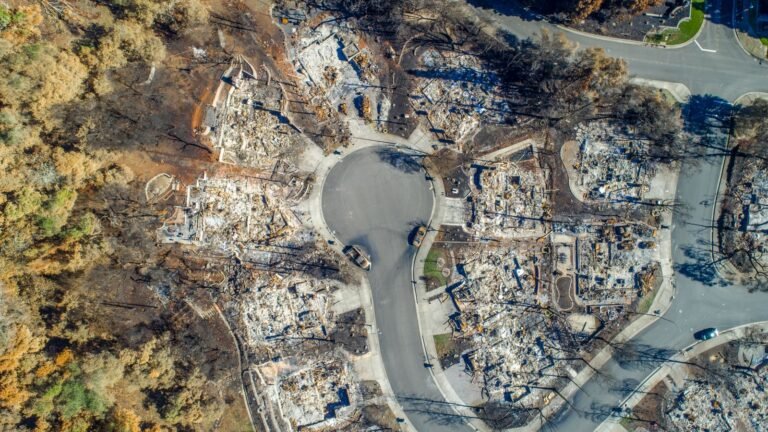
The Eaton Fire started January 7, 2025, above Altadena. It killed 19 people and destroyed thousands of homes and businesses.
On August 4, 2026, Los Angeles County Fire and CAL FIRE concluded that electrical arcing on an out-of-service Southern California Edison (SCE) transmission tower started the fire. Thousands of individuals have sued SCE. The first bellwether trial is set for January 25, 2027.
Public agencies have sued too. Los Angeles County sued SCE in March 2025, and Pasadena and Sierra Madre filed their own suits. The U.S. Department of Justice sued SCE in September 2025 to recover more than $40 million in federal Eaton Fire costs.
SCE’s direct compensation program
SCE also runs a voluntary Wildfire Recovery Compensation Program. It is open until November 30, 2026. Accepting an offer requires signing a release of claims, so have the terms reviewed first. See our page on Edison’s offer.
The Palisades Fire: claims against public agencies
The Palisades Fire also began January 7, 2025. It killed 12 people, burned 23,448 acres and destroyed about 6,800 structures, according to the Westside Current.
Federal prosecutors say it grew from the smoldering remains of the January 1 Lachman Fire. Victims have sued the City of Los Angeles, the Los Angeles Department of Water and Power and the State of California. Their claims point to the fire’s rekindling and an empty Santa Ynez Reservoir. In May 2026, a state appeals court let those consolidated suits move forward. Claims against government agencies can raise special defenses, such as immunity rules, that don’t apply to a utility.
A federal arson case against the man accused of starting the Lachman Fire ended in a mistrial in June 2026. A retrial was tentatively set for October 19, 2026.
What a wildfire claim can cover
Depending on the facts and legal theory, a claim may seek compensation for:
- A destroyed or damaged home and other structures
- Personal belongings
- Smoke, soot and ash damage to homes that did not burn
- Rent, relocation and other displacement costs
- Lost wages and business losses
- Trees, landscaping and property cleanup
- Medical costs, pain and suffering, and emotional distress
- Wrongful death losses for surviving family members
Insurance often pays part of these losses. Insurers may then seek repayment from the party responsible. Uninsured and underinsured losses are often a key part of a survivor’s own claim.
How to prepare for a wildfire case review
You don’t need everything in hand to start. But these records help a law firm understand your situation:
- Your insurance policy, claim letters and payment records
- Photos and video of the property before and after the fire
- A home inventory, even a rough one
- Receipts for housing, travel and replacement items
- Medical records for injuries or smoke-related illness
Our wildfire loss documentation guide explains how to rebuild records when everything is gone.
How a wildfire lawsuit moves through the courts
Wildfire cases can take years, but most follow a similar path. Knowing the steps can make the process less confusing.
1. Case review
A law firm looks at where you lived, what you lost and which fire damaged your property. It checks deadlines and which defendants may be responsible.
2. Filing the claim
For utility cases, the firm files a lawsuit in court. For public agencies, a formal government claim usually must come first, often within a short deadline.
3. Coordination
When thousands of people sue over one fire, courts often handle the cases together before one judge. That is happening with the Eaton Fire cases in Los Angeles Superior Court.
4. Discovery
Both sides exchange evidence. That can include investigation reports, maintenance records, emails and testimony under oath. In the Palisades cases, the May 2026 appeals ruling cleared the way for this step.
5. Bellwether trials
A small number of test cases go to trial first. Their results help both sides value similar claims. The first Eaton Fire bellwether trial is set for January 25, 2027.
6. Settlement or trial
Many wildfire cases settle, often in groups by claim type. Any settlement offer is a personal decision. It is wise to have a law firm explain the terms before you sign anything.
No one can promise how long this will take or how a case will end. But having your records in order helps at every step.
Government Claim Deadlines in a California Wildfire Lawsuit
If a public agency may share blame for a fire, the rules change in an important way. Before you can sue a city, county, water department or the state, California law usually requires you to file a written government claim first.
The six-month rule
Under the Government Claims Act, a claim for personal injury or property damage generally must be presented within six months of the incident. That rule is in Government Code section 911.2, as local agencies explain on their own claim pages.
If the agency rejects the claim and sends written notice, you generally have six months from that notice to file a lawsuit, under Government Code section 945.6. Other kinds of claims can have different time limits.
Why this matters for Palisades Fire survivors
The Palisades Fire cases name public agencies, so the government claim step applies to many of them. It is one reason a California wildfire lawsuit against an agency can look very different from a case against a utility.
- A utility case usually starts with a lawsuit filed in court.
- An agency case usually starts with a government claim, then a lawsuit if the claim is denied.
- Agencies may raise immunity defenses that utilities cannot use.
If you are not sure whether you filed a government claim, or whether someone filed one for you, ask a participating law firm to check right away. Do not assume a deadline has or has not passed.
Keep proof of what you filed
- A copy of each claim form, with the date it was sent
- Mail receipts or email confirmations
- Any letter from the agency accepting, rejecting or asking about your claim
These papers can decide whether a later California wildfire lawsuit moves forward, so store them with your other fire records.
How Insurance and a California Wildfire Lawsuit Work Together
Most survivors deal with an insurance claim and a legal claim at the same time. They are separate, but they affect each other.
Your insurer may seek repayment
After an insurer pays you, it often has the right to seek that money back from the party it believes caused the fire. This is called subrogation. It is one reason insurers file their own suits after major fires.
Subrogation does not usually stop you from pursuing your own claim. Your California wildfire lawsuit can focus on what insurance did not cover.
Underinsured losses
Many survivors learn after a fire that their limits were too low. Building costs may have risen, or a policy may not have been updated after a remodel. Common gaps include:
- Rebuilding costs above the dwelling limit
- Code upgrade costs required by new building rules
- Personal property above the contents limit
- Living expenses that last longer than the policy pays
- Trees, landscaping and outdoor structures with low sub-limits
Tracking these gaps carefully helps a firm see the uninsured part of your loss, which is often the heart of a California wildfire lawsuit.
Tips for dealing with your insurer
- Ask for a full copy of your policy, including all endorsements.
- Keep a log of every call, with the date, the name of the person and what they said.
- Get important promises in writing.
- Read any release carefully before you sign it. Some documents can affect your other claims.
- Ask a law firm to look at anything you do not understand.
If your insurer denies part of your claim, ask for the reason in writing. A written denial helps you and your law firm understand what is left to recover, and it creates a clear record if you later dispute the decision. Keep every denial letter with your other insurance papers so nothing gets lost during a long case.
Documenting Smoke and Ash Damage in Homes That Did Not Burn
Not every survivor lost a home to flames. Many homes still standing near the Eaton and Palisades burn areas have smoke, soot and ash damage. These losses can be part of a California wildfire lawsuit, but they are harder to see and easier to dispute.
Signs of smoke damage
- A lasting smoky smell, even after airing out the home
- Ash or soot in vents, attics, closets or crawl spaces
- Stains on walls, ceilings or window screens
- Damage to clothing, furniture, rugs and electronics
- Health complaints, such as coughing or headaches, while staying in the home
How to document it
For a California wildfire lawsuit, take photos and video of every room before cleaning, if it is safe to enter. Include close-ups of soot on surfaces, filters and vents. Keep any air or surface test results and write down who did the testing.
Save receipts for professional cleaning, air filters, temporary housing and replaced items. If you stayed elsewhere while the home was cleaned, note the dates.
Talk to a doctor if you have breathing problems or other symptoms. Medical records can matter if you seek compensation for health effects.
Disagreements about cleaning
Insurers and survivors often disagree about whether cleaning is enough or whether items must be replaced. Keep notes on what each side said. A participating law firm can explain how these disputes may fit into a California wildfire lawsuit.
Renters and Business Owners in a California Wildfire Lawsuit
Homeowners are not the only people who may have claims. Renters and business owners also suffered major losses in the 2025 fires, and their records look a little different.
If you rented your home
A renter cannot claim the building itself, but a renter may still have real losses. A California wildfire lawsuit filed by a renter may seek money for:
- Clothing, furniture, electronics and other belongings
- Moving costs and a higher rent at a new home
- Lost security deposits and prepaid rent
- Time off work to deal with the fire
- Emotional distress and health effects, where the law allows
Gather your lease, rent receipts, renters insurance policy and any messages with your landlord. If you did not have renters insurance, you can still list what you lost. Photos on your phone or social media accounts can help show what was in your home.
If you own a business
Business losses can be larger and harder to prove. A firm reviewing a business claim may ask for:
- Tax returns and profit and loss statements from the years before the fire
- Records of inventory, equipment and supplies
- Proof of lost customers, canceled contracts or closed locations
- Payroll records, including staff you had to let go
- Lease terms for your business space
A business owner may also have a separate claim from a personal one, for example for a home and a shop in the same area. Ask a firm whether both can be part of a California wildfire lawsuit, and how they would be handled.
Families who lost a loved one
Losing someone in a fire is a different kind of loss. Wrongful death claims follow their own rules on who may file and what may be recovered, and those rules vary by claim type. It is okay to take time before talking to a law firm, but ask about deadlines early.
Common Mistakes to Avoid After a Wildfire
Recovery is exhausting, and small mistakes are easy to make. Watching for these can help protect your options in a California wildfire lawsuit.
- Missing a deadline. Deadlines vary by claim type and defendant, and government claims can be very short.
- Signing a release too quickly. A direct offer, like SCE’s program, may require you to give up claims. Have it reviewed first.
- Throwing away damaged items before documenting them. Photograph first, then discard if needed.
- Relying only on memory. Write down what you lost while details are fresh, and update the list over time.
- Posting about your losses or settlement talks online. Keep case details private.
- Responding to door-to-door or unsolicited offers. Check who you are dealing with before sharing personal information.
Questions to ask a law firm
- Which fire damaged my property, and who may be responsible?
- Do I need to file a government claim, and has the deadline passed?
- How does my insurance payment affect my California wildfire lawsuit?
- How are fees and costs handled, and can I get that in writing?
- How will you keep me updated as bellwether trials approach?
There are no wrong questions. Asking early can help you understand your choices before you make any decision about a California wildfire lawsuit.
Keep one recovery binder
Many survivors find it easier to keep all paperwork for a California wildfire lawsuit in one place. A binder or digital folder with tabs for insurance, government claims, receipts, photos and medical records can save hours later. Bring it to every meeting with your law firm.
Frequently asked questions
Who can file a California wildfire lawsuit?
Homeowners, renters, business owners and families who lost a loved one may qualify. So may people whose homes were damaged by smoke and ash. A participating law firm can review whether you have a claim.
Can I sue if I already got insurance money?
Often, yes. Insurance may not cover all your losses, and a claim can seek uninsured or underinsured amounts. A firm can explain how insurance payments affect your case.
Is there a class action for the Eaton Fire?
Most Eaton Fire lawsuits are individual cases handled together before one judge in Los Angeles Superior Court. Bellwether trials are meant to help both sides value similar claims.
How long do I have to file?
It depends on the claim and who you are suing. Claims against public agencies often have much shorter deadlines. Ask a firm to review your dates as soon as possible.
Does it cost anything to have my case reviewed?
A case review through Direct2Attorney is free and carries no obligation. If you hire a law firm, ask it to explain its fee agreement in writing before you sign.
How Direct2Attorney can help
Direct2Attorney is not a law firm. We connect wildfire survivors with participating law firms that handle California wildfire claims. If you share your situation, a firm may review it at no cost and explain your options.
You can start on our California wildfire lawsuit page. There is no obligation, and a review does not commit you to anything.
Direct2Attorney is a legal marketing and referral service, not a law firm. This article is general information, not legal advice. Submitting information does not create an attorney-client relationship.