Direct2Attorney is a legal marketing & referral service, not a law firm and not a substitute for legal advice.
Support, whether or not you ever call a lawyer
If you want to talk to someone trained for this, the RAINN National Sexual Assault Hotline is free, confidential and available 24 hours a day at 1-800-656-4673, or online at hotline.rainn.org. They can also connect you with a local advocate. If you are in crisis, call or text 988. If you are in danger right now, call 911.
You do not have to make a legal decision to deserve support, and you do not have to be ready today. This page will still be here.
Eligibility
If any of these describe you, a free and confidential rideshare lawsuit review is worth the two minutes it takes. You will not be asked what happened on the form.
By the driver, during the ride, at pickup or drop-off, or shortly after because of the trip.
Unwanted touching, sexual comments, being followed, or contacted afterward using trip information.
Most survivors do not. Trip records, messages and later notes can support a claim.
Many states have lengthened these deadlines or opened lookback windows. Asking costs nothing.
As a passenger, another driver, a pedestrian or a cyclist. That is a different claim, and it can be reviewed too.
That is the most common reason people never ask. A private review can answer it.
Not sure you want to do anything yet?
That is a completely reasonable place to be. A free, confidential conversation gives you information without committing you to a single thing.
Meeting these guidelines does not mean you have a valid claim. It means a participating law firm is likely to review it, and that firm decides on its own whether to take your case. Direct2Attorney cannot judge the legal merits of your case, give legal advice, or file anything for you.
What stops people, and what actually helps
Almost everyone who comes forward waited first. These are the four reasons we hear most, and what is actually true about each.
What stops people
Most survivors do not. People worry that without a report, nobody will take it seriously, or that it is somehow proof it did not happen.
What is true
Claims are regularly built without one. The trip record in your app, a message you sent that night, a medical or counseling note, or a friend who remembers you telling them can all support a claim. Its absence is not held against you.
What stops people
Fear of family, employers or a community finding out keeps a great many people silent for years.
What is true
Courts routinely allow survivors to file as Jane Doe or by initials in sexual assault cases. Your identity is known to the court and the parties, not printed in a public filing. Ask the firm exactly how it works in your state.
What stops people
People assume the window closed long ago and never ask, so they never find out.
What is true
Legislatures across the country have lengthened or removed filing deadlines for sexual assault claims, and some have opened lookback windows for older cases. Deadlines still vary, but the answer is often not what people expect. Asking costs nothing.
What stops people
The idea of describing it to a lawyer, then again in a deposition, is enough on its own to keep people from calling.
What is true
You are not asked to describe anything on this page. On the call you share only what you choose to. You can ask to speak with a woman, bring someone with you, take breaks, or stop. Firms that handle these cases are used to working this way.
About the claims
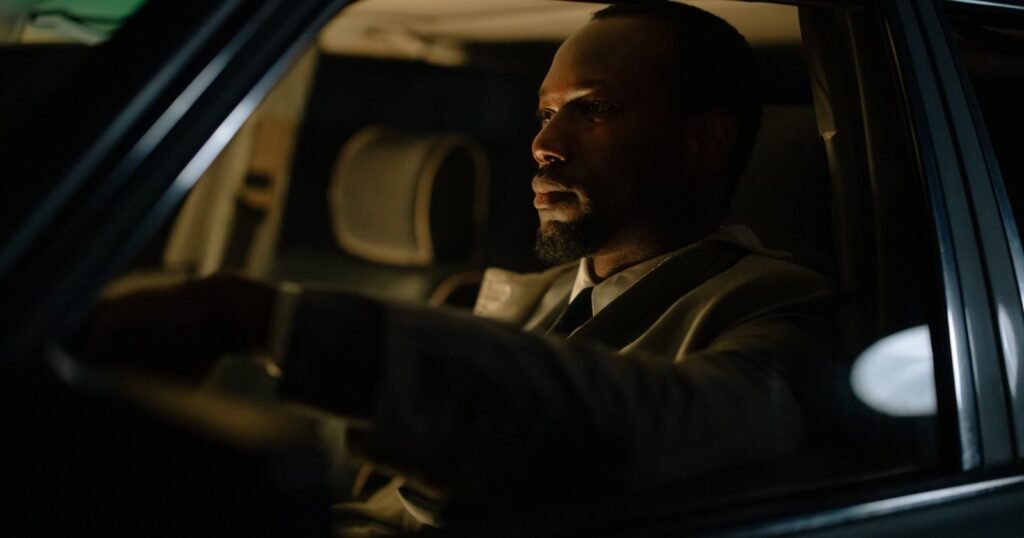
Uber and Lyft connect riders with drivers through an app. The companies market rides as a safe way to get home. Thousands of passengers have filed a rideshare lawsuit claiming that they were sexually assaulted, harassed or otherwise harmed by drivers, and that the companies did not do enough to prevent it.
Each rideshare lawsuit focuses on what the companies knew and did. Plaintiffs allege the companies were aware of the risk of driver assaults for years, yet did not adopt safety measures that could have reduced it, and promoted their rides as safe anyway. The companies deny these claims.
Federal Uber cases are grouped together in one court, called a multidistrict litigation or MDL. That is MDL 3084 in the Northern District of California. A separate Lyft MDL, MDL 3171, was approved in February 2026 and is before Judge Rita F. Lin in the same district. Some claims are also filed in state courts or sent to arbitration, a private process outside of court.
Where a claim can be heard
| Platform | What to know |
|---|---|
| Uber | Federal sexual assault cases are consolidated in MDL 3084 in the Northern District of California, with bellwether (test) trials underway |
| Lyft | A separate federal MDL, MDL 3171, was approved in February 2026 and runs on its own schedule |
Company names are used only to identify the platforms involved. Direct2Attorney is not affiliated with, endorsed by, or sponsored by Uber, Lyft or any court.
How it happens, in plain words
No one is to blame for an assault except the person who did it. But rideshare lawsuit filings say certain gaps made these assaults easier to commit and harder to report.
A passenger rides alone, often late at night, in a car controlled by someone they have never met.
Lawsuits claim background checks and driver screening missed warning signs, or that drivers with prior complaints stayed on the app.
Plaintiffs allege safety features such as cameras, alerts and monitoring were not used as widely as they could have been.
Survivors describe reporting through the app and hearing little back. A rideshare lawsuit can seek those internal reports in discovery.
Your trip record is already saved
Even if you deleted the app, the company keeps trip data. A law firm can request it, so you do not have to rebuild that night from memory.
Healing and support
Healing is personal and there is no right timeline. These are options many survivors find helpful, whether or not they ever file a rideshare lawsuit.
General information only. A doctor or licensed counselor can help you choose what fits you.
Right now
RAINN (1-800-656-4673) is free and confidential 24/7 and can connect you with a local advocate. In crisis, call or text 988.
Medical care
A hospital or clinic can check for injuries and offer care. You decide what happens at each step.
Therapy
Approaches such as trauma-focused CBT and EMDR are widely used to treat trauma and PTSD.
Daily life
Many survivors find it hard to ride again. A counselor can help you plan safe ways to travel.
Connection
Survivor groups, in person or online, can help you feel less alone with this.
Your pace
If you can, keep screenshots of the trip receipt and messages. A firm can gather the rest later.
Quick self-check
You do not need to describe what happened. If you can say yes to most of these, a free, confidential review is worth asking for.
Were you riding with, or hit by, an Uber or Lyft driver?
Were you harmed during the trip or because of it?
Has it affected your health, work or daily life since?
Would you like to know your options privately, with no obligation?
Requirements
You do not need any of this to start. A firm gathers most of it for you. But every rideshare lawsuit is built on these four things.
A rideshare trip
The app record ties the driver to your ride.
What happened
Messages, reports or notes made at the time.
The harm
How it has affected your health and life.
Filed in time
Under the deadline of the state where it happened.
Case status
Thousands of rideshare lawsuit claims, and a mixed record at trial. Federal Uber cases are consolidated in MDL 3084, with thousands of cases pending as of October 2026. A separate Lyft MDL was approved in February 2026.
Ignore the payout figures online
No global settlement amount has been announced. Ranges quoted on other sites are guesses, and one verdict does not set the value of anyone else’s claim.
California state court trial
A jury found Uber negligent but concluded that negligence was not a substantial factor in causing the harm.
$8.5 million federal verdict
In the first federal bellwether trial, a jury returned an $8.5 million compensatory verdict against Uber, with no punitive damages.
Lyft MDL created
Federal Lyft passenger sexual assault cases are centralized as MDL 3171 before Judge Rita F. Lin.
Second federal verdict
A federal jury in North Carolina found Uber liable and awarded $5,000, a far smaller award.
Third bellwether settled before trial
Uber settled Jane Doe QLF 001 v. Uber, the third federal bellwether, days after jury selection and before opening statements. Terms were not made public.
Next trial not yet set
No global settlement has been announced, and the next federal bellwether had not been scheduled as of mid-October 2026. Thousands of Uber cases remain pending, and new claims are still being filed.
This is not legal or medical advice. If you are in danger, call 911. If you are in crisis, call or text 988. You never need to share details of what happened to request a review.
Compensation
No amount of money undoes this. What a rideshare lawsuit can do is cover what it has cost you, and put the cost where it belongs.
No one can tell you what a claim is worth before reviewing it, and no one can promise you will recover anything. Past results do not guarantee or predict a similar outcome in any future case.
Also handled
Not every rideshare lawsuit involves assault. If you were hurt in a collision, as a passenger, another driver, a pedestrian or a cyclist, that is a different kind of claim with a different insurance structure behind it.
During an accepted or active trip, a $1 million commercial liability policy generally applies. Which policy pays depends on what the driver’s app was doing at the moment of impact, and that is usually the first thing disputed.
Uber or Lyft crash claims
Coverage periods, insurance denials, adjuster calls and what to do in the first week after a collision.
The process
Nothing happens that you do not agree to. Here is exactly how it goes.
Platform, roughly what year, and your state. Not what happened. Free, and it commits you to nothing at all.
Usually within a day, at the time you chose, and you can ask to speak with a woman. The first call is a conversation, not an interview.
Trip records from the platform, app reports, messages, medical or counseling notes. Much of what supports a claim already exists.
Filed anonymously where the law allows, in the MDL, state court or arbitration. You never have to accept an offer, and you can stop at any stage.
READY WHEN YOU ARE
Share only what you choose.
Filing deadlines
Deadlines for sexual assault claims are not the same as ordinary injury deadlines, and they have changed a great deal. Many states have lengthened or removed them, and several have opened revival windows that let older claims be filed for a limited period. California opened a two-year revival window for certain adult sexual assault claims that runs through the end of 2027. A rideshare lawsuit over a crash usually follows the general injury deadline shown in the tool below.
Several states have temporarily reopened claims that were previously too late. These windows open and close on fixed dates, so a claim that was barred last year may not be barred now, and may be barred again later.
Legislatures wrote these longer deadlines precisely because survivors often come forward years later. Waiting is normal and is not treated as a weakness in your claim.
Nearly every state gives far longer for assaults that happened in childhood, often decades, and some have removed the deadline altogether.
The deadline generally follows the state where the incident occurred, which matters if you were traveling or have since moved.
General injury deadline by state
General personal-injury rule only. Your claim type may follow a different deadline.
The state tool shows the general personal-injury deadline, which usually governs crash claims. Sexual assault claims often have longer or different deadlines. Because these rules have moved so much in recent years, the answer people assume is often wrong in both directions. It costs nothing to have someone check the state where it happened.
This is general information, not legal advice, and it is not a calculation of your deadline. Filing deadlines are set by state law, differ by the type of claim, change when legislatures amend them, and can be shortened or extended by facts specific to your situation. Nothing on this page tells you whether your claim is timely. Only an attorney licensed in your state can determine the deadline that applies to you. If a deadline passes, a claim is usually barred permanently regardless of its merits, so the safer course is always to ask early.
Not sure whether your time has run out?
Most people guess, and a lot of them guess wrong in the direction that costs them. Finding out takes about two minutes and costs nothing.
The no-fee promise
Participating firms take these cases on contingency. The fee is a percentage of any recovery. If there is no recovery, no attorney fee is owed.
There is no retainer, no hourly billing, and no invoice arriving while you are trying to get through your week. Cost should never be the reason someone stays silent.
What that covers
What to ask about
Fee arrangements are set by the law firm you sign with, not by Direct2Attorney, and terms vary between firms and states. Read your representation agreement and ask questions before signing.
Why people use us
Private from the first message
You can use initials. Your information is encrypted and handled under our Privacy Policy, and you are never obligated to go further.
Firms that do this work
We connect you with firms handling rideshare lawsuit claims in the MDLs and state courts, who are used to survivor-paced intake.
You control the conversation
Ask for a woman. Bring someone. Take a break. Stop. None of that counts against you or your claim.
No fee unless you recover
Free review, contingency representation, and no attorney fee owed if there is no recovery.
What Direct2Attorney is
A legal marketing and referral service. We check whether your situation matches what participating law firms are looking for, and connect you with one of them if it does.
What Direct2Attorney is not
We are not a law firm, a counseling service or a crisis line. We cannot give legal advice or represent you. For support, RAINN is available 24/7 at 1-800-656-4673.
Confidential reviews are open
You do not need a police report. You do not need your name in a public filing. You do not need to have told anyone before today. And you will not be asked to describe anything on this page.
If you want to know whether a rideshare lawsuit is an option for you, that conversation is free, confidential, and yours to end whenever you choose.
What happens after you ask
We check your answers
Usually the same business day
A participating firm may call you
At the time you choose
You decide what comes next
No cost and no obligation, ever
Questions
Still have a question? Ask it on the call. The review is free, and there is no obligation.
Start my free review →No. Most survivors never report to police, and the courts understand that. A claim can be supported by the trip record in your app, messages you sent afterward, medical or counseling records, or an account you gave to a friend or family member at the time. A police report helps if one exists, but its absence is not a barrier and it is not treated as a sign that something did not happen.
Usually not. Claims of this kind are commonly filed under a pseudonym such as Jane Doe or a set of initials, and courts routinely allow it in sexual assault cases. Your identity would be known to the court and the parties, not published in the filing. Ask the law firm directly how anonymity would work in your state before you decide anything.
Longer than most people expect. Many states have extended or removed the filing deadlines for sexual assault claims in recent years, and some have opened lookback windows for older cases. Deadlines still vary a great deal by state and by how old the incident is. It is worth asking even if it happened years ago, because the answer is often not the one people assume.
The results have been mixed and you deserve the full picture. In February 2026 a federal jury returned an $8.5 million compensatory verdict against Uber in the first bellwether trial, with no punitive damages. A second federal trial in North Carolina ended on April 22, 2026, when the jury found Uber liable and awarded $5,000. A California state court jury separately found Uber negligent but concluded that negligence was not a substantial factor in causing the harm. No global settlement has been announced.
It can affect where a claim is heard rather than whether it can be brought. The platforms’ terms of service include arbitration provisions and class action waivers, and some claims have been directed to individual arbitration instead of court. Judges have rejected some of these arguments, including a ruling that a clause preventing consolidation was unenforceable. A law firm can tell you how it is likely to apply to your situation.
Nothing. The review is free and confidential, and there is no obligation. If a participating law firm takes your case, it will normally work on contingency, meaning the fee comes out of a recovery and no attorney fee is owed if there is no recovery.
No. The form on this page does not ask what happened and you should not write it there. When you speak with a law firm you control how much you share and when. You can ask to speak with a woman, you can bring someone with you, and you can stop at any point. Nothing is required of you today beyond deciding whether you want to talk.
Yes, claims against Lyft can be reviewed too. Federal Lyft passenger sexual assault cases were centralized in February 2026 as MDL 3171 in the Northern District of California, separate from the Uber cases. A participating firm can tell you where your claim would be filed.
Yes. Crash injuries are a different kind of claim. During an accepted or active trip, a $1 million commercial liability policy generally applies, but which policy pays depends on what the driver’s app was doing at the time. A free review can look at your situation.





Learn more
More lawsuit research and settlement guides from our partner TortAdvisor ↗