Direct2Attorney is a legal marketing & referral service, not a law firm and not a substitute for legal advice.
Before anything legal, support is available right now
A lawsuit is never the urgent step. You are. The RAINN National Sexual Assault Hotline is free, confidential and open 24 hours a day at 1-800-656-4673, with online chat at hotline.rainn.org. If you are in crisis, the 988 Suicide & Crisis Lifeline is there by calling or texting 988.
If a child is being abused now, report it to the NCMEC CyberTipline at 1-800-843-5678 or your local child protective services. If anyone is in immediate danger, call 911.
Where you safely can, keep letters, records, names and dates. But your safety and your health come first, always.
Eligibility
The law is broader than most people assume. It is not limited to priests, and it is not limited to the Catholic Church.
Priests, deacons, nuns, brothers and religious-order members, no matter when the abuse happened.
Teachers, coaches, staff and volunteers at Catholic schools, parishes, camps, youth groups and retreats.
Churches of any denomination, schools, camps, youth organizations and other bodies that enabled or concealed abuse.
If a court or lawyer told you the claim was time-barred (too late to file), the revival window is what changes that answer.
The claim runs against the institution that enabled or concealed the abuse, not only the individual.
Having no report and no criminal case is expected in this litigation. It is not a weakness.
Told your claim was too late?
If you were ever told your claim was too late, that answer changed on July 1, 2026, but only until June 30, 2028. Rhode Island survivors can usually proceed anonymously, and consultations are free and confidential.
Meeting these guidelines does not mean you have a valid claim. A participating law firm decides on its own whether to take a case. Direct2Attorney cannot judge the legal merits of your case or give legal advice.
What holds survivors back, and what is actually true
The window has a fixed end date. The reasons people wait are the same ones that have cost survivors their claims in other states.
What holds survivors back
Many Rhode Island survivors were turned away years ago and never asked again.
What is true
The revival window exists to reopen claims that had lapsed. If you were told no before July 1, 2026, the answer was accurate at the time and is no longer the law.
What holds survivors back
Survivors assume the claim died with the person responsible.
What is true
Revival-window claims target the diocese or organization that enabled or concealed the abuse. The abuser’s death, and the lack of any criminal case, does not bar an institutional claim.
What holds survivors back
Before this law, Rhode Island cut survivors off at age 53.
What is true
Survivors now in their sixties and seventies filed on day one, describing abuse in the 1970s. Age is not a bar during the window.
What holds survivors back
Nobody is ever fully ready to do this, and waiting feels safer than acting.
What is true
The window closes permanently on June 30, 2028. If the diocese seeks bankruptcy protection before then, the court could set an even earlier bar date (a final deadline for claims). Records and witnesses also thin out.
What the law does
Governor Dan McKee signed the legislation on June 11, 2026, after unanimous Senate approval. It opens a two-year revival window running from July 1, 2026 through June 30, 2028.
During that period, survivors of childhood sexual abuse can file civil lawsuits against the institutions and organizations that enabled or concealed their abuse, even if the statute of limitations (the legal time limit) had already run out.
Before this law, Rhode Island survivors had until age 53, which is 35 years after turning 18. Anyone older than that, or whose claim had otherwise lapsed, had no path at all. Now they do. The window is temporary by design.
What the window does not do. It does not guarantee a recovery, and it does not set a number. It removes one specific obstacle, the expired time limit, and leaves everything else to be proved in the usual way. It also does not extend. There is no history in other states of a closed revival window being reopened. When June 30, 2028 passes, claims revived by this law go back to being barred.
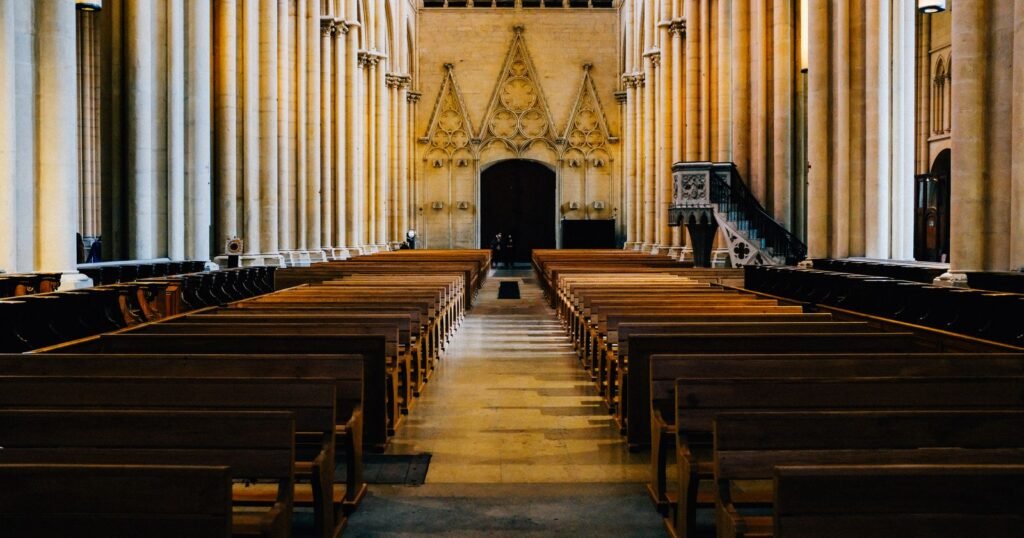
Filed on day one
Within hours of the window opening, more than 30 lawsuits were filed in Rhode Island Superior Court against the Roman Catholic Diocese of Providence, with allegations spanning parishes across the state. They included survivors now in their sixties describing abuse in the 1970s. At least 34 had been filed by July 2, 2026, and by the end of July more than 50 survivors had sued the diocese.
Why filing early inside the window matters
Bankruptcy risk
Dioceses facing claim waves in other states have filed Chapter 11. That brings a hard bar date set by the bankruptcy court, often much earlier than the state window.
Evidence and witnesses
Personnel files, assignment records and living witnesses are easier to secure in 2026 than in 2028.
Settlement history
The Diocese of Providence has already paid more than $21 million across earlier settlements. The window is expected to bring much larger exposure.
Group position
Where claims resolve together, early filers are inside the process before allocation decisions are made.
The Rhode Island Attorney General’s multi-year Report on Child Sexual Abuse in the Diocese of Providence, published in March 2026, identified 75 credibly accused clergy: 61 diocesan priests or deacons, 13 religious-order priests, and one extern priest (a priest from outside the diocese). They abused more than 300 children between 1950 and 2011.
Investigators summarized it as inaction, concealment and revictimization. Bishops minimized accusations and transferred accused priests to new assignments or to treatment instead of reporting them. Most abusers faced no consequence from either the church or the law.
Investigators concluded that many more victims never came forward, and that some records were lost or destroyed.
How it happens, in plain words
Many survivors carry blame that was never theirs. These patterns, described here at a general level only, are the ones investigators found again and again in Rhode Island and elsewhere.
A priest or religious leader was trusted by children and families as a moral guide. That trust, and the power that came with it, is what an abuser misused.
Special attention, trips, gifts or roles in the parish often came first. Families were made to feel honored. It is built to create trust and silence, and it is never the child’s fault.
Children were sometimes told no one would believe them, or that telling would hurt the church or their family. Silence was a reasonable response.
Accused clergy were moved to new parishes or sent to treatment rather than reported. That pattern of concealment is what a Rhode Island clergy abuse lawsuit is about.
You do not need these records yourself
Most of them sit with the diocese or the institution, and some are already described in the Attorney General’s report. A law firm gathers them through the lawsuit.
Healing and support
Healing does not depend on a lawsuit, and it can begin at any age, even decades later. These are common options survivors use. A claim can help pay for them, but you do not have to wait for one.
General information only. A licensed provider can help you decide what fits you.
Right now
RAINN at 1-800-656-4673 or hotline.rainn.org, and the 988 Suicide & Crisis Lifeline by call or text. Both are free and confidential.
Therapy
Approaches such as trauma-focused CBT, cognitive processing therapy and EMDR are built to help with PTSD, anxiety, flashbacks and sleep problems.
Not alone
Many clergy abuse survivors find strength in groups with others who understand, in person or online.
Faith
Some survivors leave faith behind. Others find a new path in it. Either is valid. A therapist can help you sort through it on your terms.
Body and mind
A doctor or psychiatrist can treat depression, anxiety, sleep problems and physical health effects, including with medication if it helps.
Your pace
If you pursue a claim, you choose what to share and when. You can pause or stop. Your wellbeing comes first.
Quick self-check
You will not be asked what happened. If you can say yes to most of these, a free, confidential review is worth asking for.
Did it happen in Rhode Island when you were under 18?
Was the person who harmed you a priest, deacon, nun, brother or someone working or volunteering for a church, school, camp or youth group?
Were you told it was too late, or have you never asked a lawyer about it?
Can you file before June 30, 2028?
Requirements
You do not need any of this to start. A firm builds it with you, mostly from the institution’s own records. But every claim rests on these four things.
A link to the institution
The abuser served or worked for the diocese, order, school or group.
The institution’s failure
It enabled or concealed the abuse, or did not protect you.
Harm to you
The effect on your health, work, family and life.
Filed in time
Before June 30, 2028, or any earlier bar date.
Case status
Survivors began filing within hours of the window opening. Firms are still accepting new cases, but the window closes June 30, 2028.
Allegations are not findings
The allegations in these lawsuits have not been proven in court, and the defendants are entitled to a defense. No one can promise how any case will turn out.
Attorney General’s report
The report names 75 credibly accused clergy who abused more than 300 children between 1950 and 2011.
Governor signs the law
After unanimous Senate approval, Governor Dan McKee signs the revival window into law.
Window opens
More than 30 lawsuits are filed in Rhode Island Superior Court within hours. At least 34 are on file by July 2.
More than 50 survivors sue
By the end of July, more than 50 survivors had sued the Diocese of Providence under the new law.
Window open until June 30, 2028
Claims can be filed against the diocese and other institutions. A bankruptcy filing could set an earlier bar date.
If you are in danger or crisis right now, call 911, or call or text 988. RAINN’s hotline is open 24/7 at 1-800-656-4673. You do not need to think about any lawsuit to use these services.
Compensation
No settlement undoes a childhood. What a claim can do is fund the care you need, and put on a public record what the institution knew.
No one can tell you what a claim is worth, and no one can promise you will recover anything. Past results do not guarantee or predict a similar outcome in any future case. Fees and costs come out of any recovery.
What happens next
Nothing happens that you do not agree to. You decide what to share and when.
Which parish, school or institution, roughly when, and your age at the time. Not what happened. Free, with no obligation.
Usually within a day. You decide what to share and when, and you can stop at any point without explaining why.
Diocesan personnel files, assignment histories, prior complaints and the Attorney General’s findings. Much of it is obtained through the lawsuit rather than from you.
As a Doe filing where the court permits, in Rhode Island Superior Court, ahead of both the June 2028 deadline and any bankruptcy bar date.
READY WHEN YOU ARE
Share only what you choose.
Filing deadlines
Rhode Island’s revival window runs from July 1, 2026 through June 30, 2028. If the abuse happened in another state, the rule is different again. In the last decade most states have extended, removed or temporarily revived their deadlines for childhood sexual abuse.
Revival windows open and close on set dates. There is no general practice of extending them, and a claim revived by this law becomes barred again when it closes.
If a diocese files Chapter 11, the bankruptcy court sets its own claims bar date, which can fall well before the state window closes.
The law reaches institutions and organizations generally: churches of any denomination, schools, camps and youth organizations.
The deadline generally follows the state where the abuse happened. That matters if you were raised in Rhode Island and have since moved away.
Because these rules have changed so much in recent years, the answer people assume is often wrong, in both directions. It costs nothing to have someone check the state where it happened.
This is general information, not legal advice, and it is not a calculation of your deadline. Deadlines are set by state law, differ by claim type and defendant, change when lawmakers amend them, and can be shortened or extended by facts specific to you. Only an attorney licensed in your state can determine the deadline that applies to you. If a deadline passes, a claim is usually barred for good, whatever its merits, so the safer course is always to ask early.
Not sure whether the window covers you?
Most people guess, and many guess wrong in the direction that costs them the claim. Finding out takes about two minutes and costs nothing.
The no-fee promise
Participating firms take these cases on contingency. That means the fee is a percentage of any recovery. If there is no recovery, no attorney fee is owed.
No retainer. No hourly billing. No invoice arriving while you are already paying for therapy. Cost should never be the reason a survivor never finds out what their options were.
What that covers
What to ask about
Fee arrangements are set by the law firm you sign with, not by Direct2Attorney, and vary between firms and states. Settlements on behalf of a minor generally need court approval and may be placed in a protected account until the child becomes an adult. Read the agreement and ask questions before signing anything.
Why survivors use us
You set the pace
Our intake team is trauma-informed. You share only what you choose to share, and nobody pushes you past that.
Firms filing inside the window
We connect you with firms actively litigating Rhode Island revival-window claims against the Diocese of Providence and other institutions.
Private from the first call
Survivors routinely proceed under a pseudonym. Your information is encrypted and handled under our Privacy Policy.
Deadline-aware from day one
The window and any bankruptcy bar date are the first things a firm will check for you, not the last.
What Direct2Attorney is
A legal marketing and referral service. We check whether your situation matches what participating law firms are looking for, and connect you with one of them if it does.
What Direct2Attorney is not
We are not a law firm, a counseling service or a reporting agency. For support, the RAINN National Sexual Assault Hotline is free and confidential 24/7 at 1-800-656-4673. In an emergency, call 911.
Confidential reviews open until June 30, 2028
You do not need a police report. You do not need a conviction. Your abuser does not need to be alive, and you will not be asked to describe anything on this page.
If you were ever told your Rhode Island claim was too late, that answer changed. Finding out what it means for you is free, confidential, and yours to end whenever you choose.
What happens after you ask
We check your answers
Usually the same business day
A participating firm may call you
At the time you choose
You decide what comes next
No cost and no obligation, ever
Questions survivors ask
Still have a question? Ask it on the call. The review is free, and there is no obligation.
Start a confidential review →Yes — that is exactly what the revival window is for. From July 1, 2026 through June 30, 2028, previously time-barred childhood abuse claims against institutions like the Diocese of Providence can be filed regardless of your age or how long ago the abuse occurred.
No. The law reaches institutions and organizations that enabled or concealed childhood sexual abuse — churches of any denomination, schools, camps and youth organizations in Rhode Island.
Yes. Revival-window claims target the institution that enabled or concealed the abuse. The abuser’s death, and the absence of any criminal conviction, does not bar an institutional claim.
You risk the claim entirely. The window closes permanently on June 30, 2028, and if the diocese seeks bankruptcy protection before then, an even earlier claims deadline could be imposed by the bankruptcy court. Evidence and witnesses also fade. Acting early costs nothing.
Courts routinely allow childhood sexual abuse claims to proceed under a pseudonym rather than a full name. Whether that is permitted is decided case by case, so ask the law firm directly how it would work for you before deciding anything.
Generally not for eligibility. The deadline usually follows the state where the abuse occurred, so a survivor who was abused in Rhode Island and now lives elsewhere is normally still inside the window.
Nothing. The review is free and confidential with no obligation. If a participating law firm takes the case, it will normally work on contingency, meaning the fee comes out of any recovery and no attorney fee is owed if there is no recovery.
No. To start, you only share the basics: which parish, school or institution, roughly when, and your age at the time. If a firm calls you, you decide what to share and when, and you can stop at any point.
Possibly. The Attorney General’s report found that many victims never came forward and some records were lost or destroyed, so the list is not complete. A claim does not depend on the abuser being named in the report. A participating firm can review your situation.


Learn more
More lawsuit research and settlement guides from our partner TortAdvisor ↗