In this article (14 sections)
- What pesticide drift exposure means
- How spray reaches homes and schools
- Why children are at higher risk
- Signs that drift may have reached you
- Chlorpyrifos and drift lawsuits
- Where chlorpyrifos can still be used
- What to do if you think drift reached your home or school
- Getting Advance Notice to Help Lower Pesticide Drift Exposure
- Who to Call About Pesticide Drift Exposure
- Keeping a Drift Diary: A Step-by-Step Record of Pesticide Drift Exposure
- Common Myths About Pesticide Drift Exposure
- Talking With Doctors and Schools About Pesticide Drift Exposure
- Frequently asked questions
- How Direct2Attorney can help
Last updated: October 2026
Pesticide drift happens when spray, dust or vapor moves off the field where it was applied and lands somewhere else. That can include nearby homes, yards, schools and playgrounds. For families in farm communities, pesticide drift exposure has been a concern for decades, and chlorpyrifos is one of the chemicals at the center of that concern. The steps below explain how to get spray notices, who to call, and how to keep a record if pesticide drift exposure reaches your home or school.
This guide explains how drift works, why children are at higher risk, and what families can do.
What pesticide drift exposure means
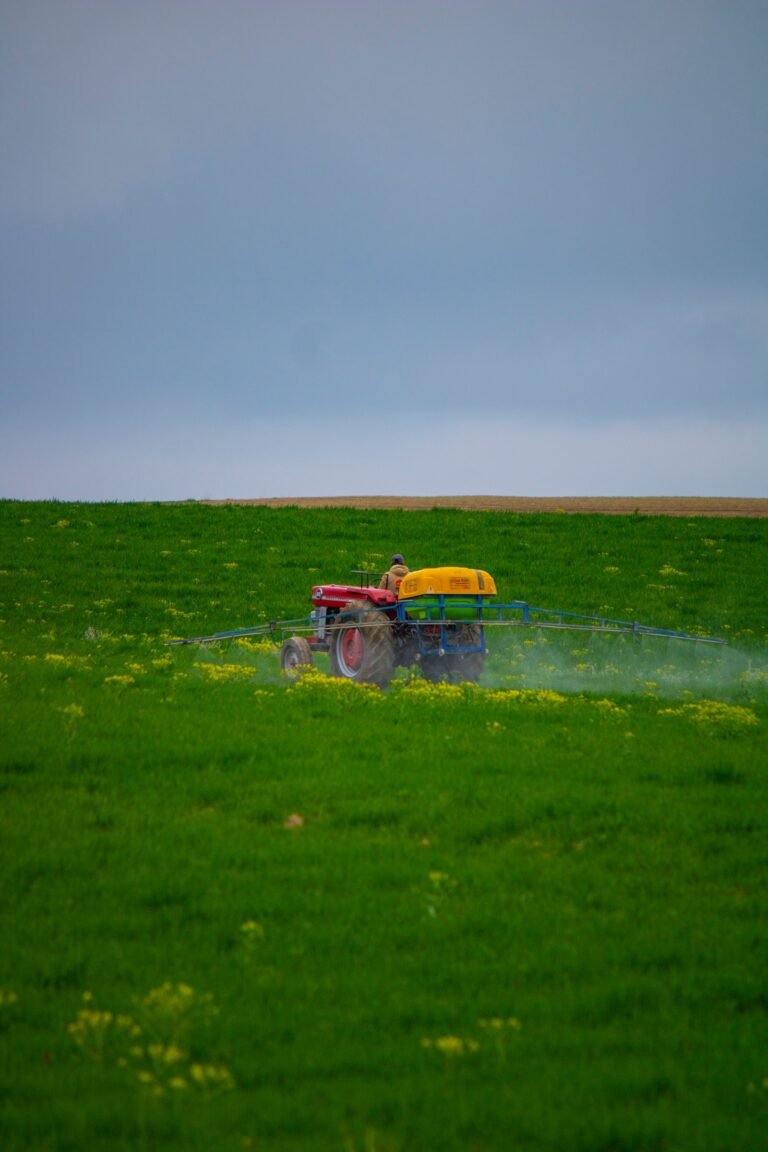
The U.S. Environmental Protection Agency defines pesticide drift as the movement of pesticide dust or droplets through the air, at the time of application or soon after, to any place other than the target area.
There are two main kinds:
- Spray drift. Fine droplets or particles blow away while the product is being sprayed.
- Vapor drift (volatilization). Some chemicals evaporate after they land and move as a gas, sometimes hours or days later.
Drift can travel past field edges, across roads and into neighborhoods. People may notice a smell, a mist or residue on cars and windows. Sometimes there is no sign at all.
How spray reaches homes and schools
Many farm towns grew up right next to fields and orchards. Homes, schools and parks may sit across a road from crops that are sprayed several times a year.
EPA lists several factors that make drift more likely:
- Wind and weather. Wind can carry droplets away. Heat and low humidity can speed up evaporation.
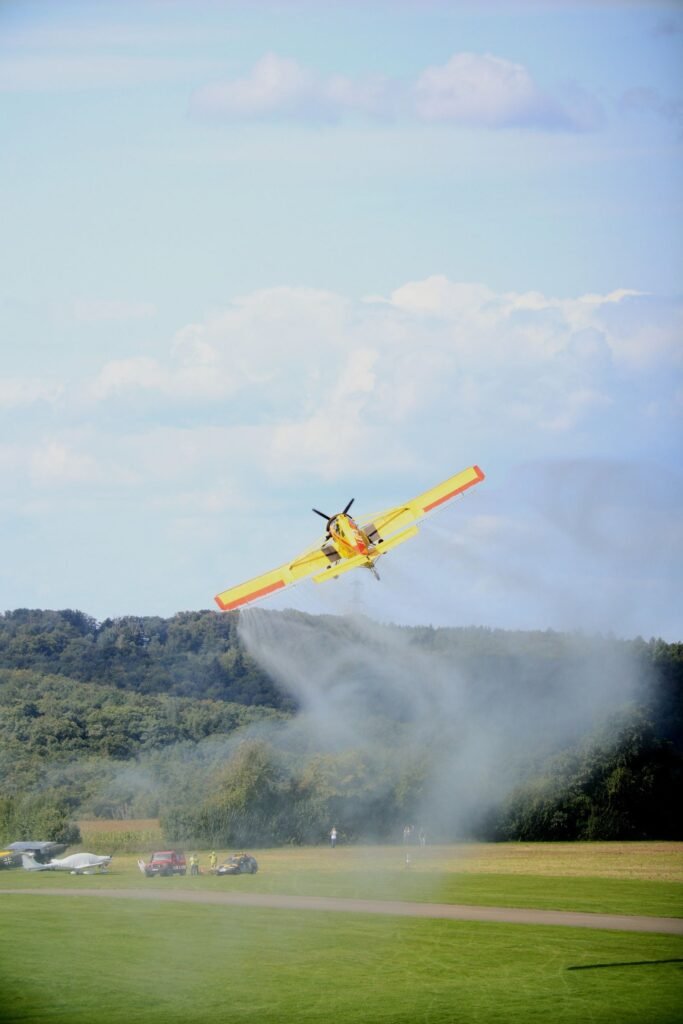
- Application method. Spraying from aircraft or airblast sprayers in orchards can send fine mist higher and farther than ground sprays aimed low.
- Equipment. Nozzle type and droplet size change how far spray travels.
- Distance. The closer a home or school is to a treated field, the higher the risk.

Near schools and playgrounds
Schools in farm areas are often surrounded by crops. Children may be outside at recess, sports practice or bus stops while nearby fields are treated. Playground equipment, grass and sand can hold residue after drift settles. Because children spend hours a day at school, a school near treated fields can be a steady source of exposure over many years.
Parents often don’t know what is being sprayed or when. Unless a state requires notice, spraying may happen early in the morning or on weekends, with no warning to families.
Inside the home
Drift doesn’t stay outside. Residue can settle on lawns, play areas and garden produce. It can be tracked indoors on shoes and clothes. Farmworkers can also carry residue home on work clothes, which is often called “take-home” exposure.
Why children are at higher risk
Children are not small adults. Their brains and bodies are still developing, and they breathe faster and put their hands in their mouths more often. They also play close to the ground, where residue collects.
For chlorpyrifos, the biggest concern has been the developing brain. California’s Department of Pesticide Regulation listed harm to fetal and childhood brain development as a primary reason for ending the chemical’s use. The state also named chlorpyrifos a toxic air contaminant, which reflects concern about exposure through the air.
Pregnancy is a key window. Exposure during pregnancy has been studied for links to lower IQ, attention problems and developmental delays.
Signs that drift may have reached you
Drift is not always visible. But people often report one or more of these signs:
- A chemical or sulfur-like smell after nearby spraying
- A fine mist or cloud moving off a field
- Residue or spots on cars, windows or outdoor furniture
- Damaged or wilted garden plants near the field edge
- Sudden symptoms in several people at once, like headaches, nausea, eye or throat irritation, or dizziness
Chlorpyrifos belongs to a class of chemicals called organophosphates. Higher short-term exposure to this class can cause symptoms such as nausea, sweating, blurred vision, muscle twitching and trouble breathing. Anyone with these symptoms after possible exposure should seek medical care right away and tell the provider about the spraying.
Long-term, low-level exposure may cause no obvious symptoms at the time. That is part of why drift concerns are hard to prove years later.
Ways to lower take-home and household exposure
If someone in your home works in fields or with pesticides, these habits may reduce what comes indoors:
- Change out of work clothes and shoes before entering the house
- Wash work clothes separately from the family’s laundry
- Shower as soon as possible after work
- Wash children’s hands and toys often, especially after outdoor play
- Rinse fruits and vegetables from gardens near fields
Chlorpyrifos and drift lawsuits
In July 2021, parents in Fresno, Kings, Madera and Tulare counties in California sued Dow, Corteva and several farm companies. News reports said the suits claimed chlorpyrifos drifted from fields and harmed children’s brains, including before birth.
Those claims are allegations, not findings. But they show how drift is at the heart of many chlorpyrifos cases. Families who never handled the chemical say they were exposed simply by living nearby.
Newer science has added another angle. A 2026 UCLA study estimated long-term exposure using past home and work addresses near treated fields. It linked the highest exposure to more than 2.5 times the risk of Parkinson’s disease.
Where chlorpyrifos can still be used
Chlorpyrifos is not fully banned in the U.S.
- California ended sales in February 2020.
- Nationwide, EPA now allows food uses on only 11 crops, including apples, citrus, cotton, peaches, soybeans, strawberries and wheat.
- In December 2024, EPA proposed revoking all other food tolerances. The EPA’s FAQ says that rule is not final.
Because some use continues, drift is not only a past problem in every state.
What to do if you think drift reached your home or school
If you notice spray drifting or strong chemical smells, these steps can help protect your family and create a record:
- Go indoors and close windows and doors. Turn off air intakes if you can.
- Wash skin and clothes that may have been exposed.
- Write it down. Note the date, time, weather, what you saw or smelled, and any symptoms.
- Take photos or video of the spraying, equipment or residue.
- Report it. Contact your county agricultural commissioner or state pesticide agency. EPA’s drift page also explains how to report drift problems.
- See a doctor if anyone has symptoms, and mention the possible exposure.
Records that may matter later
Public records can help show what was sprayed nearby. California’s pesticide use reporting data covers nearly all farm pesticide use since 1990. School records, leases and utility bills can show where you lived and when.
Getting Advance Notice to Help Lower Pesticide Drift Exposure
One of the hardest parts of living near fields is not knowing when spraying will happen. Advance notice gives families time to close windows, bring children inside and plan outdoor activities. It can be a simple way to reduce pesticide drift exposure.
SprayDays in California
California launched SprayDays California on March 24, 2025. The state describes it as a first-of-its-kind system that tells the public about scheduled applications of restricted material pesticides on farms.
- Notice is posted 48 hours before soil fumigant applications and 24 hours before other restricted material uses.
- Information is shown by one-square-mile sections on an interactive map.
- You can view the map without signing in, or sign up for email or text alerts for an address.
- Listings show the product name, active ingredient, application method and acres treated.
- Materials are available in English and Spanish.
Chlorpyrifos sales ended in California in 2020, so it should not appear there. But SprayDays can help families track other restricted pesticides near a home or school.
Outside California
Notice rules differ by state. Contact your state agriculture or pesticide agency and ask whether it offers spray notices, neighbor notification rules or a way to learn what is applied near schools.
The Application Exclusion Zone
EPA’s Worker Protection Standard also sets an Application Exclusion Zone around outdoor spray equipment on farms. People are not allowed in that zone during spraying, and handlers must pause if workers or other people are in it. If spraying continues while you are close by, write down the details and report it.
Who to Call About Pesticide Drift Exposure
In the moment, it can be hard to know where to turn. Keeping a short list of numbers on your fridge or phone can help when pesticide drift exposure happens.
- 911. For trouble breathing, seizures, fainting or other severe symptoms.
- Poison Help, 1-800-222-1222. For advice on symptoms and first aid after a possible exposure.
- National Pesticide Information Center, 800-858-7378. NPIC is a cooperative agreement between Oregon State University and EPA. Its trained staff answer pesticide questions for free, Monday through Friday.
- Your county agricultural commissioner or state pesticide agency. These offices usually investigate drift complaints.
- Your doctor or your child’s pediatrician. For follow-up care and to note the event in a medical record.
What to say when you report
Give the date, time and exact location. Describe what you saw, smelled or felt, the wind direction and any equipment you noticed. Mention anyone who had symptoms.
Ask for a complaint or case number, and write down the name of the person you spoke with. A filed report can become an official record of pesticide drift exposure.
Will reporting cause problems?
Some families worry about reporting a neighbor or an employer. Reporting a drift problem is a way to ask the agency to look into what happened. If you are a farmworker and worried about your job, you may want to ask a worker advocacy group or a lawyer about your rights first.
Keeping a Drift Diary: A Step-by-Step Record of Pesticide Drift Exposure
Drift events can blur together over months and years. A simple diary turns those memories into a clear record. It can help doctors understand symptoms and help a law firm review whether a claim may exist.

- Use one notebook or phone note. Keep every entry in the same place.
- Record the basics each time. Date, time, place and what was being sprayed, if you know.
- Note the weather. Wind direction and strength, heat and whether the air felt still.
- Describe what you noticed. Smell, mist, residue on cars or windows, or damaged plants.
- List who was there. Note which children or adults were outside or at school.
- Track symptoms. Write what symptoms appeared, when they started and how long they lasted.
- Add photos and video. Note the file name or date so you can match them to the entry.
- Record any report. Write the agency name, complaint number and any reply you got.
Even a few lines can help. A diary kept at the time is often clearer than memories pieced together later about pesticide drift exposure.
Map your home and school
Draw a simple map showing your home, your child’s school, bus stops and the nearest fields or orchards. Mark the crops and the direction of common winds. Free online maps can help you measure distances.
Keep proof of where you lived
Leases, utility bills and school enrollment papers show where your family lived and when. Keep them with your diary. In a claim involving pesticide drift exposure, proof of place and time is often as important as proof of the spray itself.
Common Myths About Pesticide Drift Exposure
Families hear a lot of advice from neighbors and online. Some of it is helpful, and some can lead people to miss real risks. Here are a few common myths about pesticide drift exposure, and what is closer to the truth.
Myth: If I cannot smell it, nothing reached us
Not every pesticide has a strong odor, and smells fade. Vapor drift can also happen hours after spraying. A missing smell does not rule out pesticide drift exposure, so other signs and records still matter.
Myth: Only farmworkers are affected
Workers often have the most direct contact. But families, students and neighbors near treated fields can also be exposed through drift and residue. Some chlorpyrifos lawsuits were filed by families who never handled the chemical.
Myth: It is only a problem on spray day
Residue can settle on yards, toys, cars and garden produce and be tracked indoors. Cleaning hands, toys and surfaces after nearby spraying may help reduce pesticide drift exposure in the days that follow.
Myth: Reporting will not make a difference
Agencies cannot look into drift they do not know about. A report creates a record, and a pattern of reports from the same area may lead to closer review. Your report may also help a doctor or law firm later.
Myth: It is too late to do anything about old exposure
Many people learn about a possible link years after the exposure. Some state deadlines start when a person learned, or should have learned, of the connection. A participating law firm may review whether past pesticide drift exposure could support a claim.
Talking With Doctors and Schools About Pesticide Drift Exposure
Doctors and schools both play a role in protecting children. Clear, specific information helps them act.
With your doctor
Tell the doctor about the possible pesticide drift exposure, even if symptoms seem mild. Bring your diary or the product name if you know it.
Timing matters for testing. According to the Agency for Toxic Substances and Disease Registry, a breakdown product of chlorpyrifos can usually be found in urine for only several days after exposure. If you are worried about a recent event, see a doctor soon.
- Ask that the exposure be written in your chart.
- Ask whether any tests make sense now, and why.
- Ask what symptoms should bring you back.
- For children, ask about developmental checkups if you have concerns.
With your child’s school
Parents can ask school leaders questions such as these:
- Does the school get notice before nearby fields are sprayed?
- Are children kept indoors during nearby spraying?
- Does the school have a plan if a strong chemical smell drifts onto campus?
- Who should parents contact to report a concern?
Share copies of any drift reports you have filed. Schools are more likely to act when they see dates, times and complaint numbers that document pesticide drift exposure near campus.
If several parents notice the same problem, a shared letter to the school or district may get faster action. Keep copies of any letters and replies.
Deadlines for legal claims vary by state and claim type, and rules for children can differ. If a child or adult now has a serious diagnosis, a participating law firm may review whether pesticide drift exposure could be part of the story.
Frequently asked questions
How far can pesticide drift travel?
It depends on the chemical, weather and method. Spray drift often affects nearby areas, and vapor drift may travel farther over time. There is no single safe distance for every case.
Can drift make my child sick?
Short-term drift can cause symptoms like eye irritation, headaches or nausea. For chlorpyrifos, research has focused on long-term harm to the developing brain. Talk to a pediatrician about concerns.
Do I have to be a farmworker to file a claim?
No. Some chlorpyrifos lawsuits were filed by families who lived near fields. A law firm may review whether a family may qualify.
Is there a deadline?
Yes. Deadlines vary by state and claim type. Rules can be different for children. Ask a lawyer about your situation.
How Direct2Attorney can help
If your family lived near fields sprayed with chlorpyrifos and a child or adult now has a serious diagnosis, Direct2Attorney can connect you with a participating law firm for a free, confidential review. Learn about chlorpyrifos claims.
Pesticide drift exposure is often invisible. Talking with a lawyer can help you understand whether your family’s story may support a claim.
Direct2Attorney is a legal marketing and referral service, not a law firm. This article is general information, not legal advice. Submitting information does not create an attorney-client relationship.