In this article (12 sections)
- The basics: negligence
- How fault is decided in common crash types
- When more than one party is responsible
- How shared fault changes a claim
- Where no-fault insurance fits in
- Evidence that helps show who was at fault
- How Insurers Investigate Car Accident Liability
- Car Accident Liability in Other Common Crash Types
- Legal Terms You May Hear About Car Accident Liability
- Mistakes That Can Weaken a Car Accident Liability Claim
- Car accident liability: frequently asked questions
- How Direct2Attorney can help
Last updated: October 2026
Car accident liability usually comes down to one question: who failed to drive with reasonable care, and did that failure cause the crash? The person or company found at fault, and their insurer, is typically responsible for the harm. But fault is often shared, and each state has its own rules for how shared fault affects a claim. Below, you will also see how insurers investigate car accident liability, how fault works in other crash types and which legal terms you may hear.
This guide explains how car accident liability actually works in general terms, from negligence to shared fault to no-fault insurance.
The basics: negligence
Most car accident claims are based on negligence. In plain terms, a negligence claim usually needs four things:
- Duty: Every driver must use reasonable care on the road.
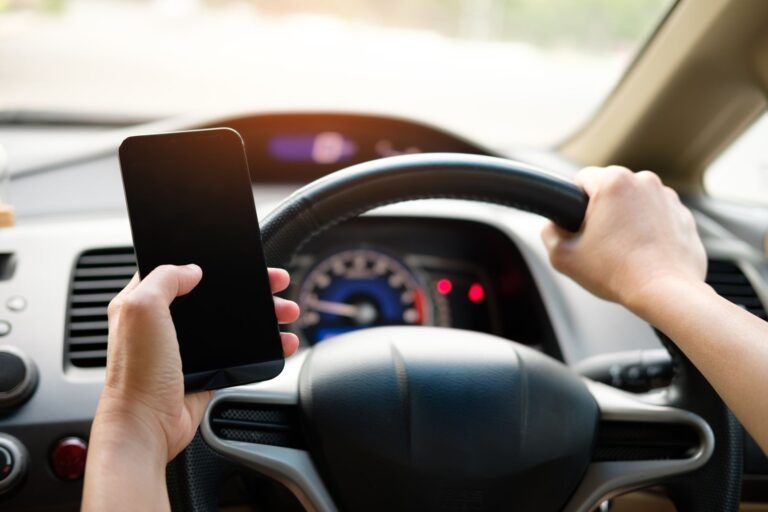
- Breach: The driver failed to do that, for example by speeding or texting.
- Causation: That failure caused the crash and the injuries.
- Damages: The injured person suffered real losses, like medical bills or lost wages.
Common examples of careless driving are well documented. NHTSA reports that speeding was a factor in 29% of traffic deaths in 2024. Distracted driving was involved in crashes that killed 3,208 people that year, and alcohol-impaired crashes killed 11,904.
How fault is decided in common crash types
There is no single formula, but some patterns come up often.
Rear-end crashes
The trailing driver is often presumed to be at fault because drivers must keep a safe following distance. That presumption can be challenged, for example if the front car stopped suddenly for no reason or had broken brake lights.
Left turns and intersections
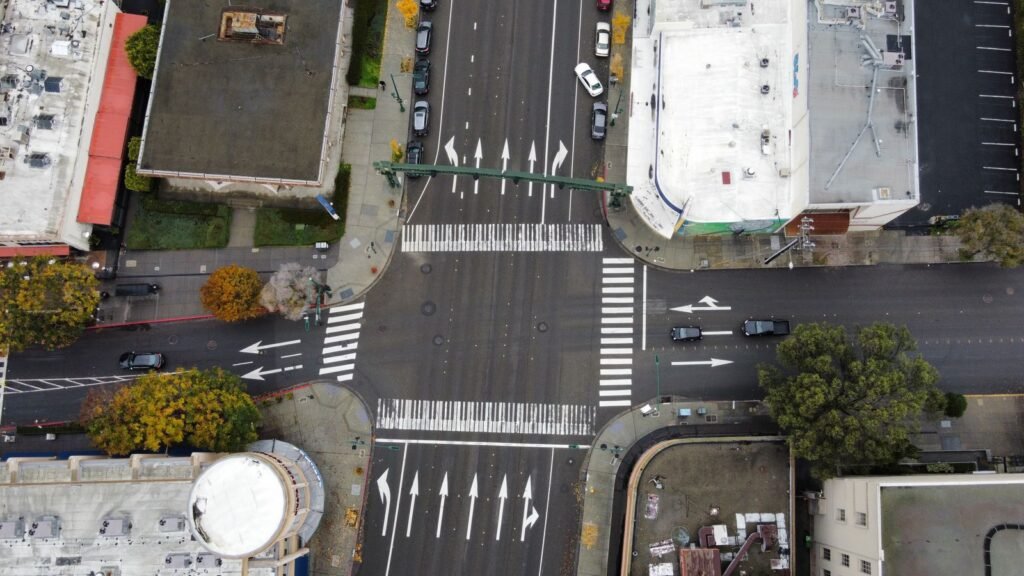
A driver turning left usually must yield to oncoming traffic. At intersections, signals, signs and right-of-way rules matter. Witness statements and camera footage can be key.
Lane changes and merges
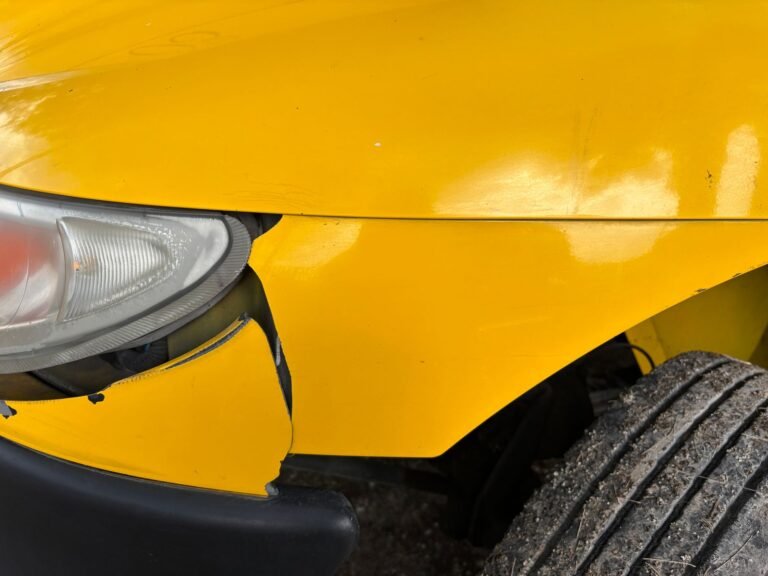
The driver changing lanes generally must make sure it is safe. Disputes often turn on who was where, and when. Blind spots, signaling and speed all come into play, and damage to the side of each car can help show the angle of impact.
Parking lots and private property
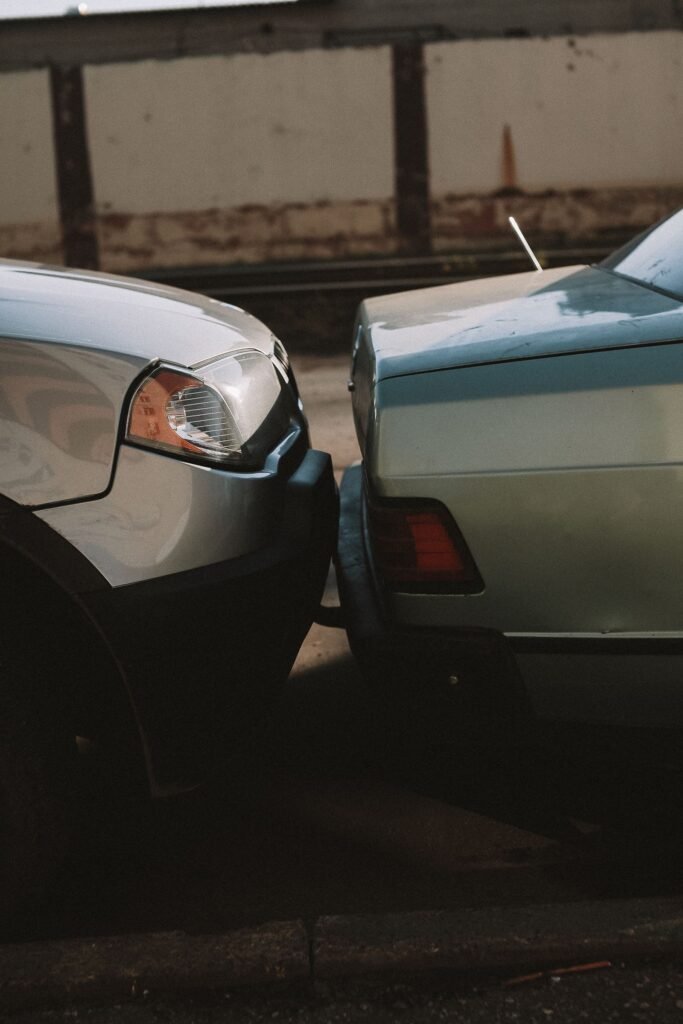
Crashes in parking lots are common and often confusing, because traffic lanes and signs may be unclear. Fault still depends on who acted carelessly, such as backing out without looking or cutting across marked spaces.
When more than one party is responsible
Liability does not always stop with the other driver. Depending on the facts, others may share responsibility:
- Employers: A company may be responsible when an employee crashes while working.
- Trucking companies: Commercial carriers must follow federal safety rules. The FMCSA’s hours-of-service rules, for example, generally limit property-carrying drivers to 11 hours of driving after 10 hours off duty. The IIHS reports that 5,340 people died in large truck crashes in 2024, and most were people in passenger vehicles.
- Vehicle or parts makers: A defect, such as faulty brakes or airbags, may create a product liability claim.
- Government agencies: A dangerous road design or missing signal may create a claim, often with short notice deadlines.
- Vehicle owners: In some states, an owner can be responsible when someone else drives their car.
- Bars or hosts: Some states allow claims against businesses that serve alcohol to visibly intoxicated people who then drive. These laws vary widely.
Finding every responsible party matters because it can open up more insurance coverage. A single driver’s policy may not be enough to cover serious injuries, while a commercial policy may have higher limits.
How shared fault changes a claim
Many crashes involve mistakes by more than one person. States handle this in different ways. Cornell’s Legal Information Institute describes three main systems.
Pure comparative negligence
Your recovery is reduced by your percentage of fault. If you were 30% at fault, your recovery is reduced by 30%. About one-third of states, including California, Florida and New York, follow this approach, according to Cornell.
Modified comparative negligence
Most states use this approach. You can recover a reduced amount only if your share of fault stays below a set limit, commonly 50% or 51%. Above that line, you may recover nothing.
Contributory negligence
Alabama, Maryland, North Carolina, Virginia and the District of Columbia follow this strict rule. If you were even slightly at fault, you may be barred from recovering, though there are limited exceptions.
These rules can change and have many exceptions. A participating law firm can explain how they apply to you.
Where no-fault insurance fits in
No-fault insurance changes who pays first, not who caused the crash. According to the Insurance Information Institute, a dozen states plus Puerto Rico have no-fault systems. In those states, your own personal injury protection (PIP) usually pays medical bills and some lost wages regardless of fault.
To bring a claim against the at-fault driver for pain and suffering in a no-fault state, you generally must meet a threshold. Some states use a “verbal” threshold based on how serious the injury is. Others use a “monetary” threshold based on medical costs. Three states let drivers choose between no-fault and traditional coverage.
Even in no-fault states, fault still matters for property damage, for claims above PIP limits and for injuries that meet the state’s threshold. So gathering evidence of who caused the crash is still worthwhile.
Evidence that helps show who was at fault
Fault is decided by evidence, not by who apologized or who seemed calmer at the scene.
- The police report, including any citations
- Photos of vehicle damage, positions and the scene
- Witness names and statements
- Traffic, doorbell, dash or business camera video
- Vehicle event data, which may show speed or braking
- Phone records, in some cases
- Medical records that link injuries to the crash
A police report is important but not final. Insurers and courts can reach different conclusions based on all the evidence.
Evidence also has a shelf life. Video can be recorded over, vehicles get repaired and memories fade. That is one reason many people seek a review soon after a crash, while evidence is easier to find.
What not to say at the scene
It is natural to say “I’m sorry” after a crash, even when you did nothing wrong. Insurers may later treat that as an admission. Instead, check on others, call for help, exchange information and stick to the facts when you speak with police.
How Insurers Investigate Car Accident Liability
After a crash, each insurance company assigns a claims adjuster. The adjuster’s job is to look into car accident liability, decide who was at fault and estimate how much the company may owe. Knowing how that review usually works can help you understand the letters and calls that follow.
What the adjuster looks at
An adjuster’s view of car accident liability is built from the same kinds of evidence a court would consider. That often includes:
- The police report and any citations
- Statements from each driver, often recorded by phone
- Witness statements, if the adjuster can reach the witnesses
- Photos of the vehicles, the road and the final resting positions of the cars
- Repair estimates that show where and how hard each car was hit
- Video from traffic cameras, dash cameras or nearby businesses
The liability decision
Once the review is done, the insurer may send a letter accepting or denying fault. In shared-fault cases, the letter may assign a percentage to each driver, such as 80% and 20%. That number is the insurer’s opinion. It is not a court ruling, and it can sometimes be challenged with new evidence.
Recorded statements
The other driver’s insurer may ask you for a recorded statement about how the crash happened. You generally do not have to give one to the other driver’s insurer, though your own policy may require you to cooperate with your own company. Many people choose to speak with a law firm first, because a casual comment can shape how car accident liability is decided.
If you disagree with the decision
Insurers do not always get car accident liability right. If an insurer blames you and you think it got the facts wrong, ask for the decision in writing and the reasons behind it. You can send new evidence, such as a witness name or video you found later. A participating law firm may also review whether the decision fits your state’s rules.
Car Accident Liability in Other Common Crash Types
The crash types covered earlier are the ones people ask about most. But many collisions do not fit neatly into those patterns. Here is how car accident liability is often analyzed in a few other situations. These are general patterns only, and the facts of each crash matter.
Chain-reaction crashes
When three or more cars collide in a row, fault can be split among several drivers. The driver who started the chain is often the focus, but a driver in the middle may also share blame if they were following too closely. Damage to the front and back of each car helps show the order of impacts.
T-bone or side-impact crashes
These often happen at intersections when one driver runs a red light or stop sign. In these cases, car accident liability usually turns on one question: who had the right of way? Signal timing, witness accounts and camera footage are often key. Where each car was damaged can also show which driver entered the intersection first.
Head-on crashes
Head-on collisions are often tied to a driver crossing the center line, so car accident liability tends to focus on which car left its lane. That may happen because of distraction, impairment, fatigue or passing unsafely. Skid marks, debris location and vehicle data can help show what happened.
Backing crashes
A driver backing up generally must make sure the path is clear. In a parking lot, both drivers may share fault if both were backing out at the same time.
Opening a car door into traffic
Many state traffic codes require drivers and passengers to check for traffic before opening a door. A person who opens a door into a cyclist or a passing car may be found at fault.
Bad weather
Rain, fog, snow and ice do not excuse careless driving. Drivers are generally expected to slow down and adjust to road conditions. A driver who keeps going too fast for the weather may still be responsible, and car accident liability can be shared if more than one driver ignored the conditions.
Pedestrians and cyclists
Drivers must use care around people walking and biking, especially in crosswalks. But a pedestrian or cyclist can share fault too, for example by crossing against a signal. Comparative fault rules decide how that shared fault affects a claim. Lighting, visibility and whether the driver was distracted are also common questions.
Legal Terms You May Hear About Car Accident Liability
Insurance letters and legal documents often use terms that are not part of everyday speech. Here are plain-language explanations of some you may see.
Negligence per se
This is when breaking a safety law counts as proof of carelessness, which can make car accident liability easier to show. According to Cornell’s Legal Information Institute, the most common use of negligence per se is traffic violations, where a driver who breaks the traffic code without an excuse is treated as having breached the duty of care. How the rule works varies by state.
Vicarious liability
This means one person or company can be held responsible for another person’s actions. A common example is an employer whose employee crashed while driving for work. Lawyers sometimes call this respondeat superior, which is Latin for “let the master answer.”
Joint and several liability
When car accident liability is shared by more than one party, some states let an injured person collect the full amount from any one of them. Other states limit each party to its own share. The rules vary widely.
Last clear chance
A few states that use contributory negligence also recognize this exception. It may allow an injured person to recover even if they were partly at fault, if the other driver had the last real chance to avoid the crash.
Sudden emergency
This defense argues that a driver faced an unexpected danger they did not cause and reacted reasonably. It usually does not apply if the driver’s own carelessness created the emergency.
Permissive use
This refers to someone driving a car with the owner’s permission. It can affect which insurance policy applies and whether the owner shares car accident liability.
Spoliation
This means losing or destroying evidence. If a party lets key evidence disappear after a claim is expected, a court may in some cases allow a jury to assume the evidence would have hurt that party.
Comparative fault
This is the general name for systems that reduce a recovery based on each person’s share of fault. Your state’s version decides how a shared finding of car accident liability affects what you may recover, as explained in the shared-fault section above.
Preponderance of the evidence
This is the usual standard of proof in civil cases. It means “more likely than not.” You do not have to prove car accident liability beyond a reasonable doubt, as in a criminal case.
Mistakes That Can Weaken a Car Accident Liability Claim
Even a clear case of car accident liability can become harder to prove if important steps are skipped. These are some of the most common mistakes people make, and how to avoid them.
- Not calling police: A police report is often the first record of what happened. If officers do not come to the scene, ask how to file a report yourself.
- Leaving without witness names: Witnesses can be hard to find later. Ask for a name and phone number, even if they only saw part of the crash.
- Repairing the car before photos: Once a car is fixed, the damage pattern is gone. Take clear photos of every side of each vehicle first.
- Waiting to ask for video: Many cameras record over old footage. Ask nearby businesses, homeowners and transit agencies about video as soon as you can.
- Guessing on the phone: Saying “I think I was going about 40” can come back later. If you are not sure, say you are not sure.
- Assuming the police report settles it: Police reports can contain errors. If yours does, ask the agency how to request a correction or add a statement.
- Delaying medical care: Insurers may argue that a gap in treatment means the crash did not cause your injuries.
- Talking about fault on social media: Posts and comments can be used to argue that you admitted fault.
None of these mistakes automatically ends a claim. But each one can make car accident liability harder to show. If you are unsure what to do next, a participating law firm may review your situation and explain the options under your state’s rules. Filing deadlines vary by state and claim type, so it helps to ask early.
Car accident liability: frequently asked questions
Does the police report decide who is at fault?
No. It is strong evidence, but insurers and courts make their own decisions. Police reports can contain errors.
Can I recover if I was partly at fault?
In many states, yes, but your recovery may be reduced. In contributory negligence jurisdictions, even slight fault can bar recovery.
Who pays if the at-fault driver was working?
An employer may share responsibility if the driver was acting within the scope of the job. Commercial insurance may apply.
Does no-fault mean nobody is to blame?
No. It means your own insurance pays certain benefits first. Fault can still matter for claims beyond those benefits.
How Direct2Attorney can help
Understanding car accident liability can help you make informed choices. Direct2Attorney can connect you with a participating law firm that may review who may be responsible in your crash. Visit our motor vehicle accident page to see if you may qualify for a free case review.
Direct2Attorney is a legal marketing and referral service, not a law firm. This article is general information, not legal advice. Submitting information does not create an attorney-client relationship.