In this article (15 sections)
- Correcting the record: was 2025 a record low?
- Distracted driving: the latest numbers
- Why the real toll is probably higher
- What states are doing about it
- How distraction can affect an injury claim
- What the numbers mean for drivers
- The Three Kinds of Distraction Behind Distracted Driving Deaths
- Distracted Driving Deaths Outside the Car
- Talking With Teen Drivers About Distracted Driving Deaths
- Simple Habits That Help Prevent Distracted Driving Deaths
- Common Myths About Distracted Driving Deaths
- Driving for Work and Distracted Driving Deaths
- For Families Coping With Distracted Driving Deaths
- Distracted driving deaths: frequently asked questions
- How Direct2Attorney can help
Last updated: October 2026
U.S. traffic deaths fell sharply in 2025, but they did not hit a record low. NHTSA’s early estimate shows about 36,640 people died in 2025, down 6.7% from 2024, and the fatality rate dropped to 1.10 deaths per 100 million miles driven. That is the second-lowest rate on record, behind 2014. Distracted driving, meanwhile, remains a stubborn problem that the latest data shows is falling more slowly than deaths overall. Behind the national numbers are real families, and the federal data show distracted driving deaths remain a stubborn problem even as overall road deaths fall.
Here is what the 2025 numbers really say, and why distraction still deserves attention.
Correcting the record: was 2025 a record low?
Not quite. In an April 2026 announcement, the U.S. Department of Transportation’s headline used the phrase “record-low,” but the release itself says 2025 had the second-lowest fatality rate in recorded history. NHTSA’s report puts it plainly: the 1.10 rate ranks behind only the 1.08 rate seen in 2014.
The total number of deaths was not a record low either. NHTSA says the estimated drop brings fatalities back to prepandemic levels seen in 2019. Still, the progress is real:
- About 36,640 estimated deaths in 2025, down from 39,254 in 2024
- The fourth quarter of 2025 was the 15th straight quarterly decline, starting in the second quarter of 2022
- The drop happened even though Americans drove about 0.9% more miles
These are early estimates. NHTSA’s final 2025 counts come later and can change. For comparison, NHTSA’s final count for 2024 was 39,254 deaths, a 4.3% decrease from 41,025 in 2023.
The National Safety Council, which counts deaths a little differently, reached a similar conclusion. Its preliminary estimates show deaths down again in the first half of 2026, by about 2% compared with the same period in 2025. That suggests the trend continued, though at a slower pace.
Distracted driving: the latest numbers
Distraction data lags a year behind. The most recent full-year figures are for 2024. NHTSA reports that 3,208 people were killed and 315,167 were injured in crashes involving distracted drivers that year.
NHTSA’s 2024 overview shows why the title’s point still stands. Total traffic deaths fell 4.3% from 2023 to 2024. Deaths in distraction-affected crashes fell only 2.3%. In other words, distraction improved more slowly than roads overall.
That is the heart of the problem. Safer vehicles, better roads and fewer crashes on the whole helped pull total deaths down. But the behavior of looking at a screen instead of the road has not changed at the same rate. Distraction is also a factor in far more injury crashes than fatal ones, which is why the injury count is so large compared with the number of deaths.
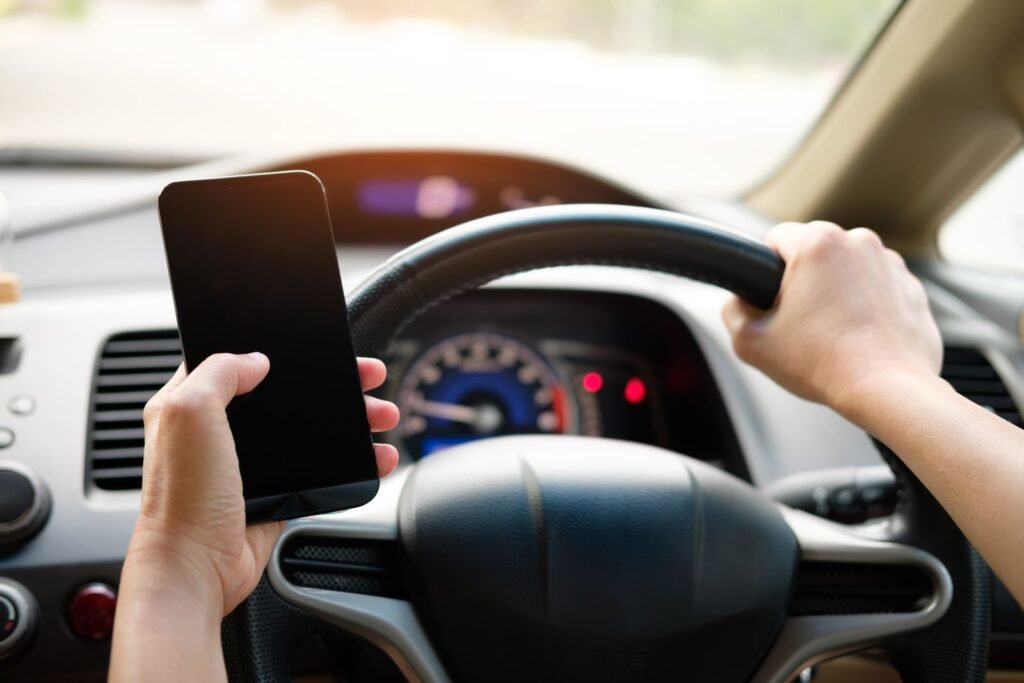
NHTSA defines distracted driving broadly. It includes talking or texting on a phone, eating and drinking, talking to passengers, and adjusting the stereo, entertainment or navigation system. Anything that takes attention away from driving counts.
Why the real toll is probably higher
The IIHS says statistics based on police reports “almost certainly underestimate” distraction’s role in fatal crashes. Drivers often do not volunteer that they were on a phone, and there is usually little other evidence.
IIHS research also found:
- Crash risk was 2 to 6 times greater when drivers were handling a cellphone.
- Distraction contributed to 8% of crash deaths in 2024, with cellphone use noted in about 437 deaths, based on police reports.
- Phone conversations can cause “inattention blindness,” where a driver’s eyes are on the road but the brain is not processing what it sees.
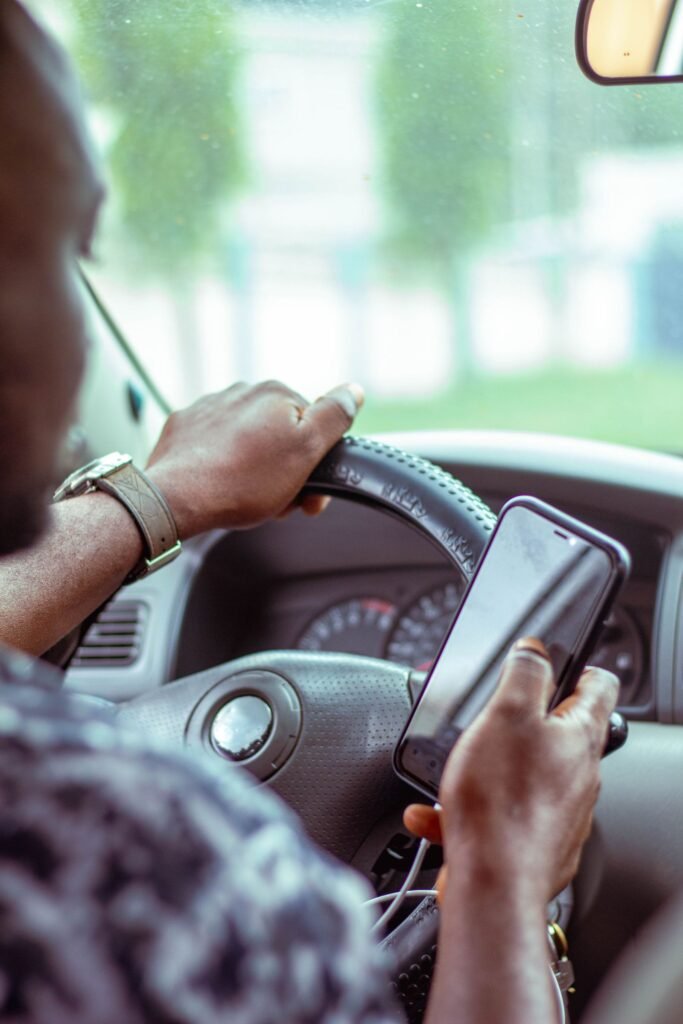
NHTSA puts the risk in simple terms. Reading or sending a text takes your eyes off the road for about 5 seconds. At 55 mph, that is like driving the length of a football field with your eyes closed.
What states are doing about it
According to the IIHS, 32 states and the District of Columbia ban hand-held calls and texting for all drivers. IIHS notes that results vary. Rear-end crash rates dropped significantly in Oregon and Washington after broad bans, but not in California. The wording of each law and how it is enforced matter.
Technology may help too. IIHS research shows drivers keep their eyes on the road for a greater share of the time when using voice commands instead of their hands. However, adoption of phone features that block notifications while driving has been low. A 2020 IIHS study found only about 20% of iPhone owners had Apple’s Do Not Disturb While Driving feature turn on automatically.
NHTSA’s national “Put the Phone Away or Pay” campaign ran in April 2026, pairing public messaging with law enforcement.
How distraction can affect an injury claim
If a distracted driver hits you, distraction can be important evidence of fault. Showing it is not always easy.
Evidence that may point to distraction
- Witness statements that the driver was looking down or holding a phone
- The police report, including any citation
- Phone records, which usually require a formal legal request
- Vehicle data or dash camera footage
- Video from nearby traffic or business cameras
Phone records and vehicle data are often obtained during a lawsuit through the discovery process. Video can be overwritten quickly, so early action helps.
Fault rules still apply
Even when the other driver was distracted, an insurer may argue you share some blame. How shared fault affects recovery varies by state. Most states reduce a recovery by your share of fault. A few jurisdictions follow stricter rules that can bar recovery if you were partly at fault.
What the numbers mean for drivers
The 2025 decline is encouraging, and NHTSA’s data shows it happened across a year of slightly more driving. But a falling total does not mean every risk is shrinking. Distraction, speeding and impaired driving remain leading factors in serious crashes. NHTSA reports 11,288 speeding-related deaths in 2024, and 11,904 people died in alcohol-impaired crashes that year.
Simple habits can help: put the phone out of reach, set navigation before you drive, and use do-not-disturb features. Passengers can help too, by handling calls, texts and directions so the driver does not have to. Parents of teen drivers can set clear phone rules and model them.
If you are hurt by a driver who was on a phone, the steps you take early, such as getting medical care, noting witnesses and asking about nearby cameras, can make it easier to show what happened.
The Three Kinds of Distraction Behind Distracted Driving Deaths
Distraction is not only about phones. The CDC describes three main types of distraction, and each one plays a part in distracted driving deaths.

- Visual: taking your eyes off the road
- Manual: taking your hands off the wheel
- Cognitive: taking your mind off driving
Some tasks involve just one type. Changing a song with a quick glance is mostly visual. Others involve all three at once. Reading or typing a text uses your eyes, your hands and your attention together.
NHTSA puts the risk in simple terms. Sending or reading a text takes your eyes off the road for about 5 seconds. At 55 mph, that is like driving the length of a football field with your eyes closed.
Distractions people often overlook
- Talking with passengers, especially in a tense or emotional conversation
- Eating or drinking while driving
- Adjusting the stereo, climate controls or navigation screen
- Reaching for something on the floor or in the back seat
- Daydreaming or thinking hard about something else
NHTSA defines distracted driving as any activity that diverts attention from driving. That broad view helps explain why distracted driving deaths are hard to count. Many of these distractions leave no trace after a crash.
Distracted Driving Deaths Outside the Car
When people think about distracted driving deaths, they often picture the distracted driver. But many of the people killed were never in that car.
The CDC reports that in 2019, about 1 in 5 people who died in crashes involving a distracted driver were not in vehicles. They were walking, riding bikes or otherwise outside a vehicle. The same CDC page says nine people in the United States are killed every day in crashes reported to involve a distracted driver.
Why people outside the car face more risk
- They have no seat belt, airbag or vehicle frame to protect them.
- A driver looking at a phone may not see someone in a crosswalk or bike lane.
- Turning drivers who glance away can miss a person stepping off the curb.
For families, this can be one of the hardest parts. A loved one may have done everything right, like crossing with the signal or riding in a bike lane, and still been hit. Distracted driving deaths of walkers and riders are a reminder that every driver’s attention protects people they may never meet.
Talking With Teen Drivers About Distracted Driving Deaths
Young drivers are especially at risk. The CDC says that in fatal crashes in 2019, a higher percentage of drivers ages 15 to 20 were distracted than drivers 21 and older. Talking about distracted driving deaths before a teen gets the keys can help.

Ideas for the conversation
- Keep it real, not scary. Share facts, like the 5-second texting example, instead of graphic stories.
- Set clear rules. The CDC suggests parents set consequences for distracted driving.
- Model the behavior. The CDC also says parents can set an example by keeping their eyes on the road and hands on the wheel.
- Make a family pledge. NHTSA encourages families to sign a distraction-free driving pledge together.
- Plan for passengers. Talk about how friends in the car can be a distraction, and how to ask them to stay quiet in heavy traffic.
A simple family driving agreement
Some families write a short agreement. It might include phones in the glove box or on “do not disturb,” no eating while driving, and a promise to call for a ride without any questions asked. Review it every few months as your teen gains experience.
Teens also respond to peers. NHTSA suggests teens speak up when friends drive distracted. Giving your teen simple words to use, like “I’ll text for you,” can make speaking up easier.
Simple Habits That Help Prevent Distracted Driving Deaths
Most distracted driving deaths come down to a few seconds of lost attention. Small habits, repeated on every trip, can help keep those seconds from happening.
Before you start the car
- Set your navigation, music and climate controls while parked.
- Turn on your phone’s driving or “do not disturb” mode.
- Put your phone out of reach, such as in the back seat or glove box.
- Eat before you leave, or wait until you stop.
While you drive
- Let a passenger handle calls, texts and directions.
- If something needs your attention, pull over in a safe place first.
- Keep conversations calm. If a talk gets heated, it is okay to pause it until you arrive.
- Secure pets and loose items so you do not need to reach for them.
When you are the passenger
Passengers can help too. Offer to read messages, change the music or watch for the exit. If a driver is using a phone, you can say something simple like, “I can answer that for you.”
These habits may feel small. But NHTSA reminds drivers that any non-driving activity is a potential distraction and raises the risk of crashing.
Common Myths About Distracted Driving Deaths
Many people believe distracted driving deaths happen to other drivers, not to them. A few common myths make the risk seem smaller than it is.
- “I only look at my phone at red lights.” Drivers who are still reading when the light changes may roll into a crosswalk or miss a cyclist.
- “Hands-free means risk-free.” Hands-free use removes the manual distraction, but the CDC lists cognitive distraction, taking your mind off driving, as its own type.
- “It’s just a quick glance.” NHTSA’s 5-second example shows how far a car travels in a short look away.
- “I’m a good multitasker.” Driving takes full attention. NHTSA says you cannot drive safely unless the task of driving has your full attention.
- “Most distracted driving deaths are on highways.” Distraction can be deadly anywhere, including neighborhood streets with people walking and biking.
Knowing these myths can help you have better talks with family and friends. Many distracted driving deaths begin with a habit that felt harmless.
Driving for Work and Distracted Driving Deaths
Many people drive as part of their job, such as delivery drivers, sales staff and home health workers. Work calls, delivery apps and tight schedules can all add pressure to check a phone.
What workers can do
- Ask your employer whether it has a written policy on phone use while driving.
- Let clients and coworkers know you will not answer while driving.
- Plan routes and stops before you start.
What employers can do
- Set clear rules that calls and messages wait until the driver is parked.
- Avoid schedules that push drivers to respond on the road.
- Share NHTSA and CDC safety materials with staff.
When a crash happens during work driving, the rules about who may be responsible can be different. A participating law firm can explain how this works in your state after distracted driving deaths or serious injuries.
For Families Coping With Distracted Driving Deaths
Losing someone in a crash caused by a distracted driver is a sudden and painful loss. Families often face grief, anger and many questions at the same time. There is no right way to feel.
Getting support
- Grief counselors and support groups can help family members of all ages.
- Many victim services offices, often connected to a police department or prosecutor’s office, offer help to families after a fatal crash.
- Children may need extra support at school. A school counselor can help.
Understanding the legal side
After distracted driving deaths, there may be both a criminal case and a civil case. A prosecutor decides whether the driver faces charges. Separately, family members may be able to bring a wrongful death claim seeking compensation for their loss.
- Who can file a wrongful death claim is set by state law. It often includes a spouse, children or parents, but the rules vary.
- Deadlines vary by state and claim type. Some are short, so it helps to ask early.
- A civil claim does not depend on criminal charges or a conviction.
A participating law firm may review whether a claim is possible and explain how the process works in your state. Taking that step is a personal choice, and you can take time to decide.
Some families also find meaning in safety work after distracted driving deaths, such as speaking at schools or sharing a loved one’s story during April’s Distracted Driving Awareness Month. Others prefer privacy. Both choices deserve respect.
Distracted driving deaths: frequently asked questions
Did traffic deaths hit a record low in 2025?
No. NHTSA estimates about 36,640 deaths, a 6.7% decline. The 1.10 fatality rate is the second lowest on record, behind 2014.
How many people die from distracted driving each year?
NHTSA reports 3,208 deaths in distraction-affected crashes in 2024, the latest full year available. The IIHS says police data likely undercounts the real number.
When will 2025 distracted driving data be released?
NHTSA usually publishes detailed category data after its final annual count. Check NHTSA’s distracted driving page for updates.
Can I make a claim if a distracted driver hit me?
You may have a claim if another driver’s carelessness caused your injuries. Results depend on the facts, the evidence and your state’s rules.
How Direct2Attorney can help
If a distracted driver injured you, Direct2Attorney can connect you with a participating law firm that may review your situation at no cost. Visit our motor vehicle accident page to learn more. Traffic deaths may be falling, but distracted driving still hurts thousands of families each year.
Direct2Attorney is a legal marketing and referral service, not a law firm. This article is general information, not legal advice. Submitting information does not create an attorney-client relationship.