Direct2Attorney is a legal marketing & referral service, not a law firm and not a substitute for legal advice.
Eligibility
You may qualify if these describe your crash. These are the general guidelines participating law firms use when they review a motor vehicle accident lawsuit or injury claim. For official road safety information, see NHTSA’s road safety resources.
In a car, truck, motorcycle, bicycle or bus, or as a pedestrian. Any road user hurt by someone else’s driving.
Another driver, a company or a government entity. Partly is enough. They do not need to be entirely to blame.
An ER visit, urgent care or your own doctor. A medical record made soon after the crash matters a great deal.
Most states allow one to three years. Claims involving a government vehicle can be far shorter.
A police report, photos, witness details or dashcam video. A firm can help get records you do not have.
Semi-trucks, delivery vans, buses and work vehicles bring employer liability and much larger insurance policies into play.
Think it was partly your fault?
Most states still allow you to recover, reduced by your share of the blame. It is one of the most common reasons people never call, and one of the least justified.
Meeting these guidelines does not mean you have a valid claim. It means a participating law firm is likely to review it, and that firm decides on its own whether to take your case. Direct2Attorney cannot judge the legal merits of your case, give legal advice, or file anything for you.
What tends to complicate a claim, and why it is worth asking anyway
Some situations make a claim harder. Many of them can be worked around, depending on your state’s laws.
What holds people back
People assume any share of blame ends the claim.
What is true
Under comparative negligence rules, your recovery is reduced by your share of fault. Some states bar recovery once you are more than 50% at fault, and a few apply stricter rules. Being 100% at fault usually does end a claim, but that is less common than people think.
What holds people back
Many people skip care at the scene, then hurt for days.
What is true
Serious injuries often show no symptoms at first. Get checked now, even if it is days later. Some states start the clock when you knew, or should have known, about the injury.
What holds people back
An offer can feel like the end of the road.
What is true
Quick settlements favor the insurer. Signing a release usually waives your right to more money later, even if your condition gets worse. Get advice before you sign anything.
What holds people back
People assume there is no one to pay.
What is true
Uninsured or underinsured motorist coverage on your own policy may pay. If a commercial vehicle was involved, the employer may also be liable. Many people do not realize they carry this protection.
The basics
A motor vehicle accident claim is a legal action brought by someone hurt in a traffic crash because of another party’s negligence, recklessness or wrongful conduct. Negligence simply means someone failed to take the care a reasonable person would.
An insurance claim and a lawsuit are not the same thing. An insurance claim is handled directly with an insurer. A personal injury lawsuit is filed in civil court and can seek the full scope of your losses: medical costs, lost income, pain and suffering, and long-term care.
Insurance settlements are often lower than what a negotiated lawsuit or a court can produce. That gap is the reason these claims exist. According to NHTSA data, roughly 2.5 million people are injured in U.S. traffic crashes each year, across close to 6.1 million reported non-fatal crashes.
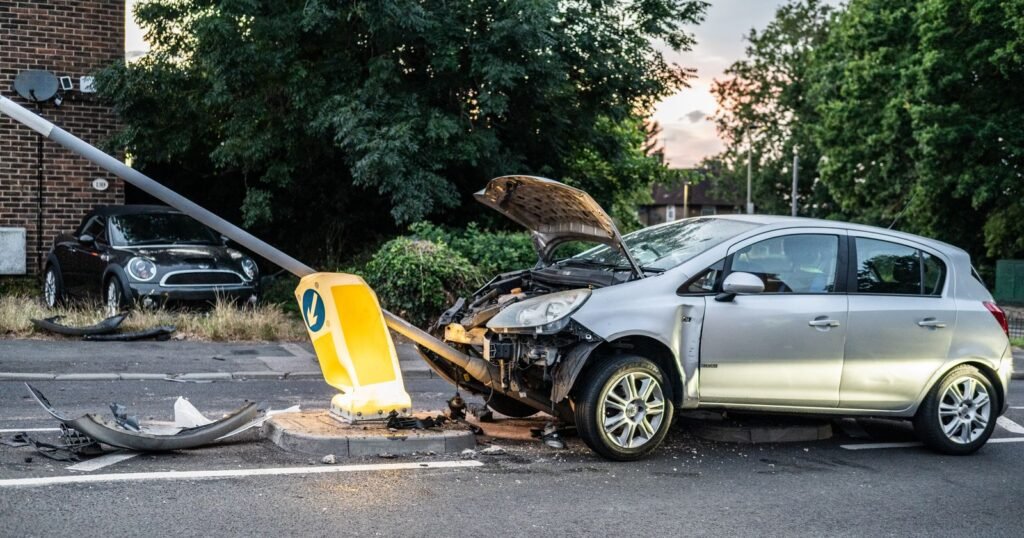
How a claim usually moves
Insurance claim first
Most claims start with the at-fault driver’s insurer, and many settle there.
Negotiation
A firm gathers records and pushes back on low offers.
Lawsuit if needed
If the insurer will not pay fairly, the firm can file in civil court before the deadline.
| Accident or injury type | Reported range | What drives the value |
|---|---|---|
| Minor soft-tissue injuries | $15,000 – $35,000 | Medical bills, lost wages, how long recovery took |
| Moderate injuries, such as fractures or herniated discs | $35,000 – $150,000 | Surgery, physical therapy, time off work |
| Serious injuries: brain, spinal cord, multiple surgeries | $150,000 – $500,000+ | Permanent disability, long-term care, lost earning capacity |
| Commercial truck accidents | ~$2,750,000 median | Federal carrier rules, employer liability, large policies |
| Pedestrian or cyclist struck | ~$4,300,000 median | Catastrophic injury, government or corporate defendant |
| Wrongful death | Varies widely | Lost financial support, survivors’ loss, dependent children |
Ranges drawn from publicly reported 2026 data including ConsumerShield (April 2026), a DK Law Q1 2026 settlement dataset, Mattiacci Law (June 2026) and Prainito Law (March 2026). These are general awareness figures, not offers, guarantees or predictions. Individual results vary enormously with injury severity, available coverage, fault and evidence.
How crashes happen, in plain words
Most crashes come down to a driver’s choice. The cause matters, because it shapes who is at fault and how strong a claim is. Statistics are from NHTSA (2023) and IIHS (June 2024).
Roughly 8% of traffic deaths in 2023, about 3,300 lives. Texting and phone use create strong negligence arguments.
About 30% of U.S. traffic deaths, one death every 42 minutes. It may open the door to punitive damages.
A factor in nearly 30% of fatal crashes in 2023, claiming 11,775 lives. Often shown in police reports and vehicle data recorders.
Officially linked to 633 deaths in 2023, and widely believed to be underreported.
Red-light running alone caused 1,149 deaths and over 107,000 injuries in 2022. Unsafe lane changes and tailgating are also common, and often caught on dashcam.
Hours-of-service breaches, poor loading, bad maintenance and negligent hiring can make the trucking company liable as well as the driver.
Feel fine? Get checked anyway
Serious injuries, such as a head injury or internal bleeding, often show no early symptoms. A prompt medical record protects both your health and your claim.
Treatment and recovery
Treatment depends on the injury. Each visit also leaves a record, and those records later show what the crash cost you.
General information only. Your doctors decide your treatment. If the crash was recent and anyone is hurt, call 911.
Right away
An ER or urgent care visit to check for broken bones, head injury and internal injuries, even if you feel fine.
Finding the problem
X-rays, CT or MRI scans can find fractures, herniated discs and brain injuries that are not visible.
Healing
Exercises and hands-on care to restore movement and strength. Recovery often takes weeks or months.
Serious injury
Fractures, spinal injuries and torn tissue may need surgery, followed by rehab.
Head injury
Rest, follow-up visits and sometimes specialist care for memory, focus or balance problems.
The hidden cost
Anxiety, trouble sleeping or fear of driving are common after a crash. Counseling can help, and it is part of what a claim covers.
Quick self-check
If you can say yes to most of these, it is worth asking for a free review.
Were you hurt in a crash as a driver, passenger, rider, cyclist or pedestrian?
Was another driver, company or public agency at least partly to blame?
Did you get medical care for your injuries?
Did the crash happen within the last few years?
Requirements
You do not need any of this to start. A firm collects it for you. But every claim is built on these four things.
Someone else was careless
Police report, photos or witnesses.
You were injured
Medical records from soon after.
It cost you something
Bills, lost pay, repair costs.
Filed in time
Each state sets its own deadline.
Compensation
Damages fall into two groups: economic losses you can measure, and non-economic losses that are real but harder to put a number on.
No one can tell you what your claim is worth before reviewing it, and no one can promise you will recover anything. Settlement ranges on this page are historical figures reported by third parties for general awareness. They are not offers, guarantees or predictions, and they do not reflect the value of any individual claim. Comparative fault rules, damage caps, no-fault requirements and filing deadlines all differ by state. Past results do not guarantee or predict a similar outcome in any future case. Attorney fees, case costs, medical liens and any required repayment to health insurers come out of any recovery.
The process
Most car accident cases end in a settlement, not a trial. Here is how a typical claim moves and roughly how long each stage takes. Timing varies with your state, your injuries and the insurer.
Step 1 · Weeks to months
Your lawyer collects the police report, photos, witness statements and medical records. Many wait until your treatment levels off, so the full cost of the injury is known before asking for money.
Step 2 · About 1 to 3 months
A demand letter goes to the at-fault driver’s insurer listing medical bills, lost wages and pain and suffering. The insurer accepts, makes a counteroffer or denies the claim.
Step 3 · Before your state’s deadline
If no fair offer comes, a complaint is filed in court. The other side is served and gets a set time to respond, usually a few weeks depending on the state.
Step 4 · Often 6 to 12 months
Both sides exchange documents, answer written questions (interrogatories) and give sworn testimony in depositions. Medical experts may review your injuries.
Step 5 · Any time before trial
Most car accident cases settle, often during or after discovery. A neutral mediator may help both sides agree on a number.
Step 6 · A year or more after filing
If the case does not settle, a judge or jury decides fault and damages. Either side can appeal, which adds more time.
The Insurance Research Council found the average auto bodily injury claim payment rose from about $14,000 in 2017 to more than $20,000 in 2022. That average mixes minor and serious injuries, so it says little about any single claim. Severity of injury, available insurance and fault split matter far more.
Being sued instead? If another driver is suing you after a crash, contact your auto insurer right away. Most liability policies provide a defense lawyer. This page is for people who were hurt and want to know whether they have a claim.
After a crash
If the accident was recent, the first steps are yours. After that, a firm takes over.
If anyone is hurt or the crash is serious, call 911 right away. Move somewhere safe if you can. Do not admit fault. Even an apology can be used against you later.
Photograph the vehicles, plates, road, skid marks, signs and your injuries. Get contact details from every driver, passenger and witness. Note the exact time and place.
Even if you feel fine. Serious injuries often show no early symptoms, and a prompt record protects your health and your claim.
Tell your own insurer the basic facts. Then take two minutes here. A participating firm handles the adjusters and builds the claim, and you never have to accept an offer you do not want.
READY WHEN YOU ARE
Step 1 takes about two minutes.
Filing deadlines
Most states give you two years from the date of a crash to file an injury claim. Twenty-six states use that two-year rule. The full national range runs from one year to six years, and a few states apply a different rule to motor vehicle claims.
Many injuries do not show up right away. If a herniated disc or head injury only became clear weeks later, some states start the clock when you knew or should have known, not on the day of the crash.
If someone died, that deadline usually starts on the date of death, not the date of the crash. Tennessee is a notable exception where it can run from the injury instead.
If a city bus, public vehicle or government agency is involved, written notice can be due in as little as 90 days to 6 months, long before the usual deadline.
For someone hurt as a minor, the clock is usually paused until they turn 18. Rules differ by state, and a parent’s own claim may run on the shorter schedule.
General injury deadline by state
General personal-injury rule only. Your claim type may follow a different deadline.
Insurance negotiations do not pause any of this. A claim can be in active talks with an adjuster and still expire. This is general information, not legal advice, and it is not a calculation of your deadline. Only an attorney licensed in your state can determine the deadline that applies to you.
Not sure whether your time has run out?
Most people guess, and many guess wrong in the direction that costs them. Finding out takes about two minutes and costs nothing.
The no-fee promise
Participating firms typically handle motor vehicle accident cases on contingency. The fee is a percentage of any recovery. If there is no recovery, no attorney fee is owed.
What that covers
What to ask about
Fee arrangements are set by the law firm you sign with, not by Direct2Attorney, and vary between firms and states.
Why people use us
No upfront fees
The review is free. Participating firms work on contingency, so a fee is owed only out of a recovery. No recovery, no attorney fee.
Firms in your state
Fault rules, damage caps and deadlines are state law. We match you with a firm licensed where your crash happened.
Fast response
Most people hear back within a day. Evidence is easiest to secure early, while records and memories are fresh.
Private and secure
Your information is encrypted and handled according to our Privacy Policy. You are never obligated to move forward.
What Direct2Attorney is
A legal marketing and referral service. We check whether your situation matches what participating law firms are looking for, and connect you with one of them if it does.
What Direct2Attorney is not
We are not a law firm. We cannot give you legal advice, represent you, or file anything on your behalf. Only a law firm you sign with can do that.
Firms are reviewing new crash injury claims
Statutes of limitations vary by state, and some run as little as one year. The sooner you speak to an independent law firm about a motor vehicle accident lawsuit, the more evidence is still available to build your claim. The review takes about two minutes, costs nothing, and commits you to nothing.
What happens after you ask
We check your answers
Usually the same business day
A participating firm may call you
At the time you choose
You decide what comes next
No cost and no obligation, ever
Questions
Still have a question? Ask it on the call. The review is free, and there is no obligation.
Start my free review →You may have a personal injury claim if another party’s negligence caused or contributed to your accident and you were injured as a result. Common grounds include distracted driving, drunk driving, speeding, running red lights and unsafe lane changes. A participating law firm can review whether the facts of your crash support a claim in your state.
In most states you can still recover even if you were partly at fault. Under comparative negligence rules your recovery is reduced by your percentage of fault. Some states bar recovery once you are more than 50 percent at fault, and a few still apply stricter rules. Being partly to blame is not a reason to skip the review.
Statutes of limitations vary by state and most run one to three years from the date of the accident. Claims against government entities can carry far shorter notice deadlines, sometimes as little as 90 days. If a deadline passes you may permanently lose the right to bring a claim, so it is worth checking early.
In most cases not before getting advice. First offers are typically designed to close a claim quickly and cheaply, often before the full extent of an injury is known. Signing a release waives your right to additional compensation later, even if your condition worsens or new costs appear.
The case review through Direct2Attorney is free and carries no obligation. Participating law firms typically handle motor vehicle accident cases on contingency, meaning their fee is paid only out of a recovery, usually as a percentage. If there is no recovery, no attorney fee is owed.
If the other driver is uninsured or underinsured, your own auto policy may include uninsured or underinsured motorist coverage that can compensate you. If a commercial vehicle was involved, the employer or trucking company may also be liable. Many people do not realize they carry this protection.
Often yes. Your own uninsured motorist coverage may apply to hit-and-run accidents, and some states operate funds that compensate victims of unidentified drivers. File a police report immediately after a hit and run, because it is typically required to access that coverage.
Yes. Serious injuries, including head injuries and internal injuries, often show no symptoms at first. A prompt medical visit protects your health. It also creates a record that links your injury to the crash, which matters a great deal if you later make a claim.
Generally, no. You are usually not required to give a recorded statement to the other driver’s insurance company, and what you say can be used to reduce your claim. You should still report the crash to your own insurer with the basic facts. If you are unsure, ask a participating law firm before you speak to an adjuster.








Learn more
More lawsuit research and settlement guides from our partner TortAdvisor ↗