
In this article (8 sections)
- Why Proof Matters in a Paraquat Exposure Lawsuit
- Who May Have Been Exposed to Paraquat?
- What the Science Says About Paraquat and Parkinson’s Disease
- Evidence to Gather for a Paraquat Exposure Lawsuit
- Medical Records: Documenting a Parkinson’s Diagnosis
- Where Paraquat Lawsuit Eligibility Stands in October 2026
- What a Free Case Review Involves
- Frequently Asked Questions
If you or a family member worked around the weed killer paraquat and later received a Parkinson’s disease diagnosis, you may be wondering whether you could have a paraquat exposure lawsuit. One of the most important questions in these cases is simple to ask but harder to answer: can you show that you were actually exposed? This guide walks through who was most likely exposed, what records and evidence may help, and what to expect from a free case review.
As of October 2026, thousands of paraquat Parkinson’s claims remain consolidated in federal multidistrict litigation (MDL No. 3004) in the Southern District of Illinois, where defendants include Syngenta and Chevron. Recent court activity has put a spotlight on exposure proof, which makes the topic more relevant than ever for anyone thinking about a claim.
Why Proof Matters in a Paraquat Exposure Lawsuit
Every paraquat exposure lawsuit rests on a few core building blocks. Generally, a person needs to show that they used or were around paraquat, that they were later diagnosed with Parkinson’s disease, and that there is a reasonable basis to connect the two. A participating law firm can evaluate each of those pieces, but the strength of a claim often depends on the documents and details a person can gather.
In 2026, the federal judge overseeing the MDL, Chief Judge Nancy J. Rosenstengel, took a close look at cases from plaintiffs who declined a proposed settlement. In a June 2026 order, the court required a group of those plaintiffs to complete a Plaintiff Fact Sheet and sit for a deposition. The court asked for details such as exposure dates, how often they were exposed, protective equipment used, and the date of their Parkinson’s diagnosis. The order noted that fact sheets are signed under penalty of perjury.
That order shows what courts focus on. Whether a case moves through a settlement program or toward trial, clear and honest exposure information is likely to matter.
Who May Have Been Exposed to Paraquat?
Paraquat dichloride is a highly toxic herbicide used for decades to control weeds and grasses, often before planting or to dry out crops before harvest. According to the U.S. Environmental Protection Agency, paraquat is a restricted use pesticide, and only certified applicators may use it. Unlike many other restricted products, paraquat may not be applied by someone working under the supervision of a certified applicator.
That rule matters for a paraquat exposure lawsuit, because the people most likely to have documented exposure often held a license or worked closely with someone who did. People who may have been exposed include:
- Licensed or certified pesticide applicators who sprayed paraquat on farms, orchards, or commercial properties
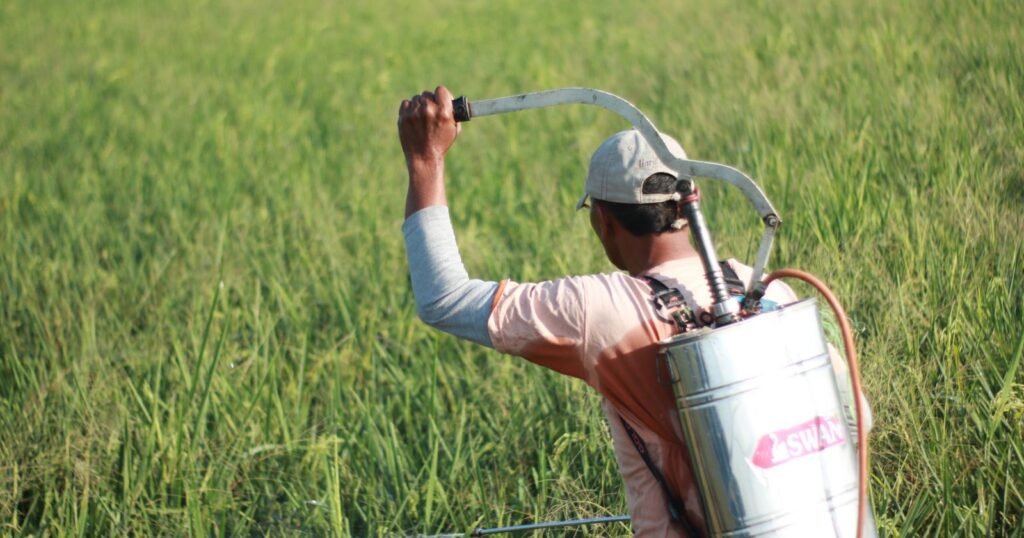
- Farm owners and farmworkers who worked on fields where paraquat was used, including people who walked or worked treated rows
- Mixers and loaders who handled concentrated paraquat, diluted it, or filled sprayer tanks
- Equipment cleaners and mechanics who rinsed or repaired spray rigs and tanks
- Crop dusting and aerial application crews involved in spraying operations
- Agricultural employees at nurseries, vineyards, and cotton, peanut, soybean, or other operations where paraquat was part of weed control
- People who lived near treated fields, although these exposure claims can be harder to document
The rules around paraquat have tightened over time, so exposure decades ago may have looked different from today. If you used paraquat in the 1980s, 1990s, or 2000s, your experience may still be relevant to a paraquat exposure lawsuit.
Direct Use vs. Nearby Exposure
Direct handling, such as mixing or spraying, is usually easier to document than exposure from living near a field. Claims based mainly on spray drift or general proximity may face more questions about how much exposure occurred. That does not automatically rule a person out, but it does make supporting evidence especially important.
What the Science Says About Paraquat and Parkinson’s Disease
Researchers have studied paraquat for years. In 2011, the National Institute of Environmental Health Sciences (NIEHS), part of the National Institutes of Health, announced findings from a study conducted with the Parkinson’s Institute. The research drew from the Farming and Movement Evaluation (FAME) Study within the larger Agricultural Health Study of licensed pesticide applicators. It found that people who used paraquat developed Parkinson’s disease about 2.5 times more often than people who did not.
NIEHS researchers explained that paraquat increases the production of certain oxygen derivatives that may harm cellular structures. Study findings like these are part of why many people have filed claims. Still, science alone does not prove any individual case. A paraquat exposure lawsuit typically requires evidence tied to the specific person.
Evidence to Gather for a Paraquat Exposure Lawsuit
You do not need a perfect file to ask for a review. Many people start with only memories and a few documents. Still, gathering what you can may help a participating law firm understand your situation more quickly. Here are the main categories of evidence that may support paraquat lawsuit eligibility.
Pesticide Applicator Licenses and Training Records
Because paraquat could only be used by certified applicators, a current or past pesticide applicator license can be strong evidence. Look for your license card, renewal notices, continuing education certificates, or paraquat-specific training completion records. If you no longer have them, your state agriculture or pesticide regulatory agency may keep licensing records.
Purchase, Spray, and Farm Records
Records showing paraquat was bought or applied can help support a paraquat exposure lawsuit. Useful documents may include:
- Receipts or invoices from farm supply stores or co-ops listing Gramoxone or other paraquat products
- Pesticide application logs or spray records kept by a farm or employer
- Restricted use pesticide records, which certified applicators are generally required to keep
- Crop consultant recommendations or written weed control plans
- Photos of product containers, labels, or spray equipment
Employment Records
If you worked for a farm, agricultural business, landscaping company, or applicator service, employment records can help show where and when you worked. Pay stubs, W-2 forms, tax returns, job descriptions, union records, or letters from former employers may all help. Even general records that place you on a farm during certain seasons can be useful when combined with other evidence in a paraquat exposure lawsuit.
Witness Statements
Coworkers, supervisors, family members, or neighbors may remember you mixing or spraying paraquat. Write down names and contact information for anyone who could confirm what products were used, what your job involved, and roughly when. In a paraquat exposure lawsuit, their memories can help fill gaps where paperwork is missing.
Your Own Exposure Timeline
Before you speak with anyone, it may help to write a simple timeline. Include the years you worked with paraquat, the farms or employers involved, how often you handled it, whether you mixed or sprayed it, what protective equipment you wore, and whether you remember the product label. These are similar to the details the MDL court asked about in 2026, and they can make a review faster and clearer.
Medical Records: Documenting a Parkinson’s Diagnosis
A paraquat exposure lawsuit also depends on medical evidence. Generally, a claim involves a diagnosis of Parkinson’s disease made by a doctor, often a neurologist. Helpful medical records may include:
- The date and records of your Parkinson’s disease diagnosis
- Neurologist notes and evaluations describing symptoms such as tremor, stiffness, or slowed movement
- Medication lists, including Parkinson’s treatments
- Imaging or other testing your doctors ordered
- Records of how the disease has affected your work and daily life
You do not need to collect every record yourself. If a participating law firm takes your case, it may help request records with your permission. It can still be useful to know the names of your doctors and the approximate date you were diagnosed.
If a Loved One Has Passed Away
Families sometimes ask whether they can pursue a claim for a loved one who had Parkinson’s disease and was exposed to paraquat. Depending on state law, a family member or estate representative may be able to bring a claim. A participating law firm can explain the options and any deadlines that may apply in your state.
Where Paraquat Lawsuit Eligibility Stands in October 2026
The legal landscape around paraquat has shifted quickly. As of October 2026, here is what has been reported:
- Settlement program: In 2025, the parties in MDL 3004 reached a settlement agreement involving Syngenta. In March 2026, the court approved a qualified settlement fund to handle payments. The total amount has not been publicly disclosed.
- Opt-outs: In June 2026, the court reported that some plaintiffs, concentrated among certain law firms, declined settlement offers. The judge selected some of those cases for limited discovery and directed non-settling plaintiffs to meet with Special Master Randi Ellis.
- Syngenta exit: In March 2026, Syngenta announced it would stop making and selling its paraquat product after June 2026. Generic paraquat products from other makers may still be sold in the U.S.
- California phase-out: According to the California Department of Pesticide Regulation, all paraquat registrations in the state were voluntarily canceled as of August 2026, starting a phase-out.
For more background on the MDL and how it has developed, see our post Paraquat Lawsuit 2026: MDL Tops 6,600 Parkinson’s Cases. You can also read about the people at the center of these cases in Paraquat Lawsuits: U.S. Farmers and Communities Seek Justice.
Because settlement details are confidential and the process is ongoing, no one can promise any particular result. Whether a new paraquat exposure lawsuit could be filed, and how it might be handled, depends on the facts of each case and on deadlines that vary by state.
What a Free Case Review Involves
Direct2Attorney is not a law firm and does not provide legal advice. We connect people with participating law firms that handle paraquat claims. If you are exploring a paraquat exposure lawsuit, here is how a free case review generally works:
- A short, confidential questionnaire. You answer basic questions about your paraquat exposure, your Parkinson’s diagnosis, and when each happened.
- Your information is shared with a participating law firm. That firm reviews your answers to see whether your situation may fit its criteria.
- The law firm decides. A participating law firm decides whether to take the case. Submitting a review does not create an attorney-client relationship and does not guarantee representation or compensation.
- Next steps, if any. If a firm is interested, it may contact you to ask follow-up questions and explain its fee arrangement.
You can start on our Paraquat lawsuit page, which explains the litigation and how to request a review. Having your exposure timeline and medical details handy can make the questionnaire quicker.
Questions to Ask a Law Firm
If a participating law firm contacts you, it is reasonable to ask how it evaluates paraquat exposure lawsuit claims, what evidence it needs from you, how its fees work, and what deadlines may apply. You can also ask how the current MDL settlement process could affect a new claim.
Frequently Asked Questions
Do I need a pesticide applicator license to file a paraquat exposure lawsuit?
Not necessarily. A license can be strong evidence because paraquat is restricted to certified applicators, but farmworkers, mixers, and others may also have been exposed. A participating law firm can review your specific situation.
What if I don’t have purchase or spray records?
Many people considering a paraquat exposure lawsuit no longer have old receipts or logs. Employment records, witness statements, photos, and a detailed timeline of your work may still help. A law firm may also be able to look for records from employers, co-ops, or state agencies.
Does living near a farm count as paraquat exposure?
It may, but claims based only on nearby spraying or drift can be harder to prove. Courts have looked closely at exposure details in paraquat cases. Any documentation of how close you lived and how often spraying happened may be important.
Is there still time to join the paraquat litigation?
As of October 2026, the settlement process in MDL 3004 is ongoing, and filing deadlines depend on state law and individual facts. A participating law firm can review whether a paraquat exposure lawsuit may still be possible in your situation.
How much is a paraquat lawsuit worth?
The total value of the Syngenta settlement has not been publicly disclosed, and every case is different. No one can promise a specific amount, and there is no guarantee of compensation.
Does a free case review cost anything?
No. The review is free and confidential. You complete a short questionnaire, and your information is shared with a participating law firm that decides whether to take the case.
Think you may qualify? See if you qualify for a free, confidential Paraquat case review →
This article is general information, not legal or medical advice. Direct2Attorney is not a law firm and does not provide legal advice.