Direct2Attorney is a legal marketing & referral service, not a law firm and not a substitute for legal advice.
Eligibility
These claims are about Parkinson’s disease following real, repeated exposure. Here is what participating law firms look for when they review a paraquat lawsuit claim.
Diagnosed by a physician, usually a neurologist. Related movement disorders may also be reviewed.
Licensed applicators, mixers and loaders, farmers spraying their own ground, and commercial or aerial application crews.
Farm workers, harvest crews and anyone re-entering treated ground. You did not have to hold the sprayer.
Drift, dust and well water exposure claims are being reviewed. These are harder to document than job exposure, but they are real.
Parkinson’s develops slowly. Firms look at the years between your exposure and your first symptoms.
Surviving family and estate representatives may be able to bring a claim. That deadline usually runs from the date of death.
Worried that following the label works against you?
It does not. The whole allegation is that the label never mentioned Parkinson’s at all. Doing everything right cannot protect you from a risk nobody told you about. For official background, see the U.S. EPA’s paraquat page.
Meeting these guidelines does not mean you have a valid claim. It means a participating law firm is likely to review it. That firm decides on its own whether to take your case. Some claims are turned down, and some recover nothing. Direct2Attorney cannot judge the legal merits of your case, give legal advice, or file anything for you.
Common worries
Most people who could ask about a paraquat lawsuit never do. These are the reasons we hear most, and what is actually true.
What holds people back
Many applicators feel that training and a license mean they accepted the risk.
What is true
Paraquat is a restricted-use pesticide. Being trained and following the label does not defeat a claim, because the core allegation is that the warnings never mentioned Parkinson’s disease.
What holds people back
Farm workers and neighbors often assume only the person holding the sprayer can file.
What is true
People who worked in treated fields or lived nearby and were exposed through drift, dust or well water have brought claims. They are harder to prove, but they are real.
What holds people back
Few people kept purchase slips or spray logs from decades ago.
What is true
A firm can look for licensing records, employment history, farm and purchase records, and state pesticide application data. Your memory is where it begins.
What holds people back
News of a settlement makes many people think the door has closed.
What is true
No court has approved any public payment amount, and your state’s deadline is running either way. A review tells you where you stand.
About the herbicide
Paraquat is one of the most toxic herbicides ever sold. A single swallow can kill an adult, which is why it has always been a restricted-use pesticide. It was never sold in hardware stores. Only certified applicators could buy or use it. Most people exposed were exposed because farming was their job.
It is sold under names including Gramoxone, made by Syngenta and historically distributed in the United States by Chevron. Syngenta has said it will stop producing the herbicide by June 2026. That does not end responsibility for exposure that already happened.
The concern is what it does to the brain. Paraquat causes oxidative stress in cells, a kind of chemical wear and tear. Research has focused on the part of the brain that makes dopamine — the same cells that die off in Parkinson’s disease. A widely cited 2011 study reported that people with paraquat exposure had roughly two and a half times the risk of developing Parkinson’s.
Lawsuits allege Syngenta and Chevron knew about this research for decades and never put a neurological warning on the label. The EPA has still not required one.

How the harm is said to happen
Paraquat enters the body
Breathed in as spray mist, absorbed through skin, or taken in from drift, dust or water.
It stresses brain cells
Research links it to oxidative stress in the cells that make dopamine.
Dopamine cells die off
Years later, the loss shows up as the tremor, stiffness and slowness of Parkinson’s.
Paraquat has been banned in more than 30 countries, including the European Union, China and Brazil. China banned it for domestic use while continuing to own the company that makes it.
| Product or party | What to know |
|---|---|
| Gramoxone | The best-known paraquat brand, made by Syngenta and named across the litigation |
| Syngenta | The manufacturer named in the claims; it has said it will stop producing paraquat |
| Chevron | Historically distributed paraquat in the United States and is also named in the claims |
| Other paraquat products | Herbicides with the same active ingredient may also be reviewed |
Product and company names are used only to identify the products and parties at issue. Direct2Attorney is not affiliated with, endorsed by, or sponsored by Syngenta, Chevron, the EPA, or any court.
How exposure happens, in plain words
You do not have to have swallowed it. Every paraquat lawsuit describes small, repeated contact over many seasons. These are the four routes that come up most.
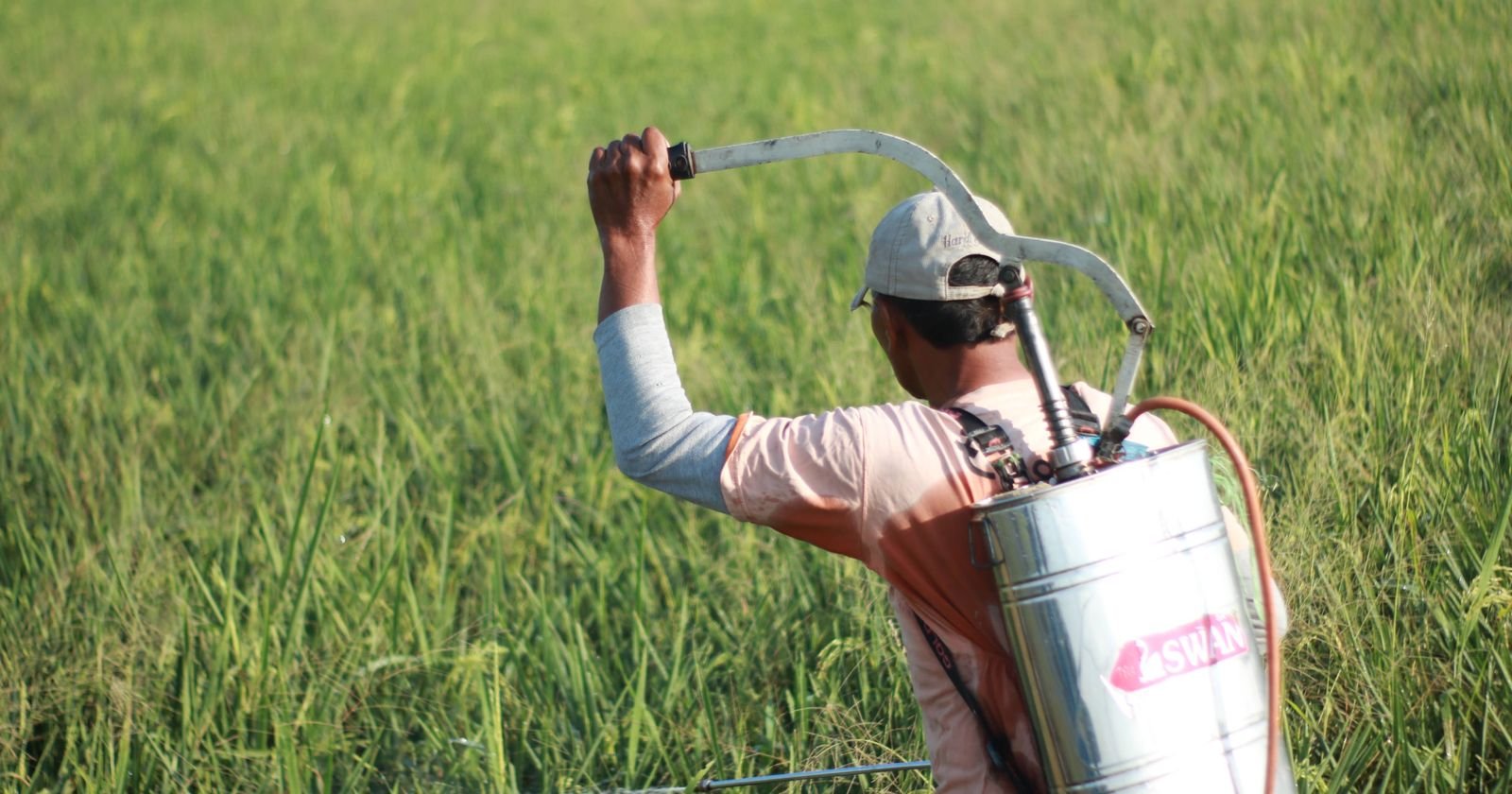
Fine droplets hang in the air during spraying, especially from tractors, backpack sprayers and aircraft. Lawsuits allege this is one of the main routes.
Mixing, loading and filling tanks led to spills on hands, arms and clothes. Cuts and scrapes give it an easier way in.
Wind can carry spray off the field and onto yards, gardens and houses next to treated ground.
Treated soil turns to dust, and runoff can reach wells. Farm workers re-entering fields can be exposed long after spraying.
Years can pass before symptoms start
Parkinson’s develops slowly. Many people were exposed decades before their first symptom. A long gap does not rule out a claim. Firms look at that gap closely.
Treatment
There is no cure yet, but treatment can ease symptoms for years. Each visit, prescription and therapy also leaves a record, and in a paraquat lawsuit those records later show what the illness has cost you.
This page is general information, not medical advice. If you worked around paraquat and notice a resting tremor, stiffness or slowness, see a neurologist or a movement disorder specialist. Your care team decides your treatment.
Diagnosis
Parkinson’s is usually diagnosed from symptoms and an exam. A movement disorder specialist may confirm it, sometimes with a brain scan.
Medicine
Drugs such as carbidopa-levodopa help replace or mimic dopamine. They often need adjusting as the disease changes.
Therapy
Therapists help with balance, walking, daily tasks, swallowing and a softening voice.
Procedures
For some patients, a surgeon places thin wires in the brain connected to a device in the chest to calm symptoms.
Daily life
Grab bars, walkers, lift chairs and in-home help often become part of life as the illness moves forward.
The hidden cost
Many people have to give up farming or their trade early. That loss matters in a claim.
Quick self-check
If you can say yes to most of these, it is worth asking for a free review.
Has a doctor diagnosed you, or a loved one, with Parkinson’s disease?
Did you mix, load, spray or work around paraquat, or live next to fields where it was sprayed?
Did that exposure happen before the first symptoms appeared?
Was the exposure in the United States, and can you name roughly where and when?
Requirements
You do not need any of this to start. A firm collects it for you. But every paraquat lawsuit is built on these four things.
Proof of exposure
Licenses, job history, farm or spray records.
Proof of the illness
A Parkinson’s diagnosis from a doctor.
A link between them
Expert support tying exposure to illness.
Filed in time
Each state sets its own deadline.
Case status
Federal cases are consolidated as MDL 3004 before Chief Judge Nancy J. Rosenstengel in the Southern District of Illinois. There is a paraquat lawsuit settlement framework, but it is not finished. Other cases are moving in state courts, including California and Pennsylvania.
What that actually means for you
Anyone telling you a paraquat payout is coming shortly is guessing. Terms are confidential, no payment schedule has been made public, and no court has approved any amount.
Cases grouped as MDL 3004
Federal paraquat Parkinson’s cases are combined in one court in southern Illinois.
Settlement in principle announced
The parties announced a settlement in principle to resolve thousands of federal claims, and the court paused proceedings while they worked on it.
EPA opens a safety review
The EPA announced it would review the herbicide’s safety. It has still not required a Parkinson’s warning.
Syngenta says it will stop making paraquat
The company announced it would end production. Exposure that already happened is not erased.
Vermont passes the first state ban
Vermont became the first U.S. state to pass a law banning paraquat.
Pressure on non-settling plaintiffs
The judge ordered plaintiffs who turned down the settlement to meet with a special master, set limited discovery in some of those cases, and entered a Lone Pine order. That is an order that makes plaintiffs show basic proof of exposure and injury early.
6,602 cases pending
Down from 6,651 in June 2026. Individual cases have settled along the way, and claims are still being filed and reviewed.
The risk worth knowing about. The central fight in this litigation is scientific causation — whether plaintiffs’ experts can testify that paraquat causes Parkinson’s in people, not just in laboratory models. Syngenta and Chevron have contested that aggressively. In other mass torts, an adverse ruling on expert testimony has ended litigation that had thousands of filed cases. That is part of why a negotiated resolution has appeal for both sides, and it is worth understanding before you decide anything.
Compensation
If a paraquat lawsuit succeeds, compensation is meant to cover what a progressive illness costs a family over years. Here is what these claims typically seek.
No one can tell you what your claim is worth before reviewing your history, and no one can promise you will recover anything at all. Past results do not guarantee or predict a similar outcome in any future case.
The process
You do not need records, licenses or purchase receipts to start a paraquat lawsuit review. Tell us what you remember, or call and let someone write it down for you.
Fill out the short form or call. Your diagnosis, what work you did, and roughly how many years you were around paraquat. It costs nothing.
If your situation fits, we connect you with a participating law firm. That firm decides on its own whether to represent you. If it does, you sign an agreement directly with the firm.
Applicator licensing records, employment history, farm and purchase records, and state pesticide application data mapped against where you lived and worked. Plus your medical records.
Your case is filed in the federal MDL or an appropriate state court. Your firm keeps you updated as the settlement framework develops. You are never required to accept an offer you do not want.
READY WHEN YOU ARE
Step 1 takes about two minutes.
Deadlines
Every state sets its own time limit for a paraquat lawsuit, called a statute of limitations. Miss it and the claim is usually gone for good, no matter how strong it was.
Deadlines vary by state, commonly one to six years.
In many states the clock starts when you learned your illness might be linked to paraquat, not on the day you were diagnosed.
Claims after a death usually run on a separate and shorter deadline, often starting on the date of death.
Only an attorney licensed in your state can confirm what applies to you.
Your deadline is running either way
Whether or not a settlement is finished, your state’s clock keeps moving. A free review can help you find out where you stand.
Fees
Nothing to ask. The case review is free with no obligation. If a participating law firm takes your case, it will normally work on contingency.
What that covers
What to ask about
Contingency means the fee comes out of a recovery, and no fee is owed if there is no recovery. Fees, costs and liens come out of any recovery.
Why people trust us
No upfront fees
The review is free. Participating firms work on contingency, so a fee is owed only out of a recovery. No recovery, no attorney fee.
Firms in this MDL
For a paraquat lawsuit, we connect you with firms handling agricultural chemical claims — ones already inside MDL 3004 and tracking the settlement process.
Call instead of typing
Tremor makes forms hard. You can give everything over the phone, and a family member is welcome to help.
Private and secure
Your information is encrypted and handled according to our Privacy Policy. You are never obligated to move forward.
What Direct2Attorney is
A legal marketing and referral service. We check whether your situation matches what participating law firms are looking for, and connect you with one of them if it does.
What Direct2Attorney is not
We are not a law firm. We cannot give you legal advice, represent you, or file anything on your behalf. Only a law firm you sign with can do that.
Firms are reviewing new paraquat claims
If you worked around paraquat and were later diagnosed with Parkinson’s disease, find out where you stand on a paraquat lawsuit. There is no settlement money available yet, and nobody can tell you when there will be — but claims are still being filed and reviewed, and your state’s deadline is running either way. The review takes about two minutes and costs nothing.
What happens after you ask
We check your answers
Usually the same business day
A participating firm may call you
At the time you choose
You decide what comes next
No cost and no obligation, ever
Questions
Still have a question? Ask it on the call. The review is free, and there is no obligation.
Start my free review →Participating law firms are generally reviewing claims from people diagnosed with Parkinson’s disease who had meaningful exposure to paraquat. That usually means licensed applicators, farmers, farm workers, mixers and loaders, or people who lived or worked close to fields where it was sprayed. Family members may be able to bring a claim on behalf of a loved one who has died.
Not a finished one. A settlement in principle was announced in spring 2025 to resolve thousands of federal claims, and the court has repeatedly paused proceedings while the parties work on it. More than a year later the framework still has not been fully signed off, partly because some plaintiff firms objected to terms. Individual cases have settled along the way. Terms are confidential, no payment schedule has been made public, and no court has approved any amount.
Update: by mid-2026 plaintiffs in MDL 3004 were deciding whether to join the settlement, and many turned it down. The judge ordered those non-settling plaintiffs to meet with a special master and entered a Lone Pine order requiring early proof of their claims. As of October 1, 2026, 6,602 cases were still pending. Terms remain confidential.
No. Paraquat is a restricted-use pesticide, so licensed and certified applicators are exactly who handled it. Being trained and following the label does not defeat a claim. The core allegation is that the warnings themselves never mentioned Parkinson’s disease, so no amount of care could have protected against a risk nobody disclosed.
Possibly. Claims have been brought by people who lived or worked near treated fields and were exposed through spray drift, contaminated dust or well water. Bystander claims are generally harder to prove than occupational ones because exposure is harder to document, but they are being reviewed. What matters is how close you were, for how long, and what can be shown from state pesticide application records.
Deadlines vary by state, commonly one to six years, and in many states the clock starts when you learned your illness might be linked to paraquat rather than at diagnosis. Claims after a death usually run on a separate and shorter deadline. Only an attorney licensed in your state can confirm what applies to you.
Nothing to ask. The case review is free with no obligation. If a participating law firm takes your case, it will normally work on contingency. That means the fee comes out of a recovery, and no fee is owed if there is no recovery.
No. Direct2Attorney is a legal marketing and referral service, not a law firm. An attorney-client relationship may form only after a participating law firm reviews your information and signs a separate representation agreement with you.
Yes. Tremor and fatigue make forms hard for many people with Parkinson’s. A spouse, child or caregiver is welcome to help, and you can give everything over the phone. The firm will still need to speak with you, or with the legal representative of someone who has died.
Yes, as a restricted-use pesticide. It has been banned in more than 30 countries. In January 2026 the EPA announced a new safety review, in March 2026 Syngenta said it would stop making paraquat, and in May 2026 Vermont became the first state to pass a ban.


Learn more
More lawsuit research and settlement guides from our partner TortAdvisor ↗