Direct2Attorney is a legal marketing & referral service, not a law firm and not a substitute for legal advice.
Eligibility
There are two separate claim types, with two separate court cases behind them. You may qualify under either. For official background, see the FDA’s safety information on semaglutide medicines.
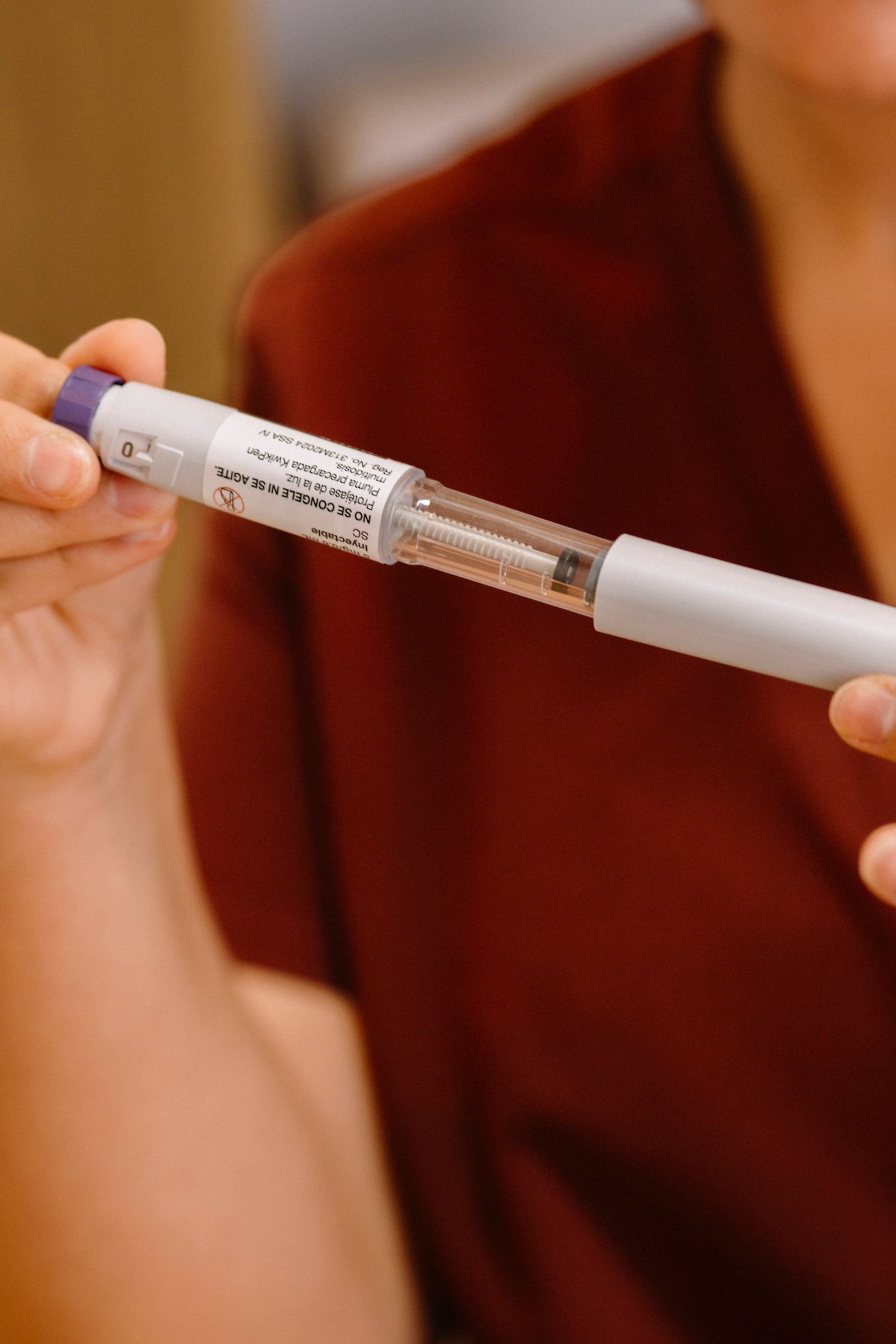
Ozempic, Wegovy, Rybelsus, Victoza, Saxenda, Mounjaro, Zepbound or Trulicity. The brand on your pen does not decide your claim.
Stomach paralysis, usually confirmed by a gastric emptying study. This is the most common injury in the litigation.
Your intestines stopped moving properly. Many of these cases involved emergency admission and sometimes surgery.
NAION is a sudden, usually permanent loss of sight in one eye caused by damage to the optic nerve. These claims have their own court case.
The timeline is what these cases turn on. A firm will map when you started, how long you took it, and when the symptoms began.
Emergency visits, admissions, surgery or a feeding tube all document the severity and make a claim materially stronger.
Not sure if what you had counts?
Ordinary nausea is not a claim, and firms will tell you so. But repeated vomiting that puts you in hospital, or vision that never came back, is a different matter. A free review sorts it out in about two minutes.
Meeting these guidelines does not mean you have a valid claim. It means a participating law firm is likely to review it, and that firm decides on its own whether to take your case. Direct2Attorney cannot judge the legal merits of your case, give legal advice, or file anything for you.
Before you decide
Many people with a real injury never ask. These are the common reasons, and what is true.
What holds people back
The name Ozempic is everywhere, so people assume the cases are only about it.
What is true
Court materials name Ozempic, Wegovy, Rybelsus, Victoza and Saxenda from Novo Nordisk, and Trulicity, Mounjaro and Zepbound from Eli Lilly.
What holds people back
Some people fear a claim means changing treatment.
What is true
That is a decision between you and your doctor. Do not stop a GLP-1 drug on your own.
What holds people back
Mild stomach upset is common on these drugs.
What is true
Gastroparesis confirmed by a test, a bowel obstruction, or sudden vision loss is the kind of injury these cases are about.
What holds people back
People worry about fees.
What is true
Participating firms work on contingency. No recovery, no attorney fee.
About the drugs
Read this first: do not stop taking your medication on your own. These drugs control blood sugar for millions of people with type 2 diabetes. Stopping suddenly can be dangerous. They also work well for a great many people who have no problems at all. Nothing on this page is medical advice, and nothing here is a reason to skip a dose. If this page worries you, call your prescribing doctor and ask. That is completely separate from any legal question, and talking to a lawyer never changes your treatment.
GLP-1 receptor agonists copy a hormone your gut releases after eating. They tell your brain you are full and they slow down how fast your stomach empties. That slowing is not a side effect. It is how the drugs work.
The lawsuits are about what happens when the slowing does not stop. In some people the stomach nearly quits emptying altogether. That is gastroparesis, or stomach paralysis. Food sits for hours or days. It brings relentless nausea, vomiting of food eaten long before, bloating and severe pain. For some it eases after stopping the drug. For others it does not.
A second set of claims involves the intestines stopping, called ileus or bowel obstruction, which is a medical emergency and sometimes needs surgery. The core allegation in all of it is failure to warn: that Novo Nordisk and Eli Lilly knew or should have known how severe this could get, and did not say so clearly enough on the label.

How the injury is said to happen
The drug slows the stomach
That is how GLP-1 drugs work.
The slowing does not stop
In some people the stomach nearly stops emptying.
Food backs up
Vomiting, pain and, in some cases, a blocked bowel follow.
Gastroparesis, ileus and intestinal obstruction, in the Eastern District of Pennsylvania before Judge Karen S. Marston.
NAION, a sudden loss of blood flow to the optic nerve that usually causes permanent sight loss in one eye. Also before Judge Marston.
| Drug named in court materials | Maker |
|---|---|
| Ozempic, Wegovy, Rybelsus | Novo Nordisk (semaglutide) |
| Victoza, Saxenda | Novo Nordisk (liraglutide) |
| Mounjaro, Zepbound | Eli Lilly (tirzepatide) |
| Trulicity | Eli Lilly (dulaglutide) |
Drug and company names are used only to identify the products at issue. Direct2Attorney is not affiliated with, endorsed by, or sponsored by Novo Nordisk, Eli Lilly, the FDA, or any court.
The medical side, in plain words
Most people take these drugs without serious problems. When something does go wrong, it usually falls into one of these four patterns.
Gastroparesis. Food sits for hours or days, causing vomiting, bloating and pain.
Ileus or obstruction. Nothing passes through. It is an emergency and can need surgery.
NAION. Sight in one eye fades or vanishes suddenly, often on waking, and rarely comes back.
The legal claim: the makers should have warned how severe and lasting these problems could be.
Two of these are emergencies
A bowel obstruction and sudden vision loss both need care right away. Contact your doctor or go to an emergency room.
Treatment
Treatment depends on the injury. Each step also leaves a record, and those records later show what the injury cost you.
General information only, not medical advice. Your care team decides your treatment. Do not stop or change any medication based on what you read here.
Finding it
A test meal is tracked to see how fast your stomach empties. It is the key test for gastroparesis.
Stomach
Small, soft meals and medicine to help the stomach move or to ease nausea.
Severe cases
When food will not stay down, nutrition may go through a tube or a vein.
Bowel
A blocked bowel may need fluids, a tube to relieve pressure, or an operation.
Vision
An eye specialist confirms NAION. Low-vision services can help with daily life.
Your doctor decides
Your prescriber decides whether to change your medicine. Never stop on your own.
Quick self-check
If you can say yes to most of these, it is worth asking for a free review.
Did you take Ozempic, Wegovy, Mounjaro, Zepbound or another GLP-1 drug?
Were you diagnosed with gastroparesis, a bowel obstruction, ileus or NAION?
Did the problem start after you began the drug?
Did it lead to an ER visit, a hospital stay, surgery or lasting vision loss?
Requirements
You do not need any of this to start. A firm collects it for you. But every claim is built on these four things.
Proof of use
Pharmacy records of the GLP-1 drug.
Proof of injury
A gastric emptying study, scan or eye exam.
A clear timeline
Injury after starting the drug.
Filed in time
Each state sets its own deadline.
Case status
Both federal MDLs are in the Eastern District of Pennsylvania before Judge Karen S. Marston. The next real event is a ruling on expert evidence, not a settlement.
No trial, no settlement, no payout figures
Neither MDL has produced a verdict and there is no settlement in either one. No fund, no payment schedule, nothing approved by any court. Any dollar range you find quoted online for Ozempic claims is invention. The defendants dispute causation entirely, and no court has found either manufacturer liable.
Testing required for gastroparesis
The court ruled that gastroparesis claims must be backed by a gastric emptying study done at the time of diagnosis. Symptoms alone are not enough.
Vision loss MDL created
NAION cases are grouped as MDL 3163, starting with 21 cases.
Expert testimony survives
The court allowed key expert testimony on gastroparesis and other gastrointestinal injuries to proceed. Filings kept climbing, adding more than 100 in a single month. Separately, the FDA sent Novo Nordisk a warning letter over its reporting of side effects.
Rule 702 expert hearing
The court scheduled an evidentiary hearing on expert testimony for September 14–18, 2026, covering warnings, federal preemption and causation. It is not a trial.
Awaiting the expert rulings
As of October 1, 2026: 4,025 cases pending in MDL 3094 and 247 in MDL 3163. The rulings after the hearing will largely decide whether the cases head toward trials or narrow sharply.
This is not medical advice. If you are on a GLP-1 drug and you have persistent vomiting, cannot keep food down, have severe stomach pain, have stopped passing stool or gas, or notice a sudden change in your vision, contact your doctor right away. A bowel obstruction and sudden vision loss are both emergencies. Do not stop or change any medication based on what you read here.
Compensation
If a claim succeeds, compensation is meant to cover what the injury has cost you, in money, in work, and in daily life. Here is what these claims typically seek.
No one can tell you what your claim is worth before reviewing your records, and no one can promise you will recover anything at all. Past results do not guarantee or predict a similar outcome in any future case.
The process
You do not need pharmacy records or exact dates to start an Ozempic lawsuit review. Tell us what you remember and the firm does the rest.
Fill out the short form or call. Which drug, roughly when you started, and what you were diagnosed with. No cost and no obligation.
If your situation fits, we connect you with a participating law firm. That firm decides on its own whether to represent you, and which of the two litigations your claim belongs in.
Pharmacy records showing what you were dispensed and when, plus hospital records, gastric emptying studies or eye exams. In these cases the timeline is the case.
Your case is filed in the right MDL or state court. Your firm keeps you updated through the expert rulings ahead. You never have to accept an offer you do not want.
READY WHEN YOU ARE
Step 1 takes about two minutes.
Why people trust us
No upfront fees
The review is free. Participating firms work on contingency, so a fee is owed only out of a recovery. No recovery, no attorney fee.
Firms in both MDLs
Stomach claims and vision claims are separate cases with different experts. We connect you with firms working in the right one.
We help with records
Pharmacy and hospital records hold the dates these cases turn on. A firm can request them for you.
Private and secure
Your information is encrypted and handled according to our Privacy Policy. You are never obligated to move forward.
What Direct2Attorney is
A legal marketing and referral service. We check whether your situation matches what participating law firms are looking for, and connect you with one of them if it does.
What Direct2Attorney is not
We are not a law firm. We cannot give you legal advice, represent you, or file anything on your behalf. Only a law firm you sign with can do that.
Firms are reviewing new Ozempic claims
If you took Ozempic, Wegovy, Mounjaro or another GLP-1 drug and were diagnosed with stomach paralysis, a bowel obstruction or sudden vision loss, find out whether an Ozempic lawsuit fits your situation. It takes about two minutes and costs nothing. Your state’s filing deadline is running either way, and asking a lawyer never changes your medical treatment.
What happens after you ask
We check your answers
Usually the same business day
A participating firm may call you
At the time you choose
You decide what comes next
No cost and no obligation, ever
Questions
Still have a question? Ask it on the call. The review is free, and there is no obligation.
Start my free review →Participating law firms are generally reviewing two kinds of claims. First, people who took a GLP-1 drug and were diagnosed with gastroparesis, also called stomach paralysis, or with ileus or a bowel obstruction. Second, people who suffered sudden vision loss diagnosed as NAION. In both groups the diagnosis normally needs to come after starting the drug and be documented in medical records. Families may bring a claim for a loved one who died.
Do not stop on your own. These drugs control blood sugar for millions of people with type 2 diabetes, and stopping suddenly can be dangerous. Nothing on this page is medical advice and nothing here is a reason to skip a dose. If this page worries you, call your prescribing doctor and ask. That is a medical decision between you and your physician, and it is completely separate from any legal question.
Gastroparesis means the stomach empties far too slowly, or stops emptying properly at all. Food sits inside for hours or days. It causes severe nausea, repeated vomiting sometimes of food eaten long before, bloating, pain and unintended weight loss. It is diagnosed with a gastric emptying study. For some people it improves after stopping the drug, and for others it does not.
Yes. The litigation covers the whole GLP-1 class, not just Ozempic. Court materials identify Ozempic, Wegovy, Rybelsus, Victoza and Saxenda from Novo Nordisk, and Trulicity, Mounjaro and Zepbound from Eli Lilly. The name on your pen does not decide whether you have a claim.
The court has set a Rule 702 hearing on expert testimony, covering warnings, federal preemption and causation. It is not a trial. It decides which scientific experts may testify. Rulings expected after it will largely determine whether this litigation moves toward trials or narrows sharply. Anyone considering a claim should understand that this is the pivotal moment, not a settlement.
Update: the court scheduled the hearing for September 14–18, 2026. As of October 3, 2026 we had not confirmed any ruling from it, and there was still no trial or settlement.
Nothing to ask. The case review is free with no obligation. If a participating law firm takes your case, it will normally work on contingency. That means the fee comes out of a recovery, and no fee is owed if there is no recovery.
No. Direct2Attorney is a legal marketing and referral service, not a law firm. An attorney-client relationship may form only after a participating law firm reviews your information and signs a separate representation agreement with you.
For gastroparesis claims in the federal MDL, usually yes. In August 2025 the court ruled that gastroparesis claims must be supported by a gastric emptying study done at the time of diagnosis. Bowel obstruction and vision loss claims rely on other records. A firm can check what your records show.
The Judicial Panel on Multidistrict Litigation’s report of October 1, 2026 listed 4,025 cases pending in MDL 3094, the stomach and bowel cases, and 247 in MDL 3163, the vision loss cases. Some other cases are in state court.


Learn more
More lawsuit research and settlement guides from our partner TortAdvisor ↗