

In this article (13 sections)
- Dupixent lawsuit timeline at a glance
- June 2026: the MDL is created
- The judge’s first orders
- How many Dupixent cases are there?
- What the FDA and the label say now
- What to watch next
- What these updates mean if you are considering a claim
- How to Check Each Dupixent Lawsuit Update Yourself
- Legal Terms That Appear in a Dupixent Lawsuit Update
- Records to Gather Before the Next Dupixent Lawsuit Update
- How to Spot a Misleading Dupixent Lawsuit Update
- Dupixent lawsuit update: frequently asked questions
- How Direct2Attorney can help
Last updated: October 2026
The biggest Dupixent lawsuit update of 2026 is that the federal cases now have one home. In June 2026, a federal panel combined lawsuits claiming Dupixent caused cutaneous T-cell lymphoma (CTCL) into MDL No. 3180 in New Jersey. The case is in its earliest stage. No trials, verdicts or settlements have happened. You will also find how to check each Dupixent lawsuit update yourself, which records to gather and how to spot misleading claims.
Below is a timeline of the key court and regulatory events so far, what the judge has ordered, and what to watch for next. For background on the science, see our separate explainer.
Dupixent lawsuit timeline at a glance
- 2024: A retrospective study in the Journal of the American Academy of Dermatology reported higher odds of CTCL among eczema patients treated with dupilumab, as MDedge reported.
- October–December 2024: The FDA listed CTCL as a potential safety signal for Dupixent and said it is “evaluating the need for regulatory action.”
- Before June 2026: Individual lawsuits were filed in federal courts across the country.
- June 4, 2026: The JPML created MDL No. 3180 in the District of New Jersey.
- June 11, 2026: Judge Zahid N. Quraishi issued his first case management order.
- August 2026: The JPML reported 28 pending actions in the MDL.
- October 1, 2026: First in-person case management conference in Trenton.
June 2026: the MDL is created
On June 4, 2026, the Judicial Panel on Multidistrict Litigation issued its transfer order. It combined 15 cases from 12 federal districts and noted 7 more possible “tag-along” cases.
Highlights of the order:
- The cases went to U.S. District Judge Zahid N. Quraishi in New Jersey.
- The defendants are Regeneron Pharmaceuticals, Sanofi-Aventis U.S. and Genzyme Corporation.
- The panel found shared questions, including whether the companies gave adequate warnings about Dupixent’s risks.
- For now, the MDL covers CTCL and its subtypes. The panel noted that no plaintiff before it had claimed a different T-cell lymphoma. It left that issue open for later.
Plaintiffs’ firms had asked the panel to pick New Jersey, according to one firm’s announcement. Once an MDL exists, new federal Dupixent CTCL cases are generally sent to the same judge.

The judge’s first orders
One week later, on June 11, 2026, Judge Quraishi and U.S. Magistrate Judge J. Brendan Day issued an initial order setting the first steps. Key points:
- Meet and confer: Lawyers for both sides had to meet by July 24, 2026, to find areas of agreement.
- Joint report: A joint case management report was due September 10, 2026. It was to cover leadership for the plaintiffs, discovery, scientific witness procedures and whether any class claims would be pursued.
- First conference: Set for October 1, 2026, at 1:00 p.m. in Trenton.
- Proposed order: A proposed initial case management order is due November 1, 2026.
- Preserve evidence: Both sides must keep documents, data and other items that may be relevant.
- Master docket: All filings go on a single master docket for the MDL.
These steps are routine for a new MDL. They set the ground rules for everything that follows, including how new cases join and how the two sides share information.
How many Dupixent cases are there?
The MDL started with 15 transferred cases. The JPML’s August 3, 2026 report listed 28 pending actions and 29 total actions in MDL 3180. “Total actions” counts every case ever sent to the MDL. “Pending” counts the ones still open. The difference usually reflects a case that was dismissed, sent back or resolved for some other reason. The report does not say why.
That is small compared with many drug MDLs. But new MDLs often grow once leadership is in place and filing procedures are set. Some Dupixent cases may also be filed in state courts, which are not counted in the JPML numbers.
What the FDA and the label say now
As of October 2026, the FDA has not announced a decision on the CTCL signal. It has not issued a recall. The Dupixent label record in the FDA’s public label database, updated in August 2026, still does not include lymphoma in its Warnings and Precautions section.
Any label change would be important news for the litigation. It would not, by itself, prove that Dupixent caused anyone’s cancer.
What to watch next
Here is what typically comes next in an MDL like this. Dates beyond November 2026 have not been set publicly.
Leadership and pleadings
The judge will likely appoint lead lawyers for the plaintiffs. A master complaint and short-form complaints often follow. These let individual plaintiffs join without rewriting the same claims.
Plaintiff fact sheets
Many MDLs require each plaintiff to fill out a fact sheet with details about drug use and diagnosis. Records like pharmacy history and biopsy reports matter here.
Discovery on general causation
A key question is whether Dupixent can cause CTCL at all. Both sides will gather company documents and scientific data. The judge may later decide which scientific testimony is reliable enough for trial.
Scope of the MDL
The court may be asked to include other T-cell lymphomas, not just CTCL.
Bellwether trials
If cases survive the science stage, the court may schedule test trials. Those are likely years away.
What these updates mean if you are considering a claim
The early stage of the MDL has practical effects for people thinking about a case.
- Time to prepare: Because the case is new, there is time to gather records before key deadlines in the MDL are set. Court deadlines are separate from state filing deadlines, which vary by state and claim type.
- Records will matter: Fact sheets and discovery will focus on proof of Dupixent use and proof of diagnosis. Pharmacy histories, pathology reports and dated photos are worth collecting now.
- No payouts yet: There is no settlement fund or claims program. Be wary of anyone who promises a specific amount.
- Keep treating: Do not stop or change Dupixent without your doctor. The drug has not been recalled.
- Watch the scope: If you were diagnosed with a T-cell lymphoma other than CTCL, the court has not yet decided whether those cases belong in the MDL. A participating law firm can explain where your case might fit.
How to Check Each Dupixent Lawsuit Update Yourself
News about a new MDL can spread fast, and not all of it is accurate. The good news is that most of the key facts come from public sources you can check on your own. Here is where each Dupixent lawsuit update usually starts.

The JPML’s reports and orders
The Judicial Panel on Multidistrict Litigation posts its orders and regular reports on pending MDLs. The MDL 3180 transfer order is a good place to start. It names the judge, the defendants and the issues the panel found in common. Later JPML reports list how many actions are pending in each MDL, which is where the case counts in a Dupixent lawsuit update come from.
The court docket
Every filing in MDL 3180 goes on the master docket in the District of New Jersey. You can search federal dockets through PACER. According to PACER, access costs $0.10 per page, capped at $3 per document, and fees are waived if you spend $30 or less in a quarter. Court orders are the most reliable source for any Dupixent lawsuit update about deadlines or rulings.
FDA pages
Regulatory news can affect the litigation too. The FDA’s quarterly lists of potential safety signals and the official drug label are both public. If the label changes, that would be a major Dupixent lawsuit update, even though it would not by itself prove that the drug caused anyone’s cancer.
What a typical update covers
Most months in a new MDL are quiet on the surface. A typical Dupixent lawsuit update may include new case management orders, the latest JPML case count, the appointment of lead lawyers, or news from the FDA. Big events, like rulings on scientific testimony or trial dates, tend to come much later.
Set up a simple routine
If you want to follow the case closely, pick one day a month to check the same few sources: the JPML’s latest report, the court docket and the FDA’s safety pages. Write down the date and anything that changed. A short log like this makes it easier to see the real trend behind each Dupixent lawsuit update, instead of reacting to every headline.
Reading law firm and news posts
Many law firms and news sites post summaries of new orders. These can be helpful, but they may leave out details or reflect one side’s view. When a post describes a ruling, look for the date of the order and, if possible, read the order itself. Also check whether the post was updated after newer orders came out, since early summaries can go out of date quickly.
Legal Terms That Appear in a Dupixent Lawsuit Update
MDL orders use a lot of shorthand. Some terms were explained above. Here are others that often come up in a Dupixent lawsuit update, in plain language.
Transferee court
The court that receives the combined cases. For MDL 3180, that is the U.S. District Court for the District of New Jersey.
Tag-along action
A related case filed after the MDL was created that may be moved into it. The June 2026 transfer order noted several possible tag-along cases.
Conditional transfer order
An order the JPML uses to send tag-along cases to the MDL. Parties can object before it takes effect.
Direct filing
Some MDL judges allow new cases to be filed directly in the MDL court, instead of being filed elsewhere and transferred. Whether this is allowed in MDL 3180 depends on the judge’s orders.
Case management order
A court order that sets rules and deadlines. The first order in MDL 3180 set the early meet-and-confer, joint report and conference dates.
Federal Rule of Evidence 702
The rule judges use to decide whether scientific testimony is reliable enough for a jury. Rulings under this rule are often among the most important events in a drug MDL.
Preservation order
An order requiring both sides to keep documents and data that may matter to the case. The first order in MDL 3180 included this kind of instruction.
Remand
Sending a case back to the court where it was first filed, usually after shared pretrial work is done.
Failure to warn
The main legal theory in these cases. It claims the companies should have given stronger warnings about a risk. The companies deny the claims.
Records to Gather Before the Next Dupixent Lawsuit Update
Early MDL orders often lead to fact sheets and record requests. Gathering documents now can make each future Dupixent lawsuit update less stressful, because you will already have what you may need.
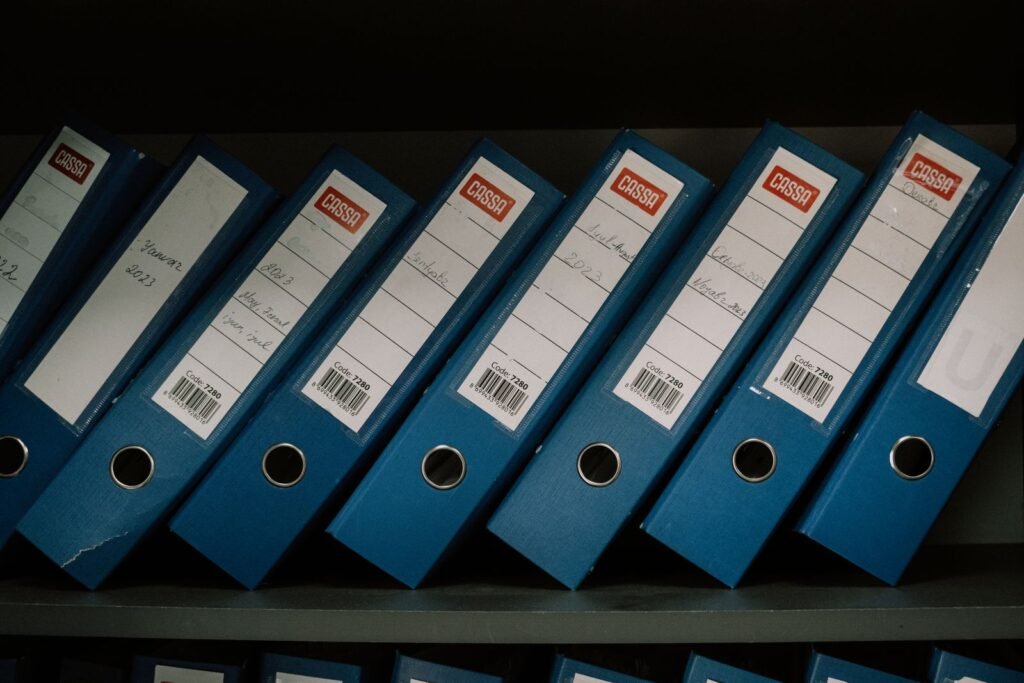
The list below goes beyond pharmacy history and pathology reports. You do not need everything, and a participating law firm may help request records you cannot get yourself.
Treatment history
- The date you started Dupixent and, if it applies, when you stopped
- The name of the prescribing doctor and the condition it was prescribed for
- Specialty pharmacy records, since many people receive Dupixent by mail
- Other treatments you used before or after, such as creams, pills or other injected drugs
- Insurance records showing when prescriptions were filled
Skin and diagnosis history
- Dermatology notes from before you started Dupixent
- Any earlier biopsies, even ones that did not find cancer
- The biopsy or pathology report that confirmed CTCL or another lymphoma
- Dated photos showing how your skin looked over time
- The name of the cancer doctor treating you now
If a loved one has passed away
If the person who used Dupixent has died, family members may still gather records. Ask the doctors and pharmacy what they need to release records to the estate or next of kin. Keep a copy of the death certificate with the medical file. Whether a family may bring a claim, and who may bring it, depends on state law, so it helps to ask a participating law firm before the next Dupixent lawsuit update.
A simple timeline
Write a one-page timeline with the key dates in order: first skin symptoms, first diagnosis, start of Dupixent, new or changing symptoms, biopsy dates and the lymphoma diagnosis. Timing is a central question in these cases, and a clear timeline can help a firm understand your situation quickly.
Keep records safe
Store paper copies in one folder and keep a digital backup. Do not mark up the originals; write notes on a separate sheet or on copies instead. If you mail records to anyone, send copies and keep the originals. If you get new records after the next Dupixent lawsuit update, add them to the same place.
How to Spot a Misleading Dupixent Lawsuit Update
Because the MDL is new, there is a lot of advertising and online chatter. Some of it is accurate. Some is not. These warning signs can help you tell the difference.
- Promised amounts: No settlement or verdict has happened. A post that names a “payout” for each person is not based on any court result.
- “Class action” claims: MDL 3180 is a group of individual lawsuits, not a class action. A Dupixent lawsuit update that calls it a class action may be careless with other facts, too.
- Deadline pressure: Filing deadlines are real and vary by state and claim type. But a message saying you must sign today or lose everything deserves a careful second look.
- Recall claims: As of October 2026, Dupixent had not been recalled. Be cautious of anything that says otherwise without an FDA source.
- Requests for upfront payment: Be careful with anyone who asks for money before reviewing your claim, or who asks for personal details you are not comfortable sharing.
Where to raise concerns
If you see an ad or message that seems false or high-pressure, you can report it to your state attorney general’s consumer protection office. Concerns about a lawyer’s conduct can usually be raised with your state bar. Saving a screenshot of the message, with the date, makes any Dupixent lawsuit update or ad easier to report.
Questions to ask about any update
When you read a new Dupixent lawsuit update, ask yourself:
- What is the source? Is it a court order, a JPML report or an FDA page?
- What is the date? MDLs move quickly in the early months.
- Does it describe what actually happened, or what someone predicts will happen?
- Does it say what the update means for people with claims, or just repeat a headline?
If an update seems important but unclear, a participating law firm can explain what it means in general and whether it may affect your situation.
Dupixent lawsuit update: frequently asked questions
Has there been a Dupixent settlement?
No. As of October 2026, no Dupixent cases have settled and none have gone to trial.
Is it too late to file?
Not necessarily. The MDL is just starting. But filing deadlines vary by state and claim type, so it helps to ask early.
Is the Dupixent lawsuit a class action?
No. Most cases are individual lawsuits grouped for pretrial steps in MDL 3180.
What happened at the October 1 conference?
It was scheduled for October 1, 2026. Orders from that conference were not yet public when this page was updated. Check back for the next update.
How Direct2Attorney can help
If you or a loved one used Dupixent and later received a CTCL or other lymphoma diagnosis, we can connect you with a participating law firm that may review your situation at no cost. Visit our Dupixent lawsuit page to get started. For regulatory background, read what the FDA’s Dupixent safety review has found.
This Dupixent lawsuit update reflects court records available as of October 2026.
Direct2Attorney is a legal marketing and referral service, not a law firm. This article is general information, not legal advice. Submitting information does not create an attorney-client relationship.