

In this article (15 sections)
- Why CTCL and eczema are easy to confuse
- Skin changes on Dupixent to raise with your doctor
- Other skin reactions Dupixent can cause
- Keep a simple skin diary before your visit
- What a skin biopsy involves
- Questions to ask your dermatologist
- If a biopsy shows CTCL
- CTCL vs Eczema: Differences Doctors Often Look For
- Reading Your Biopsy Report: Terms You May See
- Getting a Second Opinion on CTCL vs Eczema
- How to Talk About CTCL vs Eczema at Your Appointment
- Waiting for Answers: Repeat Biopsies and Follow-Up
- Who May Be on Your Care Team
- CTCL vs eczema: frequently asked questions
- How Direct2Attorney can help
Last updated: October 2026
Most rashes on Dupixent are not cancer. But when eczema stops responding, changes shape or keeps coming back in the same spots, it may be worth asking your dermatologist about a skin biopsy. A biopsy is the main way to tell cutaneous T-cell lymphoma (CTCL) apart from eczema. It is a quick office procedure. Understanding CTCL vs eczema can help you notice the right changes and know which questions to bring to your next skin appointment.
This guide explains CTCL vs eczema: how the two can look alike, which changes are worth raising with your doctor, and what a biopsy involves. It is not a way to diagnose yourself. Only a doctor can do that.
Why CTCL and eczema are easy to confuse
CTCL is a lymphoma that shows up in the skin. The most common type is mycosis fungoides. The National Cancer Institute (NCI) describes its early “patch phase” as a “thin, reddened, eczema-like rash.” It often starts in areas the sun doesn’t reach, like the buttocks, hips, upper thighs or trunk.
Early CTCL can be itchy, red and scaly, just like eczema. It can also improve a bit with creams at first. Because of this, some people are treated for eczema for years before anyone suspects lymphoma.
That matters for Dupixent users. In late 2024, the FDA listed CTCL as a potential safety signal for Dupixent and said it was evaluating the need for action. Researchers are still debating whether the drug plays a role, or whether some patients had undiagnosed CTCL from the start.
Skin changes on Dupixent to raise with your doctor
None of these signs means you have cancer. They are reasons to ask questions and possibly get a closer look.
A rash that stops responding
Many people see big improvement on Dupixent. Pay attention if your skin improved and then got worse again, or never improved much at all after several months.
Patches that look different from your usual eczema
- Flat, pink or red patches with clear edges, often on the hips, buttocks, thighs or trunk.
- Patches that stay in the same spots instead of moving around.
- Areas that look thin, wrinkled or lighter or darker than the skin around them.
Raised or thickened areas
NCI describes the next phase of mycosis fungoides as “small raised bumps or hardened lesions.” Plaques that feel thick or firm, or lumps that grow, deserve prompt attention.
Redness over most of your body
In Sézary syndrome, a less common type of CTCL, NCI says skin all over the body can be “reddened, itchy, peeling, and painful.” Widespread redness with severe itching, especially with swollen lymph nodes, should be checked quickly.
Other warning signs
- Swollen lymph nodes in the neck, armpits or groin.
- Sores that open up or don’t heal.
- Unexplained fever, weight loss or night sweats.
Other skin reactions Dupixent can cause
Not every new rash on Dupixent points to lymphoma. The current FDA label lists other known skin reactions. They include new-onset psoriasis and, after approval, reports of facial skin reactions such as redness, rash, scaling and swelling.
These reactions can also look like eczema that is “not behaving.” That is one more reason a biopsy can help. It gives your doctor a clearer answer than looking at the skin alone.
Keep a simple skin diary before your visit
Before your appointment, write down what you have noticed. A short diary helps your doctor see patterns that are easy to miss in one visit.
- When did the problem areas first appear, and where?
- Did they improve on Dupixent, then change or return?
- Do they itch, burn or hurt? Do they bleed or crack?
- Which creams or treatments have you tried, and did they help?
Take clear photos in good light every few weeks, with something for scale, like a coin. Keep the date on each photo. Bring the diary and photos to your visit.
What a skin biopsy involves
A skin biopsy is usually done in the dermatologist’s office and takes only a few minutes.
- Numbing: The doctor numbs a small area with an injection.
- Sample: A small piece of skin is removed, often with a round “punch” tool about the size of a pencil eraser.
- Closing: The spot may get a stitch or two, or just a bandage.
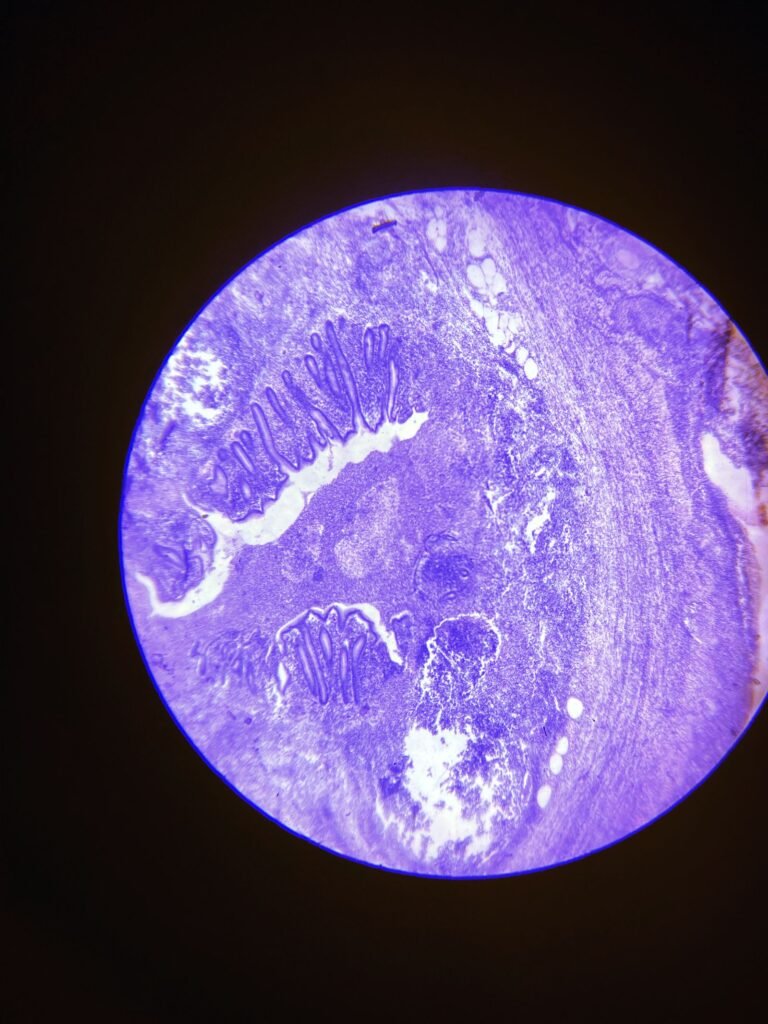
- Lab review: A pathologist, often a dermatopathologist, looks at the tissue under a microscope.
Why you may need more than one
NCI notes that more than one biopsy is often needed to diagnose mycosis fungoides. Early CTCL can look like ordinary inflammation under the microscope. Doctors may take samples from different spots or repeat biopsies over time.
Special tests on the sample
To confirm CTCL, the lab may run extra tests. NCI lists immunophenotyping, which checks the types of cells present, and a T-cell receptor (TCR) gene rearrangement test. Blood tests may check for Sézary cells. Ask your doctor which tests were ordered and why.
Questions to ask your dermatologist
It is okay to ask directly. Some helpful questions:
- “Could this be something other than eczema?”
- “Would a biopsy help rule out CTCL or another condition?”
- “Should we take samples from more than one spot?”
- “Will the lab run special tests, like TCR gene rearrangement?”
- “Should I keep taking Dupixent while we find out?”
Do not stop Dupixent or any other medicine on your own. Dupixent has not been recalled. Your doctor can weigh the risks and benefits for you. A second opinion at a cancer center or academic dermatology clinic is also an option.
If a biopsy shows CTCL
A CTCL diagnosis can be frightening. Your care team will stage the disease, which NCI describes in four stages based on how much skin is involved and whether lymph nodes, blood or organs are affected. They will then explain treatment options for your stage.
It can also help to keep good records now. Save your pathology reports, photos of your skin with dates, and your pharmacy history for Dupixent. Federal Dupixent CTCL cases are now grouped in MDL No. 3180 in New Jersey. The companies deny the claims, and no case has been tried or settled. Filing deadlines vary by state and claim type.
CTCL vs Eczema: Differences Doctors Often Look For
No single sign can tell the two apart. Still, dermatologists notice certain patterns when they weigh CTCL vs eczema. Knowing these patterns can help you describe your skin more clearly at your visit.

When it started
The American Academy of Dermatology notes that atopic dermatitis usually begins early in life and may fade during childhood or the teen years. A rash that first appears in adulthood, with no eczema history, is one detail your doctor may want to know about.
Where it shows up
According to the AAD, eczema in older children often affects the elbows, knees, ankles, neck and wrists. Adults are more likely to have it on their hands, and it can appear around the eyes.
Early mycosis fungoides tends to show up in covered areas. A review on the NIH bookshelf, StatPearls, notes that early lesions often develop on the buttocks and upper thighs. Patches in places the sun rarely reaches are one reason doctors think about CTCL vs eczema more carefully.
How it behaves
- Itch first, or patch first: The AAD calls atopic dermatitis “the itch that rashes,” meaning intense itch often comes before the rash. CTCL can itch too, so itch alone does not settle the question.
- Moving or staying put: Eczema flares often come and go in different spots. CTCL patches tend to stay in the same places and slowly change.
- Shape and edges: CTCL patches may have sharper borders or look thin and wrinkled.
- Response to treatment: Eczema usually improves with standard care. Patches that stop responding, or never respond, deserve a closer look.
These are general patterns, not rules. Only a biopsy, read by a trained pathologist, can sort out CTCL vs eczema with confidence.
Reading Your Biopsy Report: Terms You May See
Pathology reports are written for doctors, so the words can feel foreign. Ask your dermatologist to walk you through yours. Here are some terms that often appear when a pathologist is weighing CTCL vs eczema.
- Spongiotic dermatitis: Swelling between skin cells. This pattern is common in eczema.
- Lymphoid infiltrate: A collection of lymphocytes, a type of white blood cell, in the skin sample.
- Epidermotropism: Lymphocytes moving into the outer layer of the skin. StatPearls lists this, with little or no spongiosis, as a key feature of mycosis fungoides.
- Atypical lymphocytes: Lymphocytes that look abnormal under the microscope.
- Pautrier microabscesses: Small clusters of lymphocytes in the outer skin. They can support a CTCL diagnosis but are not always present.
- CD4, CD7 and other “CD” markers: Labels found on the surface of cells. Mycosis fungoides cells are usually CD4-positive, and loss of CD7 can be a clue, though it also occurs in some inflammatory rashes.
- Clonal TCR gene rearrangement: A sign that many T-cells in the sample share the same genetic pattern, which can support lymphoma.
Words that signal uncertainty
Reports sometimes say “suggestive of,” “cannot rule out,” “favor” or “recommend clinical correlation.” These phrases mean the pathologist is not certain. In a CTCL vs eczema question, they are a good reason to ask whether another biopsy, special testing or a second review makes sense.
Getting a Second Opinion on CTCL vs Eczema
Because early CTCL is hard to diagnose, a second opinion can be very helpful. The National Cancer Institute says that getting a second opinion is very common, and most doctors are not offended when patients ask.

Two kinds of second opinions
- A second look at the slides: Your biopsy slides can be sent to another pathologist, often a dermatopathologist at an academic center. You do not always need a new biopsy, and a fresh read can sometimes settle a CTCL vs eczema question.
- A second clinical visit: A dermatologist who sees many cutaneous lymphoma patients can examine your skin, review your history and decide whether new samples are needed.
How to arrange it
- Ask your dermatologist for a referral, or call the second-opinion clinic directly.
- Ask the lab that read your biopsy to send the slides and tissue blocks to the new center.
- Gather your pathology reports, office notes, treatment list and dated skin photos.
- Call your insurer to ask whether the visit and the slide review are covered.
NCI keeps a list of NCI-designated cancer centers across the country. Many of them have clinics that regularly sort out CTCL vs eczema in hard-to-read cases.
How to Talk About CTCL vs Eczema at Your Appointment
Many people feel rushed at skin visits. A little planning helps you raise the CTCL vs eczema question clearly, without feeling like you are second-guessing your doctor.
Start with the change, not the diagnosis
Doctors respond well to clear facts. Instead of saying “I think I have cancer,” try describing what changed and when. For example: “These patches on my hip have been in the same spot for eight months and have not improved on Dupixent.”
Use your photos and diary
Show dated photos in order, from oldest to newest. Point out patches that stayed in one place, grew thicker or changed color. Your doctor can compare them with what they see on the day of the visit.
Ask directly about a biopsy
It is reasonable to ask, “Would a biopsy help us tell CTCL vs eczema apart in my case?” If your doctor says no, ask what signs would change that answer and when you should come back.
Write down the plan
- What does the doctor think is causing the rash?
- Which test or treatment comes next?
- When will results be ready, and who will call you?
- What should make you call sooner?
Before you leave, read the plan back to the doctor or nurse. This simple step catches mix-ups and helps you feel more in control.
Waiting for Answers: Repeat Biopsies and Follow-Up
Sorting out CTCL vs eczema is not always a one-visit job. When early CTCL is suspected but not confirmed, doctors may suggest watching the skin and testing again later.
Why waiting is sometimes part of the plan
Early CTCL can look like ordinary inflammation under the microscope. A sample taken a few months later, or from a different patch, may show clearer features. This does not mean anyone missed something. It is often how the diagnosis is made.
How to make the wait easier
- Keep taking photos every few weeks in the same light and from the same angle.
- Ask for a set follow-up date before you leave the office.
- Write down new symptoms, such as swollen lymph nodes, sores that do not heal or fevers, and call if they appear.
- Ask for copies of each pathology report so you can keep your own file.
Coping with uncertainty
Not knowing can be stressful. It may help to talk with a friend, a counselor or a patient support group while you wait. The Cutaneous Lymphoma Foundation offers education and support for people facing these questions.
Most rashes that raise the CTCL vs eczema question turn out to be eczema or another skin condition. Staying engaged with your care team is the surest way to get a clear answer either way.
Who May Be on Your Care Team
Sorting out CTCL vs eczema can involve several kinds of doctors. Knowing who does what helps you know whom to ask.
- Dermatologist: Examines your skin, takes biopsies and often manages early CTCL.
- Dermatopathologist: A pathologist with extra training in skin. This doctor reads your biopsy under the microscope.
- Hematologist-oncologist: A cancer doctor who treats blood and lymph cancers, especially if CTCL is more advanced or involves the blood.
- Radiation oncologist: May be involved if radiation or electron beam therapy is part of treatment.
- Nurse navigator or care coordinator: Helps schedule visits, explain next steps and connect you with support.
Keep everyone on the same page
When several doctors are involved in a CTCL vs eczema workup, records can get scattered. Ask each office to send notes to your main dermatologist, and keep your own copies.
A simple folder with your biopsy reports, photos and medication history makes every visit go further. It also helps each new doctor see the full CTCL vs eczema picture without starting from scratch.
If any doctor uses a word you do not understand, ask them to explain it in plain terms. You have a right to understand your own diagnosis.
CTCL vs eczema: frequently asked questions
Is a Dupixent rash a sign of cancer?
Usually not. Most rashes on Dupixent are eczema flares or other known side effects. A rash that is persistent, unusual or getting worse is worth checking.
How is CTCL different from eczema?
Eczema is an inflammatory skin condition. CTCL is a cancer of T-cells that live in the skin. They can look alike, so a biopsy is often the only way to tell.
Does a biopsy hurt?
Most people feel a brief sting from the numbing shot. The site may be sore for a few days.
What if my biopsy says “dermatitis”?
That can be accurate. But if your skin keeps changing, ask whether a repeat biopsy or special testing makes sense. Early CTCL can be hard to catch on one sample.
How Direct2Attorney can help
If you used Dupixent and a biopsy later showed CTCL, we can connect you with a participating law firm that may review your situation at no cost. Visit our Dupixent lawsuit page to learn more. You may also want to read when eczema wasn’t eczema.
Knowing the difference between CTCL vs eczema starts with one step: asking your doctor whether a biopsy makes sense for you.
Direct2Attorney is a legal marketing and referral service, not a law firm. This article is general information, not legal advice. Submitting information does not create an attorney-client relationship.