In this article (12 sections)
- Correcting the question: AFFF is already an MDL
- What the AFFF MDL covers, and what it does not
- A second firefighter PFAS MDL: turnout gear
- Where personal injury claims stand heading into 2027
- What we know about AFFF settlements so far
- What could shape PFAS litigation in 2027
- Who Tends to Have Questions About the AFFF MDL
- How a Personal Injury Claim Moves Through the AFFF MDL
- Records That Can Help in an AFFF MDL Claim
- AFFF MDL Terms in Plain Language
- Frequently asked questions
- How Direct2Attorney can help
Last updated: October 2026
Will AFFF lawsuits merge into an MDL by 2027? They already have. Federal firefighting foam cases were combined into a multidistrict litigation, MDL 2873, in late 2018, and it is now one of the largest MDLs in the country. The real question for 2027 is what comes next for PFAS litigation: personal injury trials, possible settlements, and new cases that the AFFF MDL will not take. It also explains who has exposure questions, how a personal injury claim moves through the AFFF MDL and which records tend to help.
This guide explains where the AFFF MDL stands in fall 2026, why some PFAS cases are being kept out of it, and what the next year may look like for people with firefighting foam exposure.
Correcting the question: AFFF is already an MDL
A multidistrict litigation (MDL) is a way for federal courts to group similar lawsuits in front of one judge. Pretrial work, like sharing documents and testing scientific evidence, happens once instead of in hundreds of courtrooms. Each case stays its own lawsuit.
AFFF (aqueous film-forming foam) cases have been handled this way for years:
- Court: U.S. District Court for the District of South Carolina, in Charleston
- Judge: U.S. District Judge Richard M. Gergel
- Case name: In re: Aqueous Film-Forming Foams Products Liability Litigation, MDL No. 2873
- First case management order: January 2, 2019, according to the court’s MDL 2873 page
As of September 1, 2026, the Judicial Panel on Multidistrict Litigation (JPML) listed 15,264 pending actions in MDL 2873 and 19,840 actions filed over the life of the MDL. Many of those actions include more than one plaintiff, so the number of people involved is much higher.
So if you read that AFFF cases “might become an MDL,” that information is out of date. The MDL exists. What is still unsettled is how it will end.
What the AFFF MDL covers, and what it does not
MDL 2873 has always focused on AFFF foam itself. It includes a few types of cases:
- Water provider cases: cities and water systems suing over PFAS in drinking water
- Personal injury cases: people who say AFFF exposure caused cancer or other illness
- Other cases: property owners, states and others with AFFF-related claims
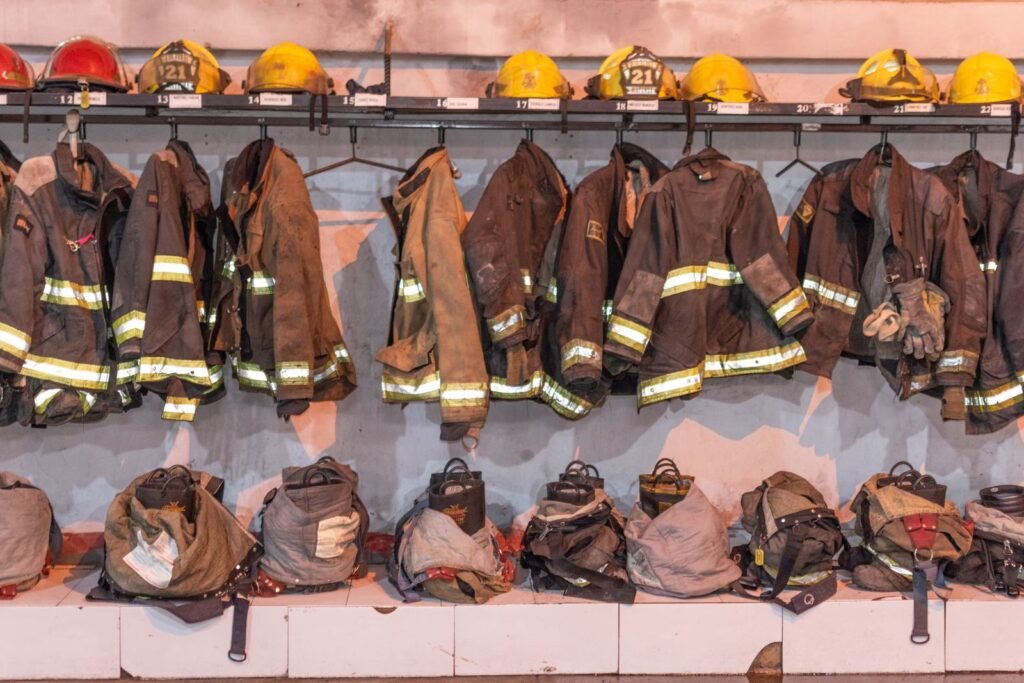
The court has also been clear about limits. In a December 11, 2025 order, the JPML refused to move several PFAS cases into MDL 2873. That included lawsuits over firefighter turnout gear, the protective coats and pants firefighters wear. The Panel wrote that “this remains an AFFF MDL, not a PFAS MDL.”
That line matters for the future. PFAS cases that are not tied to AFFF foam are not automatically headed to Charleston.
A second firefighter PFAS MDL: turnout gear
In 2026, turnout gear cases got their own path. The JPML’s September 2026 report lists MDL 3191, In re: Non-AFFF Firefighter Turnout Gear Marketing, Sales Practices, and Products Liability Litigation. It sits in the District of Minnesota before U.S. District Judge Jeffrey M. Bryan. It had eight pending actions on September 1, 2026.
This is a much smaller and newer case. Many of the early filings were brought by cities, counties and fire districts. They focus on the cost of replacing gear that allegedly contains PFAS.
For the future of PFAS litigation, the split shows a clear pattern:
- Foam exposure stays in the AFFF MDL (MDL 2873)
- Gear exposure alone goes to the separate turnout gear MDL (MDL 3191)
- Other PFAS sources, such as a local chemical plant or consumer products, may be handled in state courts or other federal courts
A firefighter exposed to both foam and gear may have questions about where a claim belongs. That is something a participating law firm may review.
Where personal injury claims stand heading into 2027
The biggest open issue in the AFFF MDL is personal injury. Here is the status as of fall 2026, based on court records and litigation reporting:
- No global personal injury settlement has been announced. Settlements so far have been with public water systems, not with individuals who have cancer.
- The first bellwether trial was postponed. A kidney cancer bellwether trial was expected in October 2025. That date was vacated, and a new trial date had not been publicly set as of this update.
- Scientific issues are still being tested. The court has been working through disease-specific tracks, including kidney, testicular, thyroid and liver cancer and ulcerative colitis.
- Paperwork rules are tighter. A 2026 case management order required plaintiffs to submit fact sheets and proof of diagnosis and exposure. Defendants have asked the court to dismiss thousands of cases they say lack those records.
A bellwether trial is a test case. Its outcome can help both sides judge what other cases may be worth. Without one on the calendar, predictions about 2027 settlements are just guesses.
What we know about AFFF settlements so far
Water provider settlements show that large PFAS deals are possible. These agreements pay public water systems to test and treat water. They do not pay individuals for health problems.
- 3M: up to $10.3 billion in present value, paid over 13 years, with total payments that could reach about $12.5 billion. The court granted final approval on March 29, 2024, according to 3M’s announcement.
- Chemours, DuPont and Corteva: $1.185 billion combined, announced June 2, 2023, according to DuPont’s release.
- Tyco Fire Products: $750 million, and BASF: $316.5 million, as reported by Reuters in 2024.
Some people read these numbers and assume a personal injury settlement must follow soon. That may or may not happen. Personal injury claims involve proof of exposure, diagnosis and medical causation for each person, which is harder to resolve in one deal.
What could shape PFAS litigation in 2027
Several things are worth watching over the next year:
- A new bellwether trial date. A trial setting often pushes both sides toward settlement talks.
- Rulings on the science. The court’s decisions on which diseases have enough scientific support will shape which claims move forward.
- Dismissals for missing records. Cases without proof of diagnosis and exposure may be removed from the MDL.
- Regulation. EPA proposed in May 2026 to keep the 4 parts-per-trillion limits for PFOA and PFOS in drinking water but allow some water systems until 2031 to comply. A separate proposal would drop limits for PFHxS, PFNA, GenX and the “Hazard Index” mixture, according to EPA. Rules on drinking water do not decide lawsuits, but they affect how PFAS risk is discussed.
- Growth of non-AFFF cases. The turnout gear MDL and consumer product lawsuits suggest PFAS litigation will keep spreading beyond foam.
Who Tends to Have Questions About the AFFF MDL
AFFF was used for decades to put out fuel fires. That means the people asking about the AFFF MDL come from many backgrounds, not just big-city fire departments.
Military firefighters and service members
The military used AFFF widely on bases, ships and airfields. According to the U.S. Government Accountability Office, the National Defense Authorization Act for Fiscal Year 2020 required the Department of Defense to stop using AFFF at its installations after October 1, 2024, with waivers allowed that could extend use until October 1, 2026. Shipboard use was treated separately. Many veterans who trained with foam years ago are now asking whether their illness could be connected.
Airport and industrial firefighters
Airport rescue crews and firefighters at refineries, chemical plants and other industrial sites often trained with foam. Their work records may show how often they sprayed it and in what settings. Contractors who worked at these sites, rather than for the airport or plant directly, may need records from more than one employer.
Municipal and volunteer firefighters
City, county and volunteer departments also used AFFF, often during training drills. Volunteer firefighters may have fewer formal records, so personal notes and statements from fellow members can matter.
People who drank contaminated water
Some people were never firefighters. They lived near a base, airport or training site where foam may have reached the local water supply. Water provider claims are part of the AFFF MDL, and some individuals have also filed personal injury claims based on drinking water exposure.
How a Personal Injury Claim Moves Through the AFFF MDL
Every case is different, and the court can change its procedures at any time. But personal injury claims in a large MDL tend to follow a similar path. Here is a general picture of how a claim may move through the AFFF MDL.
- A law firm reviews the person’s exposure history, diagnosis and dates.
- If the firm takes the case, it files a complaint. The court’s MDL 2873 website includes pages on orders, forms and direct filing.
- The plaintiff completes the paperwork the court requires, such as a plaintiff fact sheet with proof of diagnosis and exposure.
- The two sides exchange information. The defendants may ask for medical records, work history and other documents.
- The court decides broader questions, such as which diseases have enough scientific support to move forward.
- Some cases may be picked for bellwether trials, which test how juries respond to the evidence.
- After pretrial work ends, cases that are not resolved may be sent back to the federal courts where they would have been filed for trial.
Each step can take months or years. The AFFF MDL has been active since late 2018, and personal injury claims are still being sorted out. Patience and good records are important. So is staying in touch with your law firm when your address, phone number or health changes.
Why paperwork deadlines matter
The court has already required plaintiffs to submit fact sheets and proof of diagnosis and exposure. Defendants have asked the court to dismiss thousands of cases they say lack those records. Missing a court deadline in the AFFF MDL can put a claim at risk, which is one reason many people work with a law firm that tracks these orders.
Records That Can Help in an AFFF MDL Claim
Strong records help show two things: that you were exposed to firefighting foam, and that you were diagnosed with an illness being studied in the litigation. The list below is a starting point. You do not need every item, and a participating law firm may help find what is missing.

Proof of exposure
- Military service records, including job titles and duty stations
- Fire department employment records, training logs and certificates
- Incident reports from fires where foam was used
- Union or pension records showing years of service
- Statements from coworkers who trained or worked alongside you
- Photos from training drills or fire scenes
Proof of water exposure
- Records showing where you lived and for how long, such as leases, deeds or utility bills
- Notices from your water utility about PFAS testing
- Your local water system’s annual Consumer Confidence Report. The EPA says customers should receive these reports by July 1 each year and offers a tool to find yours.
Proof of diagnosis
- Pathology or biopsy reports confirming the diagnosis
- Imaging and lab results
- Treatment records and the name of your treating doctor
- The date you were first diagnosed
Write your own exposure history
Official records rarely tell the whole story. A written history in your own words can fill the gaps. For each job or place you lived, try to note:
- The years you were there
- How often you trained with or sprayed foam, such as monthly drills or only at certain fires
- Whether foam touched your skin, soaked your gear or was sprayed in enclosed spaces
- What protective equipment you wore, if any
- How foam was cleaned up afterward, and who did it
- The names of people who can confirm what you remember
Write “not sure” when you do not know. An honest, careful history is more useful than one that guesses.
Talk with your doctor
Tell your doctor about any history of foam exposure or contaminated drinking water, even if it was years ago. Ask that it be added to your medical history. Your doctor can also help you understand what screening or follow-up care may make sense for you. Medical care decisions should be based on your health, not on a legal claim.
Requesting military records
Veterans and the next of kin of deceased veterans can usually request service records from the National Archives online or by mail. Basic requests are generally free for veterans and next of kin. These records can help show where and when a person served in the AFFF MDL context.
AFFF MDL Terms in Plain Language
Court orders and news stories about the AFFF MDL use a lot of legal shorthand. Here is what some of the most common terms mean.
PFAS
Per- and polyfluoroalkyl substances. A large family of man-made chemicals that break down very slowly. PFOA and PFOS are two of the most widely studied PFAS found in some foams.
Case management order (CMO)
A court order that sets rules and deadlines for how cases move forward. The AFFF MDL has issued many CMOs since its first one in January 2019.
Plaintiff fact sheet
A detailed form each plaintiff fills out about exposure, health history and damages. It works like a sworn questionnaire.
Bellwether trial
A test trial of a representative case. Its result is not binding on other cases, but it can guide settlement talks.
General causation
The question of whether a substance can cause a certain disease at all. In the AFFF MDL, the court has handled this disease by disease.
Federal Rule of Evidence 702
The rule judges use to decide whether scientific testimony is reliable enough for a jury to hear.
Short-form complaint
A brief complaint used in many MDLs. It lets a plaintiff adopt shared claims from a master complaint and add personal details, instead of writing a full complaint from scratch.
Leadership counsel
Lawyers the judge appoints to coordinate work for all plaintiffs, such as taking key depositions and handling the science. Each plaintiff still has their own lawyer.
Statute of limitations
The deadline to file a claim. It is set by state law and often depends on when a person was diagnosed or learned of a possible link. Being part of the AFFF MDL does not change the need to file on time.
Remand
Sending a case back to its original court after the MDL’s shared pretrial work is finished.
Tag-along action
A new case filed elsewhere that shares the same issues and is later transferred into an existing MDL.
If you were exposed to foam and later became ill, you may want to know whether your claim fits the AFFF MDL. A participating law firm may review your records and dates. Filing deadlines vary by state and claim type.
Frequently asked questions
Is AFFF litigation a class action?
No. MDL 2873 is a multidistrict litigation. Each person’s case is still an individual lawsuit, even though pretrial work is shared.
Can I still file an AFFF lawsuit in 2026?
Possibly. Filing deadlines vary by state and claim type, and they often depend on when you were diagnosed or learned about a possible link. A participating law firm may review your dates.
Will there be an AFFF personal injury settlement in 2027?
No one can say for sure. As of fall 2026, no global personal injury settlement had been announced, and a new bellwether trial date had not been publicly set.
Do turnout gear claims go into the AFFF MDL?
Not usually. The JPML has kept gear-only cases out of MDL 2873, and a separate turnout gear MDL (MDL 3191) now exists in Minnesota.
How Direct2Attorney can help
If you were exposed to firefighting foam and later diagnosed with cancer or another serious illness, you may want to know whether you may qualify for an AFFF claim. Direct2Attorney can connect you with participating law firms that handle these cases. Learn more on our PFAS and AFFF lawsuit page, or browse other case types.
The AFFF MDL is already here. What matters now is how its personal injury cases move forward in 2027, and whether your records are ready.
Direct2Attorney is a legal marketing and referral service, not a law firm. This article is general information, not legal advice. Submitting information does not create an attorney-client relationship.