Direct2Attorney is a legal marketing & referral service, not a law firm and not a substitute for legal advice.
Eligibility
These claims are about long-term ranitidine use followed by cancer. Before the criteria, one thing has to be said plainly: this litigation has gone badly for claimants, and for most people the honest answer is that there is no longer a case to bring.
For official background, see the FDA’s announcement removing ranitidine (Zantac) from the market.
Over the counter or prescription. Generic ranitidine counts. Ranitidine was pulled from the U.S. market in April 2020, so all use predates that.
Firms generally look for a year or more of regular use, often much longer. Occasional use for the odd bout of heartburn is not the profile.
Bladder, stomach, esophageal, liver, pancreatic or colorectal cancer are the ones most commonly claimed. Courts narrowed the list over time.
There needs to be a plausible gap between years of use and the diagnosis. A cancer diagnosed shortly after you first started taking it does not fit the theory.
Pharmacy printouts, prescription histories, insurance records or receipts. Proof of use is harder for an over-the-counter product, and it matters.
Family members and estate representatives may be able to bring a claim. That deadline usually runs from the date of death, which can be later than you expect.
Want the short version before you fill anything in?
Call and ask one question: given my state and my diagnosis date, is there anything left to file? A participating firm can usually answer that in a few minutes, and the answer may well be no.
Meeting these guidelines does not mean you have a valid claim, and in this litigation it may not even mean a firm will review it. The federal court and the Delaware courts both excluded the plaintiffs’ scientific experts on whether ranitidine causes cancer. Those rulings apply no matter how strong an individual person’s facts are, and most law firms have closed Zantac intake as a result. Any firm that does review your case decides on its own whether to take it. Direct2Attorney cannot judge the legal merits of your case, give legal advice, or file anything for you.
Clearing things up
A lot of what you read online about Zantac claims is out of date or simply wrong. Here is what is true.
What people often hear
Settlement headlines make it sound like anyone can apply.
What is true
The settlements were private deals for specific inventories of already-filed cases, negotiated with particular firms. There is no claims process to apply to.
What people often hear
Some read the dismissals as a clean bill of health.
What is true
The courts found the plaintiffs’ expert evidence was not reliable enough for a jury. No court has found that ranitidine causes cancer, and none has found that it does not.
What people often hear
The name is the same, so people worry.
What is true
Zantac products sold in the U.S. today contain famotidine, the same ingredient as Pepcid. It was not part of the recall or the litigation.
What people often hear
Ads still promise compensation.
What is true
Most law firms have stopped taking Zantac cases. What is worth having is a straight answer about whether anything remains open for you.
About the drug
This page is not a reason to panic about your health. Ranitidine has not been sold in the United States since April 2020, so there is nothing for you to stop taking. If you are using something for heartburn today, it is a different medicine. Famotidine, sold as Pepcid and as the current Zantac 360 product, is a different molecule and was not part of the recall.
If you took ranitidine for years and you are worried, the useful step is a conversation with your doctor about whether any screening makes sense for you, based on your age, your family history and your symptoms. That is a medical conversation, and it is separate from any legal question. Nothing on this page is medical advice.
Zantac was ranitidine, an H2 blocker that reduces stomach acid. Approved in 1983, it became one of the best-selling drugs in the world and was available without a prescription for decades. Tens of millions of people took it, many of them for years.
In 2019 an independent pharmacy laboratory reported that ranitidine could break down into NDMA (N-nitrosodimethylamine, a compound classified as a probable human carcinogen) and petitioned the FDA to act. The concern was that the molecule was unstable, and that heat and time during storage could increase how much NDMA formed.
On April 1, 2020 the FDA requested that all ranitidine products be withdrawn from the U.S. market. The agency cited its own testing showing NDMA levels increasing in samples stored at higher temperatures and over time. Every ranitidine product came off American shelves. The lawsuits followed almost immediately. What happened to them since is the part most pages leave out.
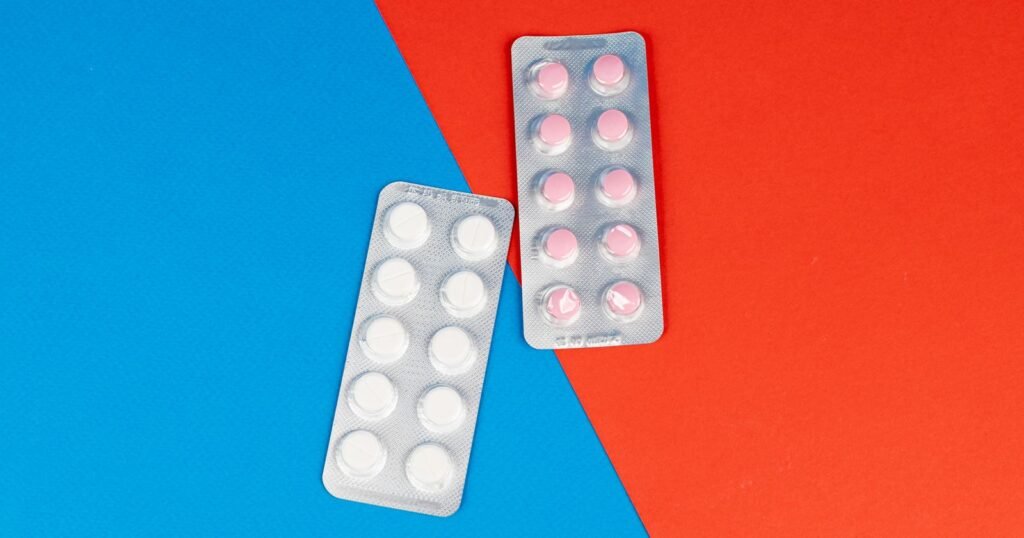
How the NDMA concern arose
Ranitidine is unstable
The molecule can break down over time.
Heat and storage add NDMA
FDA testing showed levels rising in warm, older samples.
The FDA pulls it
All ranitidine was withdrawn from the U.S. market on April 1, 2020.
That the manufacturers knew or should have known ranitidine was chemically unstable, that it degraded into NDMA in storage and possibly in the body, and that they failed to test adequately or warn anyone, while continuing to sell it for decades.
That the expert evidence offered to prove ranitidine causes cancer was not reliable enough to reach a jury. The federal judge found the plaintiffs’ experts made analytical leaps, leaned on weak epidemiology, and set aside larger studies that did not help them.
| Product | What to know |
|---|---|
| Zantac (ranitidine) | Brand-name ranitidine; withdrawn from the U.S. market in April 2020 |
| Generic ranitidine | Same active ingredient; counts the same way in a claim |
| Zantac 360 (famotidine) | A different molecule sold today; not part of the recall or the litigation |
| Pepcid (famotidine) | A different molecule; not part of the recall or the litigation |
Product and company names are used only to identify the products at issue. Direct2Attorney is not affiliated with, endorsed by, or sponsored by GSK, Sanofi, Pfizer, Boehringer Ingelheim, the FDA, or any court.
The science, in plain words
The worry was never about the acid relief itself. It was about what the pill could turn into. Here is the theory the lawsuits relied on.
Ranitidine is chemically unstable. Over time, part of it can turn into NDMA.
Warm storage and long shelf time raised NDMA levels in FDA testing.
It is classified as a probable cause of cancer in humans. Exposure over years was the concern.
Courts found the evidence linking ranitidine to cancer was not reliable enough for juries.
No court has found a cause
No court has found that ranitidine causes cancer. It is equally true that no court has found it does not. The rulings were about the reliability of the evidence offered.
Your health first
Whatever happens with any lawsuit, your care comes first. Treatment records also show what a diagnosis has cost you.
General information only, not medical advice. Your doctor decides what screening and treatment are right for you.
If you are worried
Ask whether any screening makes sense, based on your age, family history and symptoms.
Finding it
Imaging, scopes and tissue samples confirm a diagnosis and its stage.
Treatment
Removing a tumor or part of an organ is common for many of these cancers.
Treatment
Used alone or with surgery, depending on the cancer and its stage.
Ongoing
Regular scans and visits watch for recurrence over years.
Today
Anything sold today for heartburn is a different medicine. Ask your pharmacist if unsure.
Quick self-check
If you can say yes to most of these, a quick free call can tell you whether a path remains. The answer may be no.
Did you take Zantac or generic ranitidine regularly for a year or more before April 2020?
Were you diagnosed with bladder, stomach, esophageal, liver, pancreatic or colorectal cancer?
Was the diagnosis years after you started taking it?
Was the diagnosis recent, or are you asking for a loved one who died recently?
Requirements
Even with strong facts, the court rulings on causation apply to everyone. But any claim would still be built on these four things.
Proof of use
Pharmacy, prescription or insurance records.
Proof of diagnosis
Pathology and treatment records.
A plausible gap
Years of use before the diagnosis.
Filed in time
Many state deadlines have already run.
Case status
Federal cases were consolidated as MDL 2924 before Judge Robin L. Rosenberg in the Southern District of Florida. Delaware was the second front. Both have now gone against claimants.
The Zantac lawsuit settlements are closed
In October 2024 GSK agreed to pay up to approximately $2.2 billion to resolve around 80,000 cases, roughly 93% of the state court claims against it. Sanofi and Pfizer separately resolved thousands more in 2024 and 2025. These were private deals for already-filed cases. There is no open fund and no claims process to apply to.
NDMA concern raised
An independent pharmacy lab reports ranitidine can break down into NDMA and petitions the FDA.
FDA withdraws ranitidine
All ranitidine products are pulled from the U.S. market.
Federal experts excluded
Judge Rosenberg’s 341-page opinion excluded all ten of the plaintiffs’ general causation experts under the Daubert standard and granted summary judgment for the manufacturers. Roughly 50,000 claims fell with it.
Delaware briefly revives cases
The Delaware Superior Court allowed the plaintiffs’ experts to testify, which briefly revived the litigation nationally.
GSK settlement
GSK agrees to pay up to about $2.2 billion to resolve around 80,000 already-filed cases.
Delaware Supreme Court reverses
It held that the trial court had applied the wrong standard to the expert evidence.
Federal appeal argued
The Eleventh Circuit heard oral argument on the 2022 expert ruling.
Delaware claims dismissed
On remand the experts were excluded, and the Superior Court granted summary judgment, dismissing more than 80,000 claims against Boehringer Ingelheim covering everything filed before December 2025.
Eleventh Circuit decision still awaited
As of October 1, 2026, 847 cases remained pending in MDL 2924. We found no reported Eleventh Circuit decision. If the exclusion is reversed, the federal track reopens. If it is affirmed, it closes for good.
Trials have mostly favored the defense. Boehringer Ingelheim, the one major defendant that did not settle, has taken cases to trial and won a run of defense verdicts in Illinois and California. A verdict for a claimant in a Zantac lawsuit has been the exception, not the rule.
The honest question
Put the two problems together. The causation rulings do not depend on your individual facts. However clear your use history and however serious your diagnosis, the same expert evidence has been rejected twice by two different court systems. And ranitidine left the market in April 2020, so in many states the filing deadline has already run for a cancer diagnosed years ago.
That does not make every claim impossible. Some state courts have not ruled the same way, wrongful death deadlines can run from a later date, and the Eleventh Circuit could change the picture.
But most law firms have stopped taking Zantac cases, and you should treat any service promising you a Zantac payout with real suspicion. What is worth having is a straight answer about whether anything remains open for you. A firm can give you that, and it costs nothing.
What the courts did and did not decide
No court has found that ranitidine causes cancer. It is equally true that no court has found it does not. What the courts decided is narrower and more technical: that the specific scientific evidence the plaintiffs offered was not reliable enough to be presented to a jury. The FDA’s withdrawal request in 2020 was a precautionary action about NDMA levels in the product, not a finding that anyone’s cancer was caused by it.
Compensation
Where a claim succeeds, compensation is meant to cover what a cancer diagnosis has cost. Read this section knowing that in this particular litigation, very few claims have reached that point.
No one can tell you what a Zantac claim is worth, and no one can promise you will recover anything at all. Past results do not guarantee or predict a similar outcome in any future case.
The process
You do not need pharmacy records or a case number to begin a Zantac lawsuit review. Tell us what you remember, and expect a candid answer.
Roughly how many years you took Zantac or ranitidine, and when you were diagnosed. No cost, no obligation. Approximate dates are fine.
The most useful thing a firm can do is tell you quickly whether anything is still open in your state. If not, you should hear it on that first call.
You sign an authorization. The firm requests pharmacy and prescription records to establish use, plus pathology, imaging and treatment records for the diagnosis.
Your Zantac lawsuit is filed in whichever court remains viable, and your firm keeps you updated, including on the pending federal appeal. You never have to accept an offer you do not want.
READY WHEN YOU ARE
Step 1 takes about two minutes.
Deadlines
Timing is one of the biggest problems in this litigation. Ranitidine left the market in April 2020, and deadlines have kept running since.
Every state has its own deadline for injury claims. For cancers diagnosed years ago, it has already run in many states.
In some states the clock may start when you learned, or should have learned, of a possible link, not on the day of diagnosis.
A family’s deadline usually runs from the date of death, which can be later than you expect.
Only an attorney licensed in your state can tell you whether your deadline has passed.
Not sure if your time has run?
A participating firm can usually tell you in one call whether your state and diagnosis date leave any path open.
Why people use us
No upfront fees
The review is free. Participating firms work on contingency, so a fee is owed only out of a recovery. No recovery, no attorney fee.
A straight read on a hard tort
Most firms have closed Zantac intake. We would rather tell you that than take your details and leave you waiting for a call that is not coming.
Other options if this one is closed
If a Zantac claim is not viable but something else in your history is, a participating firm can look at that instead.
Private and confidential
Medical history is personal. Your information is encrypted and handled according to our Privacy Policy.
What Direct2Attorney is
A legal marketing and referral service. We check whether your situation matches what participating law firms are looking for, and connect you with one of them if it does.
What Direct2Attorney is not
We are not a law firm. We cannot give you legal advice, represent you, or file anything on your behalf. Only a law firm you sign with can do that.
Free, honest Zantac reviews
If you took Zantac for years and were later diagnosed with cancer, you are entitled to know exactly where the Zantac lawsuit stands rather than a sales pitch about it. For many people the answer will be that the door has closed. For some it has not. Finding out takes about two minutes and costs nothing.
What happens after you ask
We check your answers
Usually the same business day
A participating firm may call you
At the time you choose
You decide what comes next
No cost and no obligation, ever
Questions
Still have a question? Ask it on the call. The review is free, and there is no obligation.
Start my free review →Only barely, and it depends entirely on where you are. The federal MDL was effectively ended in December 2022 when the judge excluded all of the plaintiffs’ general causation experts, and that ruling is on appeal to the Eleventh Circuit, which heard argument in October 2025 and had not issued a decision as of mid-2026. Delaware, which held tens of thousands of cases, dismissed them in April 2026 after its Supreme Court tightened the expert standard. Most law firms have closed Zantac intake. Some claims continue in other state courts. Anyone who tells you this litigation is wide open is not describing it accurately.
Update: as of October 3, 2026 we found no reported Eleventh Circuit decision, and 847 cases remained pending in MDL 2924 according to the October 1, 2026 federal court panel report.
Where firms are still reviewing claims at all, they generally look for long-term use of brand-name Zantac or generic ranitidine, usually a year or more, followed by a diagnosis of one of the cancers commonly alleged in this litigation, such as bladder, stomach, esophageal, liver, pancreatic or colorectal cancer, with a plausible latency period between use and diagnosis. Proof of use matters, so pharmacy records, prescription histories or receipts help. Meeting these criteria does not mean a firm will take the case, because the causation rulings apply regardless of individual facts.
They were dismissed. In December 2022 Judge Robin L. Rosenberg, who oversaw MDL 2924 in the Southern District of Florida, issued a lengthy opinion excluding every one of the plaintiffs’ general causation experts under the Daubert standard, finding their methods unreliable. Without expert testimony that ranitidine can cause cancer, the claims could not proceed, and summary judgment was entered for the manufacturers. Roughly 50,000 claims were affected. Plaintiffs appealed, and the Eleventh Circuit heard oral argument in October 2025.
There were settlements, but they were private deals covering claims that were already filed, and they are closed. In October 2024 GSK agreed to pay up to approximately $2.2 billion to resolve about 80,000 cases, most of them in Delaware. Sanofi and Pfizer separately resolved thousands more. These were negotiated with specific firms for specific case inventories. There is no open claims process, no fund accepting new applications, and no mechanism for someone filing today to join them. Boehringer Ingelheim, the remaining major defendant, has not settled and has won a series of defense verdicts at trial.
For most people, realistically yes, and you deserve to hear that plainly. Two things stand in the way. First, the causation rulings in the federal MDL and in Delaware make it very difficult to prove the scientific link in court, and those rulings do not depend on your individual facts. Second, ranitidine was pulled from the U.S. market in April 2020, so the filing deadline has expired in many states for cancers diagnosed years ago. A firm can tell you in one call whether your state and your diagnosis date leave any path open. That call costs nothing, and an honest answer may be that there is nothing to pursue.
The cancers most commonly alleged were bladder, stomach, esophageal, liver, pancreatic and colorectal cancer, with some claims involving prostate and breast cancer. Courts narrowed the list over time. It is important to understand that no court has found that ranitidine causes any of these cancers. The federal court and the Delaware courts reached the opposite conclusion about the reliability of the scientific evidence offered to prove it.
No. The concern was specific to ranitidine, the active ingredient in Zantac, which can degrade into NDMA. Famotidine, sold as Pepcid and as Zantac 360, is a different molecule and was not part of the recall or the litigation. Zantac branded products sold in the United States today contain famotidine, not ranitidine. If you have questions about your own medication, ask your doctor or pharmacist. Nothing here is medical advice.
That depends on which court dismissed it and whether an appeal is still live. Claims dismissed in the federal MDL are covered by the pending Eleventh Circuit appeal, and the outcome of that appeal affects them as a group. The Delaware dismissals in April 2026 were entered with prejudice and appeals from them are possible. If you already had a lawyer, that firm is the right first call, since it knows the posture of your specific case.
Nothing to ask. The case review is free with no obligation. If a participating law firm takes your case, it will normally work on contingency. That means the fee comes out of a recovery, and no fee is owed if there is no recovery. Given the current state of this litigation, many firms will decline to take Zantac cases at all, and you should expect that as a realistic outcome.
No. Direct2Attorney is a legal marketing and referral service, not a law firm. An attorney-client relationship may form only after a participating law firm reviews your information and signs a separate representation agreement with you.

Learn more
More lawsuit research and settlement guides from our partner TortAdvisor ↗