In this article (14 sections)
- The Supreme Court’s Durnell decision
- Recent Roundup verdicts against Monsanto
- Why big verdicts don’t predict your outcome
- Appeals can take years
- The class settlement and future plaintiffs
- Where federal and state cases stand
- What the latest decisions mean for you
- How to Read News About Roundup Verdicts
- What the Science and EPA Say Behind Roundup Verdicts
- Records That Matter After Recent Roundup Verdicts
- Terms You Will See in Roundup Verdicts and Rulings
- Questions to Ask a Law Firm About Roundup Verdicts and Your Claim
- Frequently asked questions
- How Direct2Attorney can help
Last updated: October 2026
The latest Roundup court decisions send a mixed message to future plaintiffs. Juries have returned large verdicts against Monsanto, but the U.S. Supreme Court ruled in June 2026 that label-based failure-to-warn claims are preempted by federal law, and a proposed class settlement could decide how most future claims are handled. Below, we also explain how to read news about Roundup verdicts, what the EPA says, and which records may matter if you are considering a claim.
This article walks through the key Roundup verdicts and rulings from 2025 and 2026, and what they may mean for people diagnosed with non-Hodgkin lymphoma (NHL) now or in the future.
The Supreme Court’s Durnell decision
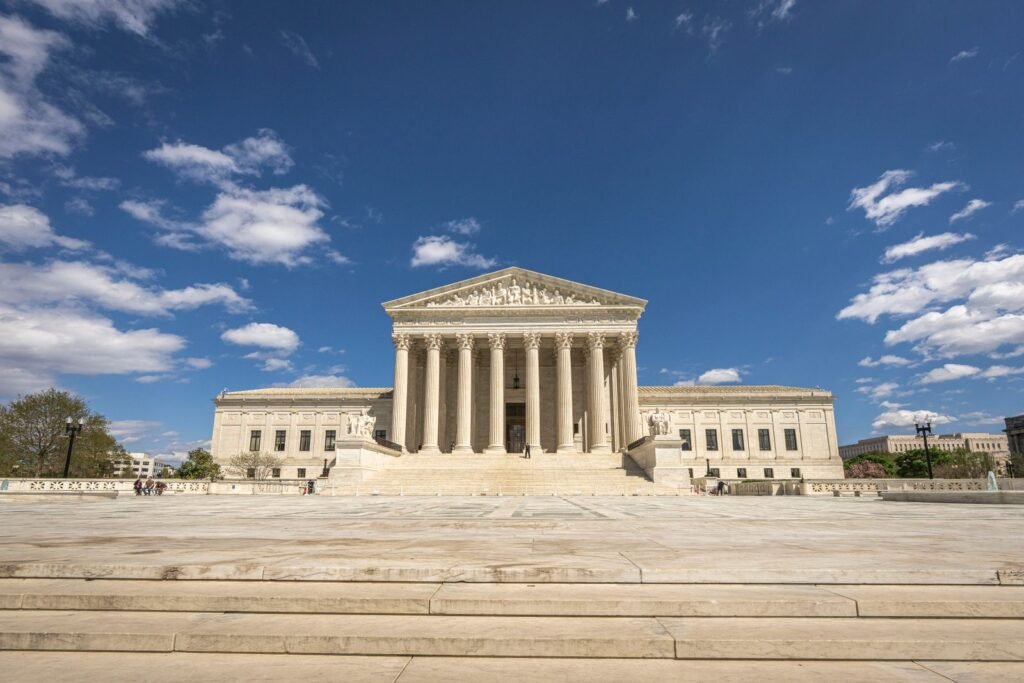
On June 25, 2026, the Supreme Court decided Monsanto Co. v. Durnell. The vote was 7–2, with Justice Kavanaugh writing for the majority. Justice Jackson dissented, joined by Justice Gorsuch.
The case came from Missouri, where a jury had awarded John Durnell $1.25 million in 2023. The Supreme Court held that the federal pesticide law, FIFRA, “expressly preempts” his state-law failure-to-warn claim because the claim would require Monsanto to add a cancer warning to Roundup’s EPA-approved label.
What the ruling left open
The Court’s opinion addressed failure-to-warn claims tied to the label. It did not decide other theories, such as design defect claims, and it said it did not need to reach Monsanto’s separate implied preemption argument.
That matters for future plaintiffs. Claims built only on “the label should have warned about cancer” face a major barrier. Whether other theories remain available depends on the facts and the state.
Recent Roundup verdicts against Monsanto
Before Durnell, several juries sided with plaintiffs. These are some of the most discussed results.
- Georgia, March 2025. A Cobb County jury awarded John Barnes about $2.1 billion, including $65 million in compensatory damages and $2 billion in punitive damages. Bayer said it would appeal.
- Missouri, May 2025. A state appeals court upheld a $611 million judgment for three plaintiffs from a 2023 Cole County trial, after the trial judge had reduced the punitive damages.
- Earlier landmark cases. Home user Edwin Hardeman’s award was reduced to about $25 million and upheld on appeal in 2021.
Bayer, for its part, says it has secured favorable outcomes in 17 of its last 25 trials. It also says damages in cases that reached final judgment have been cut sharply from the original jury awards.

Why big verdicts don’t predict your outcome
Headline numbers can be misleading. Large punitive awards are often reduced by trial judges or on appeal, and some are overturned entirely. Durnell’s own verdict is an example of a win at trial that did not survive review.
Each verdict also reflects its own facts: how long the person used Roundup, their type of NHL, the state’s law and the evidence the jury heard. No verdict sets a value for anyone else’s claim.
Appeals can take years
Even a clear jury win is often just the start. Hardeman’s case shows how long the process can run.
- 2019: A federal jury awards Hardeman more than $80 million
- 2019: The trial judge reduces the award to about $25 million
- May 2021: A federal appeals court upholds the reduced award in a 2–1 ruling
The Pilliod case followed a similar pattern. A jury awarded about $2 billion in May 2019, and in July 2019 the judge reduced the total to about $86.7 million, calling the punitive awards unconstitutionally high while upholding the verdict itself.
For future plaintiffs, the lesson is patience. A case that goes to trial can take years to resolve, which is one reason many people consider settlement options when they are available.
The class settlement and future plaintiffs
The biggest development for future plaintiffs may be the proposed class settlement. In February 2026, Monsanto announced an agreement of up to $7.25 billion, paid over up to 21 years, in the Circuit Court of the City of St. Louis.
According to Monsanto’s announcement, the class includes people exposed to Roundup before February 17, 2026 who:
- Already have an NHL diagnosis, or
- Are diagnosed with NHL within 16 years after the court grants final approval
This is designed to cover future claimants, not just people who have already sued. Monsanto can end the deal if too many people opt out.
Where the settlement stands
- March 4, 2026: Judge Timothy J. Boyer granted preliminary approval
- June 4, 2026: Opt-out deadline
- September 14, 2026: Final approval hearing, where objectors argued the payments were too low and Monsanto urged approval
The judge was not expected to rule right away after the hearing.
As of the latest reports we could find in late September 2026, Judge Boyer had not announced a ruling on final approval. Check the court record or ask a participating law firm for the current status.
Where federal and state cases stand
Many Roundup cases are in state courts. In federal court, cases are grouped in MDL 2741 before Judge Vince Chhabria in the Northern District of California.
As of September 1, 2026, the Judicial Panel on Multidistrict Litigation listed 3,925 actions pending in that MDL. What happens to these cases may depend on final approval of the class settlement and on how courts apply Durnell.
What the latest decisions mean for you
Putting it together, here is what recent decisions may mean for someone diagnosed with NHL after using Roundup:
- If you were exposed before February 17, 2026 and did not opt out, you may be a class member if the settlement is approved
- If you opted out, your individual claim may face the Durnell ruling on label-based warnings
- If you are diagnosed in the future, the settlement’s 16-year window may be relevant
- If a loved one died of NHL, family members may have claims, depending on state law
These are general points, not legal advice. A participating law firm can review how the rulings apply to your facts.
How to Read News About Roundup Verdicts
Headlines about Roundup verdicts often feature a single large number. But that number rarely tells the full story. Knowing a few basics can help you read the news more clearly and set realistic expectations.

Compensatory and punitive damages
Most jury awards have two parts:
- Compensatory damages are meant to make up for real losses, such as medical bills, lost income, and pain and suffering.
- Punitive damages are meant to punish a company and discourage similar conduct. They are often the largest part of headline awards.
The U.S. Supreme Court has limited how far punitive damages can go. In State Farm v. Campbell (2003), the Court said that few awards exceeding a single-digit ratio between punitive and compensatory damages will satisfy due process. That is one reason judges so often reduce the largest Roundup verdicts.
Verdict, judgment and payment are not the same
- A verdict is what the jury decides.
- A judgment is the court’s final order, which may be lower than the verdict after post-trial motions.
- A payment happens only after appeals end or the parties settle.
When you see news about Roundup verdicts, check which stage the story describes. A verdict announced today may look very different after a judge and an appeals court review it.
Questions to ask about any headline
- Was the award reduced by the trial judge?
- Has the company appealed, and is the appeal still pending?
- How much of the award is punitive?
- Does the case involve legal theories that the Durnell ruling may affect?
Asking these questions can help you see past the number and understand what a verdict may, or may not, mean for others.
What the Science and EPA Say Behind Roundup Verdicts
Juries in Roundup verdicts hear competing scientific evidence. It helps to know where the main agencies stand, since both sides often point to them.
Two different conclusions
In 2015, the World Health Organization’s cancer research agency, IARC, classified glyphosate, the main ingredient in Roundup, as “probably carcinogenic to humans.” The U.S. Environmental Protection Agency has reached a different view. The EPA says glyphosate is “not likely to be carcinogenic to humans.”
The EPA explains that it looks at risk under real-world exposure, while IARC looks at whether a substance can cause cancer under any conditions. That difference is part of why the two agencies disagree.
EPA’s review is still open
- In June 2022, a federal appeals court vacated the human health part of EPA’s interim decision on glyphosate.
- In September 2022, EPA withdrew that interim decision. EPA says its scientific finding on cancer was not changed by the withdrawal.
- EPA expects to finish an updated human health risk assessment, including cancer potential, in late 2026.
A new EPA assessment could become part of future arguments in court. For now, it is one more reason Roundup verdicts can vary so much from one jury to the next.
Records That Matter After Recent Roundup Verdicts
Whether you join a settlement or pursue your own claim, records help show what happened. Recent Roundup verdicts show that juries look closely at how long and how often a person used the product.

Exposure records
- The years you used Roundup, and how often in a typical season.
- How you applied it, such as a backpack sprayer, a hand-held sprayer or a tank on a tractor.
- Where you used it, such as at home, on a farm, in a park or at a golf course.
- Job records if you worked in landscaping, farming, groundskeeping or a nursery.
- Receipts, store loyalty records or photos of containers, if you have them.
- Names of coworkers or family members who saw you use it.
Medical records
- The pathology report that confirms your type of non-Hodgkin lymphoma.
- Dates of diagnosis and treatment.
- Records from oncologists and hospitals.
- Medical bills and records of time missed from work.
Write down your story while it is fresh
Records are not only papers. A short written account in your own words can help, too. Note when you first used Roundup, the places you sprayed, the gear you wore and any times the spray got on your skin or clothes. Add when your symptoms started and when you were diagnosed.
Date the notes and keep them private. They can help you answer questions from a firm clearly, and they help you compare your own facts with what you read about Roundup verdicts in the news.
Settlement and court papers
- Any class notice you received in the mail.
- A copy of any opt-out form you sent, and proof of when you mailed it.
- Any letters from a claims administrator.
Keep everything in one place. If a loved one has died, family members may also need a death certificate and estate papers.
Terms You Will See in Roundup Verdicts and Rulings
Court news uses a lot of legal language. Here are plain-English meanings of terms that often appear in stories about Roundup verdicts.
- FIFRA: The Federal Insecticide, Fungicide, and Rodenticide Act, the federal law that governs how pesticides are registered and labeled.
- Preemption: When a federal law blocks a state-law claim. The Durnell ruling found label-based failure-to-warn claims preempted.
- Failure to warn: A claim that a company should have warned users about a risk.
- Design defect: A claim that a product was made in an unreasonably dangerous way, even with a warning.
- Remittitur: When a judge reduces a jury’s award because it is too high.
- Post-trial motions: Requests, made after a verdict, asking the judge to change or throw out the result.
- Appeal: A request for a higher court to review the trial for legal errors.
- Bellwether trial: An early test trial in a group of similar cases.
- MDL: Multidistrict litigation, where similar federal cases are grouped before one judge for pretrial steps.
- Class settlement: A deal that resolves claims for a large group of people at once, if a court approves it.
- Opt out: A formal choice to leave a class settlement and keep the right to bring your own case.
- Final approval: The court’s decision that a class settlement is fair and can take effect.
How a Roundup trial usually unfolds
Knowing the stages can make Roundup verdicts easier to follow:
- Jury selection, where both sides question possible jurors.
- Opening statements, where each side previews its case.
- Testimony from the plaintiff, family members, doctors and scientific witnesses.
- The defense case, often with its own scientists and company witnesses.
- Closing arguments and instructions from the judge on the law.
- Deliberation and the verdict.
Some trials are split into phases, with punitive damages decided only after the jury finds liability. After the verdict, post-trial motions and appeals can follow, as the Hardeman and Pilliod cases showed.
Why some trials end in defense wins
Not every jury finds for the plaintiff. Defense wins are part of the record of Roundup verdicts, too. Juries may find the evidence did not show that Roundup caused a person’s cancer, or that the person’s exposure was too limited. These results get less attention, but they matter just as much for understanding the litigation.
Questions to Ask a Law Firm About Roundup Verdicts and Your Claim
If you decide to talk with a participating law firm, it can help to bring a list of questions. A firm may review your situation and explain how recent decisions may apply.
- Am I part of the proposed class settlement, and how would I know?
- If I opted out, how does the Durnell ruling affect my claim?
- Which legal theories may still be available in my state?
- What deadline may apply to me, and when did it start?
- How do recent Roundup verdicts compare to my facts?
- How long might my case take if it does not settle?
- How will you keep me updated?
Mistakes to avoid
- Assuming a large verdict sets the value of your case. No verdict does.
- Throwing away old containers, receipts or work records.
- Missing letters about the class settlement. Read all mail from the court or claims administrator.
- Waiting too long. Deadlines vary by state and claim type.
Keeping perspective
Roundup verdicts get attention because the numbers are large. But each case depends on its own facts, the law in its state and how courts review the result. Learning how Roundup verdicts work can help you ask better questions and make choices that fit your situation.
If you are dealing with treatment, your health comes first. Gathering records can happen in small steps, and a firm can help you understand what is most important.
Frequently asked questions
Did the Supreme Court end all Roundup lawsuits?
No. It held that failure-to-warn claims based on the EPA-approved label are preempted. It did not decide other theories, and the class settlement is a separate process.
Will I get as much as the plaintiffs in the big verdicts?
No one can promise that. Many large awards were reduced or reversed, and each claim depends on its own facts.
I was diagnosed after the opt-out deadline. Am I covered?
If you were exposed before February 17, 2026, the settlement may cover people diagnosed within 16 years after final approval. A firm can confirm how the terms apply to you.
Is the settlement final?
As of late September 2026, we found no report of a final approval ruling. Check with a participating law firm for the latest status.
What if my loved one died before filing a claim?
Family members may be able to bring a claim on behalf of a loved one who died of NHL, depending on state law and the settlement terms. Keep their medical records, death certificate and any information about how they used Roundup.
How Direct2Attorney can help
If you or a family member developed non-Hodgkin lymphoma after using Roundup, Direct2Attorney can connect you with a participating law firm for a free case review. Visit our Roundup lawsuit page to get started, or explore other case types.
Recent Roundup verdicts and rulings change the path for many future plaintiffs. A firm may review your exposure, diagnosis and timing and explain what these decisions mean for you.
Direct2Attorney is a legal marketing and referral service, not a law firm. This article is general information, not legal advice. Submitting information does not create an attorney-client relationship.